(Untitled)
5.3 Louise Sandhaus
Louise Sandhaus is an educator at California Arts where she has been a design mentor for almost 25 years and is co-director of the school’s graphic design program. (Eye on design, 2022). She is also a board member of the American Institute of Graphic Arts, and a 2022 AIGA medallist. Sandhaus’s main aim is to research unknown designers to tell their stories, which she does through her website, ‘The peoples graphic design archive’. (The peoples graphic design archive, 2022)
Life and early career
Louise Sandhaus was born in 1955 near Boston and was brought up around design, as both of her parents were creative professionals. Her mother, Harriet Sandhaus, worked on a local paper, on an illustrated column, and her father, Norman Sandhaus, was an art director who produced manuals and brochures. After her family moved to Orlando, Florida, it was her rebellious spirit that allowed her to forge her own path into graphic design in a new conservative location, where she was left feeling alienated (Eye on design, 2022).
Sandhaus interned at an advertisement agency during her high school years, and after this she went on to do a two-year program in advertising design at The Art Institute of Fort Lauderdale. Many of her teachers there were designers in New York and had knowledge of the East Coast modernism in the New York art scene. (Eye on design, 2022)

“The training of my mentors changed the trajectory of my work, strengthening my conceptual thinking to allow me to bring writing as well as visual design into my practice. (Eye on design, 2022).”
This helped her get a job back in Boston, on the East West Journal, which was an alternative lifestyle magazine. She began here as a staff designer and by the time she was 23 she had been promoted to art director. Once her work gained recognition, she left the magazine so that she could freelance, and experiment with her own work, whilst also teaching at the Art Institute of Boston. (Eye on design, 2022)
Education
She received her BFA and MFA one after another in 1993 and 1994, and she then spent a period of time at the Jan van Eyck Academy in the Netherlands. She spent 2 years here and then returned to the US in 1996, back to CalArts, where she continues to teach to this day. She became the co-director of the graphic design program in 1998, and she also established her own design studio in the same year, Louise Sandhaus Design. (Eye on design, 2022)
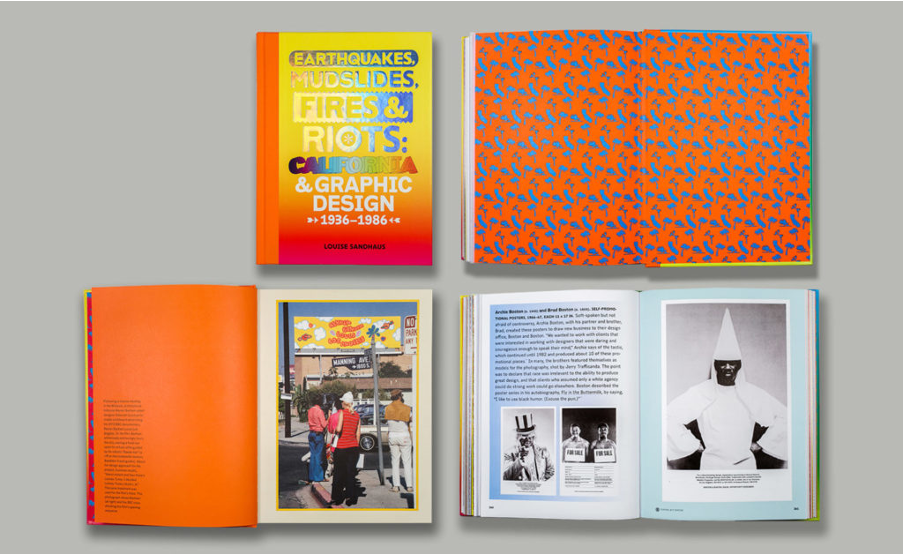
Sandhaus’ contributions to design allow her to reach new people through her writing, and this allows her to educate others outside of the classroom, she is a mentor to the design community.
The Peoples Graphic Design Archive
The Peoples Graphic Design Archive is a website founded by Louise Sandhaus. The aim of this website is to take a bottom up approach to designers gaining recognition for their work. This can be used by anyone around the world, almost like an Instagram for designers. People can upload their work onto the website for others to view, and people can also post blogs to talk about their work on there.
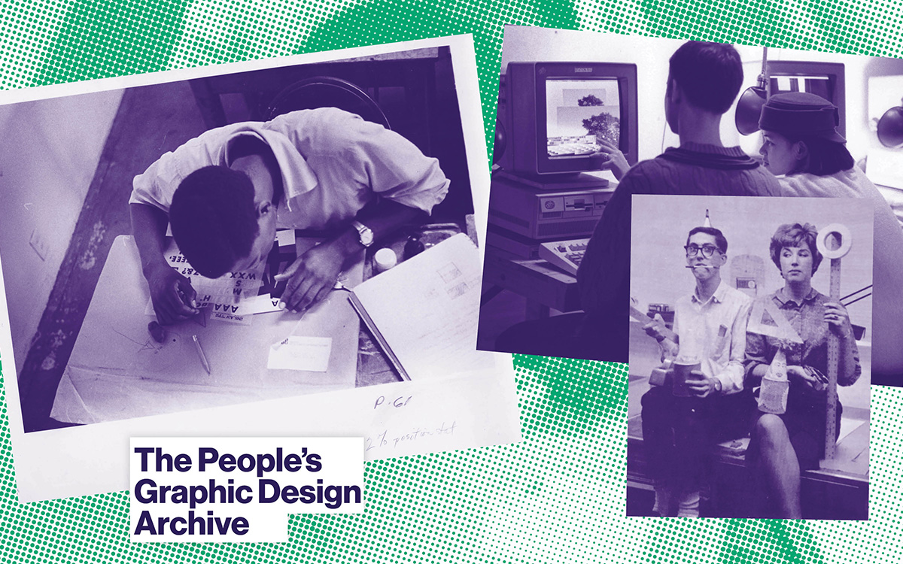
This website was set up because Sandhaus realised that there was so many talented designers out there that were unknown and not getting the recognition that they deserved for their work. However, this website is still fairly unknown to a lot of people, and a lot more people should be using it to gain recognition for their work, and to give other people the recognition that they deserve.
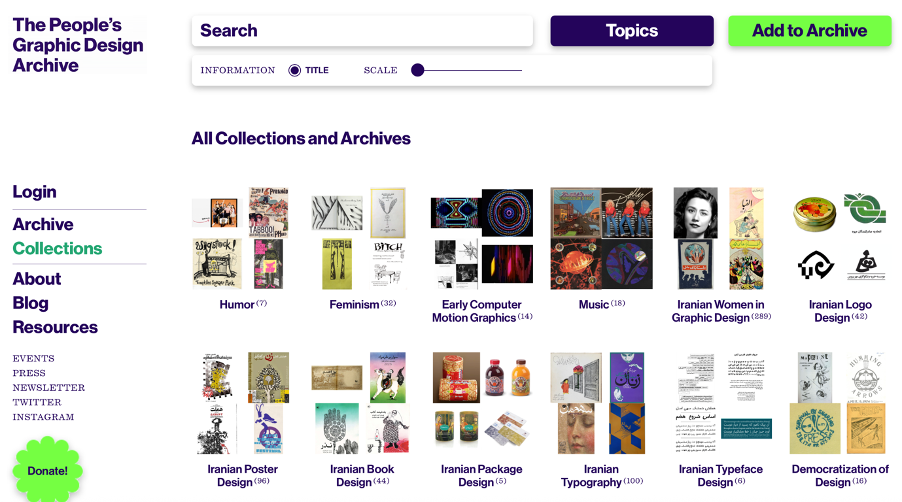
There are currently 12,769 items uploaded to the website, all sorted into sections and categories, which range from feminism, to humour, holiday cards, music, there is a collection for all of the work to have a place on the website.
Argument
The Peoples Graphic Design Archive diversifies the canon in graphic design. It reconsiders graphic design history and gives designers the power to upload work that wouldn’t be accessed and acknowledged otherwise.
This website gives all designers the opportunity to be a part of something and to feel proud of their work. It also focuses on graphic design work from the past, uploading past work that is very old compared to some of the newer work on there, and celebrating the history of graphic design and all of the amazing work that has been in creation for years.
The PGDA allows people in the community to document their own work and explore and interpret the work of others. Traditional archives tend to focus on one specific thing, such as work relating to a specific person or thing, or a particular genre of work, but the PGDA welcomes the contributions of any work, from any genre. The website fills a big gap in the graphic design community, as there are minimal other sources like this. Because of this, the Peoples graphic design archive deserves to be much more represented within the graphic design community.
Graphic design work seems to lean towards only one end of the spectrum and can feel like we are only viewing a particular form of design and work, there is so much work that is unique which means it may not seem to fit into places where other graphic design work is shown. This means that so many peoples work is left out, including whole graphic design communities. The PGDA addresses this and provides a platform for these people and communities where their work, and the history of their communities can be preserved.
If the Peoples graphic design archive was better represented, it would help to change the way people feel about what work is valuable to the history of design, as it is all valuable, not just a certain type of design.
Much of graphic designs history has been a struggle to find out about, as it was not documented as much as graphic design is now, however the PGDA includes past graphic design materials, that are easy to access and gain knowledge on, and this can also be used as an educational tool. The growth of the website depends on designer’s participation and contributions to it.
The Peoples graphic design archive also challenges the biases that were already a part of graphic design history. There has been lots of groups of individuals whose work has been overlooked due to racism, homophobia, sexism, and others, but they are finally getting the recognition for their work that they deserve. The Peoples graphic design archive plays a big role in this, they do not discriminate against anyone due to any of these factors, all they see is the work produced by the designer. If the archive is expanded with new designs and old ones, it will give a better understanding and be more inclusive with the history that it holds. This will then allow viewers to access a wider range of resources and give them more information on any specific topics that they may be interested in.
The Peoples graphic design archive is an amazing source that expands the digital record of graphic design work throughout the years. This should be a much more widely used archive, as it is changing the way we understand and preserve design history.
Reference List:
· LA Weekly https://www.laweekly.com/meet-graphic-design-champion-louise-sandhaus/ [accessed 30/11/2025]
· Sandhaus, L. (2022) ‘Louise Sandhaus Uplifts the Stories of Graphic Designs Unsung Makers’, Eye on Design, 22 August. Available at: https://eyeondesign.aiga.org/louise-sandhaus-uplifts-the-stories-of-graphic-designs-unsung-makers/
· The Peoples Graphic Design Archive https://peoplesgdarchive.org [accessed 30/11/2025]