Ryan Seslow - Wikipedia
Ryan Seslow is a Deaf graphic designer based in New York City who creates murals, sculptures, and digital works that blend traditional art, AI, emerging technologies, and storytelling. His goal is to shift perception and invite people to experience the world differently through his art. As he shares on his website (https://www.ryanseslow.com/about-contact-me/), he is actively overcoming his fears by placing himself in public positions where he speaks openly about how hearing loss and being Deaf have shaped his life in meaningful, positive ways.
Education & Teaching
For the last 23 years, Seslow has been teaching studio art, digital art, graphic design, storytelling, and communications technology across both undergraduate and graduate programs in New York City. He is currently a professor at Borough of Manhattan Community College and Touro University. His teaching practice evolves constantly to keep pace with new tools, platforms, and ideas.
He uses a multidisciplinary artistic process to help people navigate their own worlds, reminding students:
“Welcome aboard, you have been cast into the ongoing script.”
(https://www.ryanseslow.com/about-contact-me/)
Professional Role, Beliefs & Vision
Ryan sees the world through a unique lens shaped by his Deaf and hard-of-hearing experiences. These experiences influence how he observes, interprets, and communicates. His work isn't just visual — it is the translation of perception, emotion, and experience into motion, texture, shape, and digital form.
As one of his essays describes,
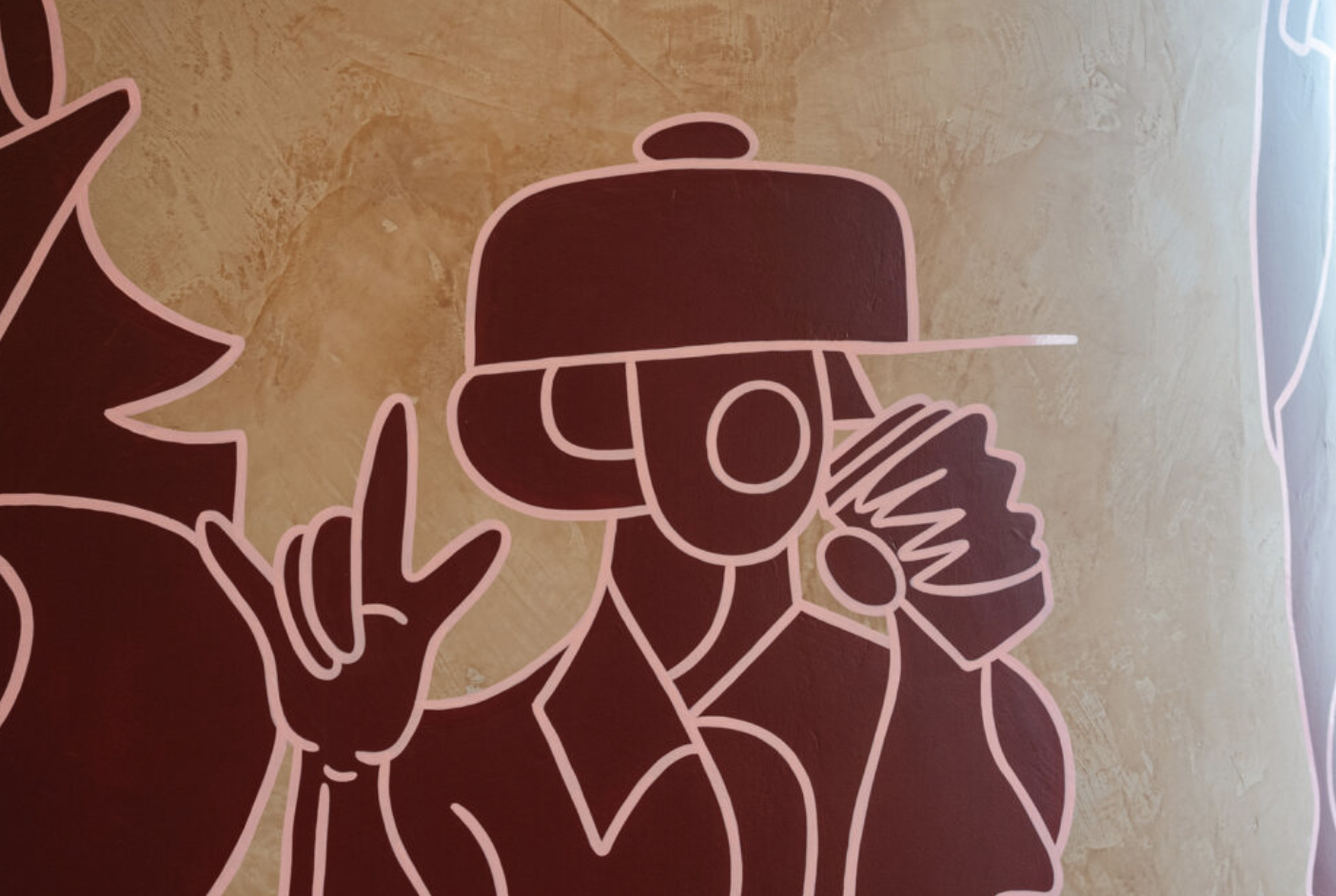
“The mural unfolds across the space like a visual poem.”
(https://www.ryanseslow.com/2018/06/04/communicating-my-deafness-part-1/)
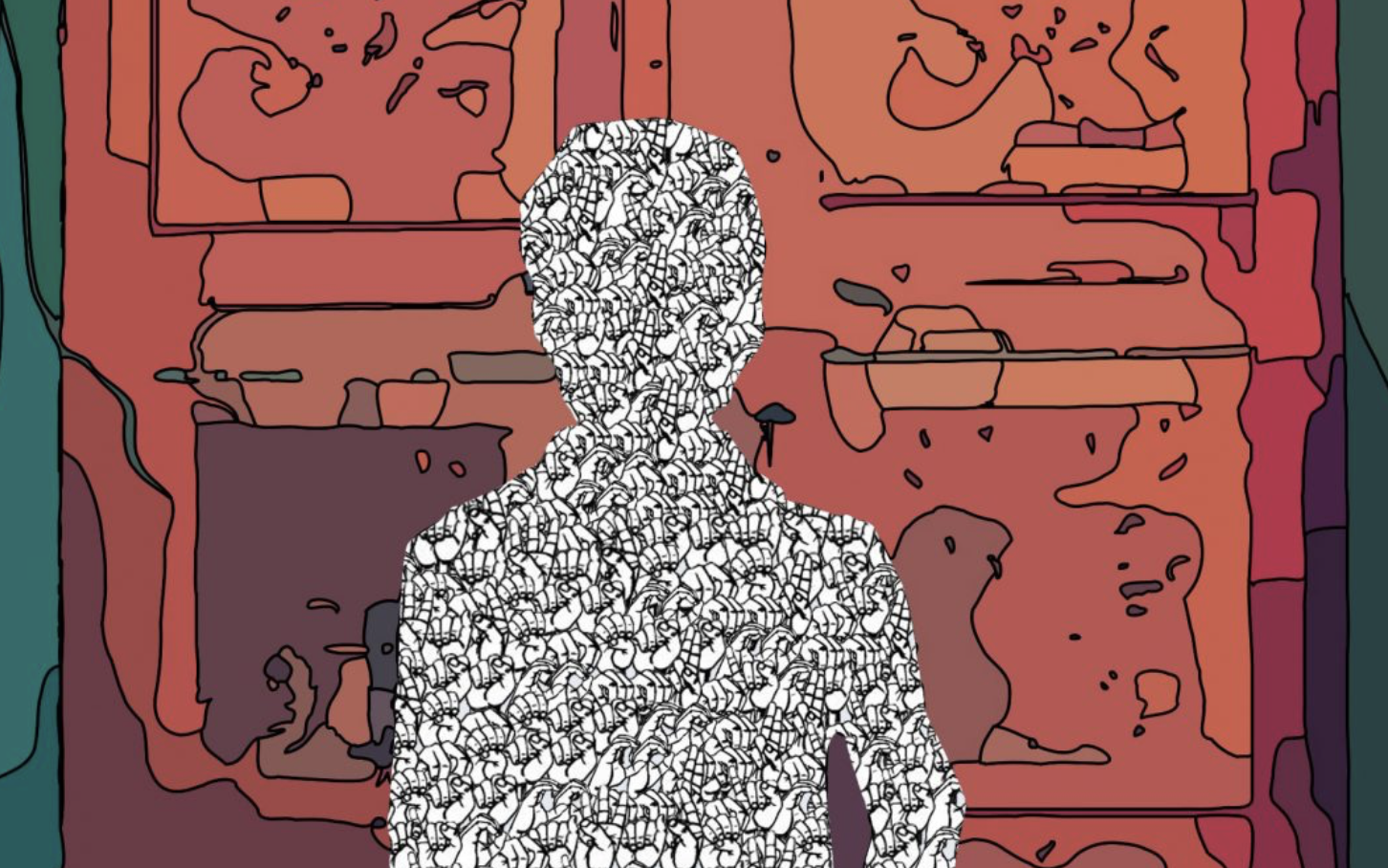
In his long-running project Communicating My Deaf & Hard of Hearing Self (https://www.ryanseslow.com/2018/06/04/communicating-my-deafness-part-1/), Seslow explores communication challenges drawn from lived experience. By animating gestures such as sign language, looping sequences, shifting type, and expressive symbols, he translates the invisible — the misinterpreted or silenced moments — into a visual language that anyone can understand.
He explains:
“The work becomes a bridge between worlds: an attempt to show how communication feels, rather than how it simply works… It transforms personal experience into motion, texture, and digital form, allowing the audience to step inside the emotional and sensory dimensions of being Deaf and hard of hearing.”
When collaborating on public projects, he acknowledges the complexity of inclusion:
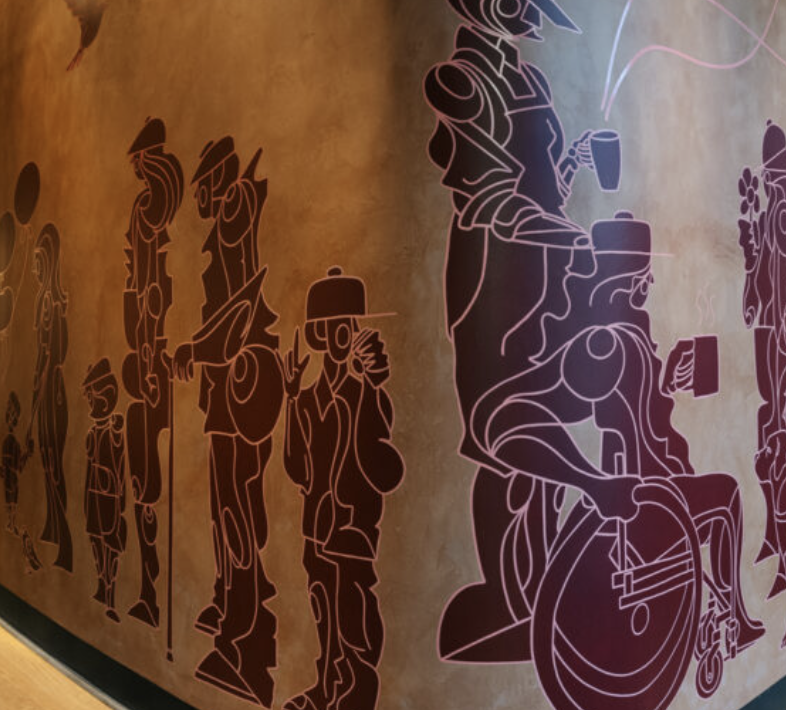
“We don’t have all the answers… we’re not going to solve all of the problems around inclusion, accessibility, and disabilities in one mural, obviously.”
(https://about.starbucks.com/stories/2024/deaf-artist-hopes-mural-at-dc-starbucks-starts-conversations-about-inclusion-accessibility/)
ASL in Public Space: Graffiti, Culture & Connection
Seslow has become increasingly focused on accessibility in public space. He describes feeling
“a strong urge to merge the worlds of graffiti, accessibility, and community,”
through projects that incorporate American Sign Language into public art.
His writing on ASL in street art emphasizes that this work is more than an aesthetic choice — it is an act of representation in places where many people have never seen their language reflected back at them (https://www.facebook.com/groups/565218893829369/posts/2575383906146181/).
He writes:
“Art becomes a voice. A record of language deprivation, identity reclaimed, and joy built through shared communication.”
In a Brooklyn installation (https://www.ryanseslow.com/american-sign-language-asl-in-public-space-graffiti-culture-and-connection/), Seslow placed enhanced, printed, and cut-out ASL letterforms that spelled graffiti across neighborhood walls, creating a bridge between visual language and street culture. As he says:
“Language is alive. Art is alive.”
Creativity & Works
- New Sculpture Installation — Brooklyn Wine Company (2025):
https://www.ryanseslow.com/2025/09/13/new-sculpture-for-the-brooklyn-wine-company/ - My First VR Gallery: A New Portal Opens (2025):
https://www.ryanseslow.com/my-first-vr-gallery-a-new-portal-opens/ - Starbucks Mural — JFK Airport Terminal 4 (2025):
https://www.ryanseslow.com/2025/07/02/brooklyn-in-transit-the-starbucks-jfk-terminal-4-mural/ - Starbucks Mural — Union Market, Washington, DC (2025):
https://www.ryanseslow.com/2025/05/15/my-mural-for-starbucks-at-union-market-washington-dc/ - Vault 007 – The 2017 Activation:
https://www.ryanseslow.com/2025/06/18/vault-007-the-2017-activation/ - ASL in Public Space: Graffiti, Culture & Connection:
https://www.ryanseslow.com/american-sign-language-asl-in-public-space-graffiti-culture-and-connection/ - Simulation Default – Exhibition (2025):
https://www.ryanseslow.com/2025/04/09/simulation-default-curation-from-the-2016-2017-vault/ - Animated GIF Series from the VR Studio (2023–2025):
https://www.ryanseslow.com/2025/05/08/animated-gif-series-from-the-vr-studio-between-analog-and-digital-worlds/ - Tesseract Aesthetics – Exhibition (2025):
https://aremes-enterprises.com/uncategorized/tesseract-aesthetics-an-exhibition-2025/
https://aremes-enterprises.com - An Ocean in Your Sky:
https://www.ryanseslow.com/an-ocean-in-your-sky/ - The Metaphor of the Fog:
https://www.ryanseslow.com/2024/06/06/the-metaphor-of-the-fog/ - Xeroxed:
https://www.ryanseslow.com/xeroxed/ - Concrete to Data – 2015:
https://www.concretetodata.com
More exhibitions and projects:
https://www.ryanseslow.com/current-exhibitions/
Philosophy & Purpose
Ryan Seslow believes art is alive and constantly evolving, art isn’t meant to stand still it must move into new worlds.
“Art wants to live in worlds, not just on walls.”
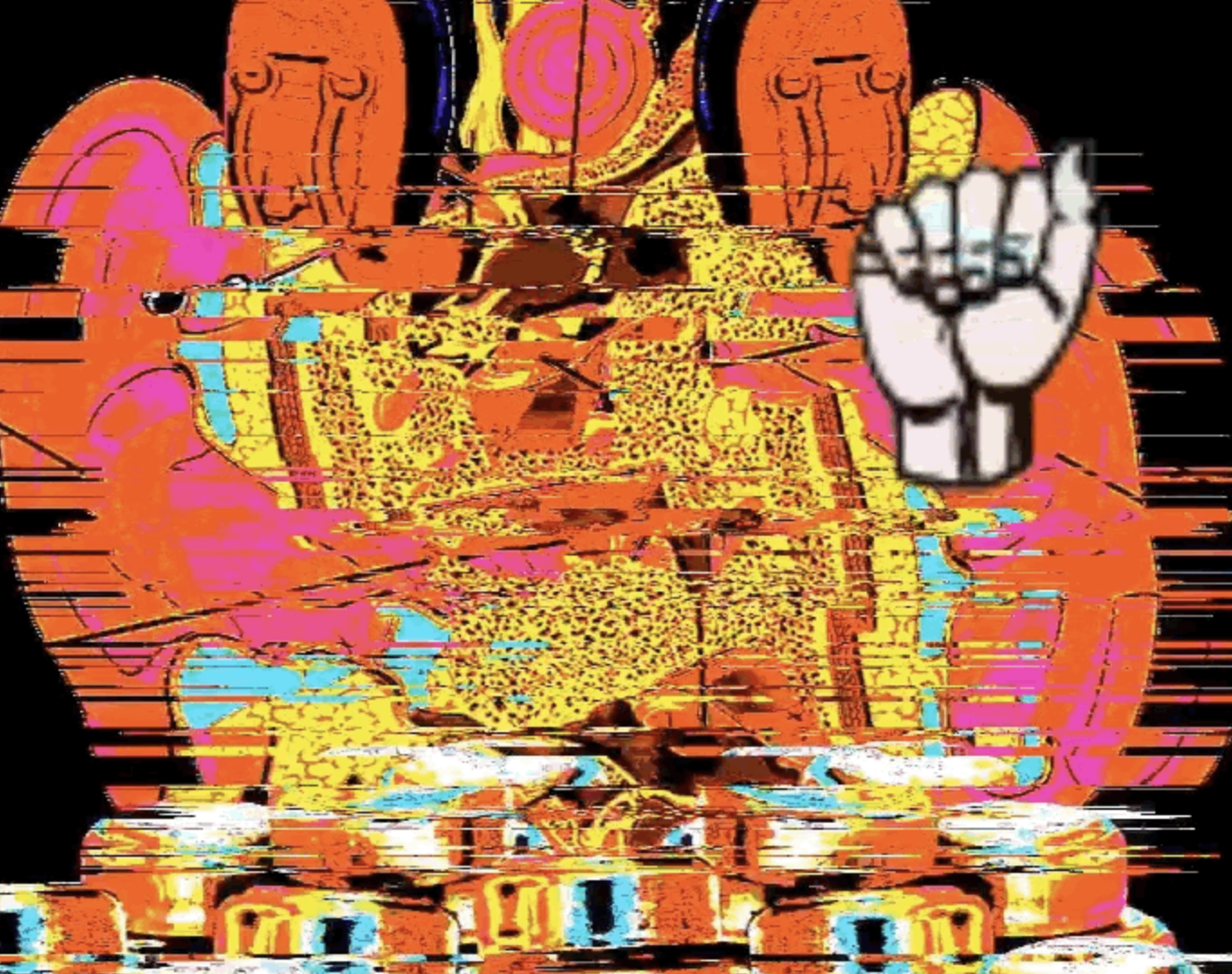
Much of his practice emerges from personal experience, especially the ways communication can fracture. His glitch-based visuals reflect
“the regular distortions, missing of sounds, words, and overall communication struggles that I experience daily.”
(https://www.ryanseslow.com/2018/06/04/communicating-my-deafness-part-1/)
Instead of hiding these challenges, he visualizes them so others can understand, this opens paths to connection, empathy, and shared experience.
Technology also plays a central role he describes his work as part of a
“sacred trinity of art, technology, and consciousness,”
using digital and emerging tools to explore alternate cityscapes, emotional feedback loops, and the energy of the mind.
Ultimately, his intention is to spark awareness not just of colour or motion, but conversations about inclusivity and shared experience, encouraging people to slow down and notice the world. He’s opens spaces where more people can feel included, understood, and connected.