Lauren Greenfield and #like a girl
A Wikipedia page exists for Lauren Greenfield but it neglects a detailed consideration about the campaign #likeagirl in relation to feminism.

Introduction
Laura Greenfield is a well-known director and worked with Leo Burnett for the 2014 always #likeagirl campaign.
About campaign
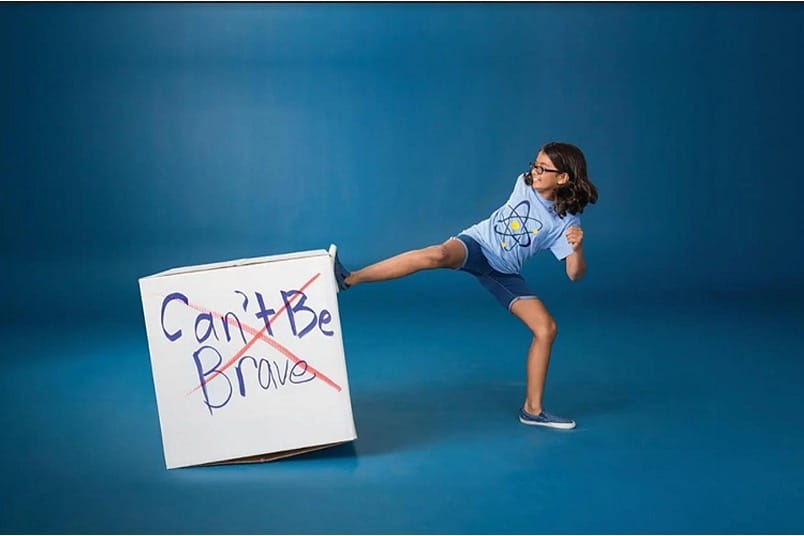
Overview
The campaign began in June 2014 and was originally launched in the United States as a 3-minute YouTube video however it quickly spread across the world via social media platforms such as Facebook and Twitter. ‘It quickly went viral, generating more than 90 million views across 150 countries in the first two months’ (Dussel, 2023). The brands campaign aims to change the perspective of the saying like a girl from a weakness to a strength, giving girls/women more confidence in themselves. They do this by ‘people being told to do things "like a girl". Older men and women tended to respond with pathetic-looking actions, while younger girls were unaware of the bias and performed the actions normally.’ (Campaign, 2015)
Extensions from the campaign
Procter & Gamble who are the owners of Always also created a follow up version of the 3-minute film for the Super Bowl, shortening it to a 60 second video. ‘There’s no better platform than the Super Bowl to reach over 100 million people to spread the message and redefine the meaning of ‘like a girl’ (Wallace, 2015) said Francisco in an interview. They also ‘encouraged girls to share photos, videos, Vines and Instagrams online to show ‘how awesome doing things #LikeAGirl really is’ with another online film, Stronger Together,’ (Contagious, 2015) for International Women’s Day. This helped them to raise even more awareness for the campaign which then helped more women feel more confident with themselves.
Statistics after the campaign
After the campaign was launched ‘According to Procter & Gamble, 76% of women aged 16 to 24-years-old said that the #LikeAGirl video changed their perception of the phrase ‘like a girl’ and they no longer saw it as an insult. Meanwhile, two out of the three men said that the video had made them think twice about using ‘like a girl’ as an insult.’ (Contagious, 2015). The statistics after the campaign shows that it had a real impact on changing the attitudes people had towards the phrase which is exactly what the brand wanted as a response. It also highlights the campaign’s effectiveness in challenging gender stereotypes.
Backlash
Women’s viewpoint
Even though this campaign had a lot of positive attention they also faced some backlash. People had seen the campaign ‘Because – let’s face it – sanitary towels are hideous creations. Big, lumpy and exactly the sort of thing I would imagine plenty want to leave behind in their puberty years, rather than continuing to use as an “empowered” woman.’ (Gill, 2017). ‘Some have also criticised the Always campaign, saying that brands are exploiting the fact that women want to see intelligent portrayals of themselves on screen’ (Rock, 2014)
Men’s viewpoint
They were also faced with the men’s comments on it as they ‘were offended by the always #likeagirl that aired during the Super Bowl. Some men felt that the commercial was not promoting gender equality because it focused too much on young girls and not young boys.’ (O’Neil, 2015) The men felt like although the campaign is aimed at women and changing the perspective on the phrase for women the brand hasn’t thought about how the phrase affects men. ‘“Menists” were offended by the airing of the ad during a Super Bowl game (AH! You said “PERIOD” during SUPER BOWL), sparking the creation of a #LikeABoy hashtag.’ (Arthurs-Brennan, 2015)
Women and stereotypes
In general
This campaign took this idea of throwing like a girl, running like a girl etc, and wanted to show that been a girl is strength rather than a weakness.
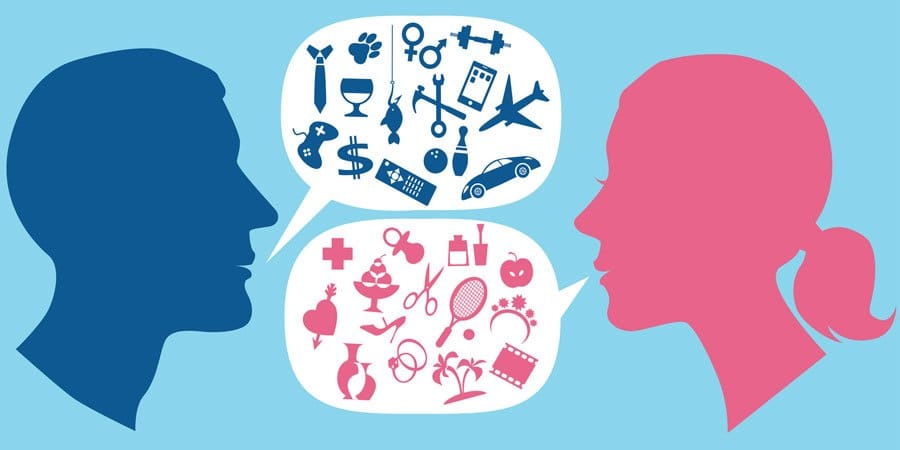
Some of the gender stereotypes for women in the United States are:
■ ‘Accommodating and emotional, while men are usually expected to be self-confident and aggressive.
■ take care of the children, cook, and clean the home, while men take care of finances, work on the car, and do the home repairs.
■ Women are expected to be thin and graceful, while men are expected to be tall and muscular. Men wearing pants and short hairstyles, women wearing dresses and make-up.’ (Planned Parenthood, n.d.)
‘Social structures have suppressed groups based on gender identity and sexual orientation. These structures are reinforced by laws, education, media, employment practices, religious beliefs, beauty standards, local customs, child-rearing practices, and countless everyday interactions. Feminists seek to forge new patterns and practices by challenging social hierarchies.’ (Lupton, Ellen, and Jennifer Tobias)
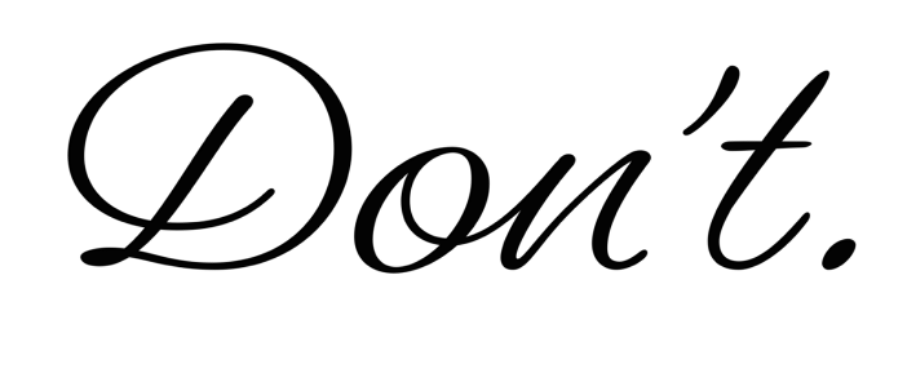
We can also see these stereotypes within type and design this image above you can see the font is “curvy” which supposedly means its feminine. Another example would be on MyFonts, ‘the fonts tagged feminine are just a weird grab bag’. (Rushton, 2015)
In Judith Butler’s talk on the Big Think YouTube channel, they talk about how everybody has their own views on gender and your gender doesn’t define you. They aim to challenge traditional ideas that men are like this, women are like that, instead they want to open space for diversity in how people identify and present themselves.
In Sport
If you look at things such as women's football and rugby, then sports have only just started gaining more attention. ‘Women’s rugby began to take shape in the early 20th century,’
■ ‘Early records of women playing rugby date back to the 1880s in Scotland and England, but these were often dismissed as novelty games.’
■ ‘Organized women’s teams emerged in the mid-20th century.’
■ ‘The first Women’s Rugby World Cup was held in 1991 in Wales, marking a turning point for the sport.’(the rugby factory, 2024)
And it’s not only growing in rugby but many other sports as well, ‘In 2024, the Paris Olympics had an equal number of male and female athletes competing for the first time. Women’s sport in the UK achieved its most-watched year ever, with 44.7 million viewers tuning into domestic fixtures.’ (Poole, 2025)
Changing perceptions
Women have been underrepresented for years now due to gender roles and stereotypes and over time the perception of women has been changing very slowly. (it started changing after the suffragettes’ movements which ‘disbanded in 1918’) (UK Parliament, n.d.)
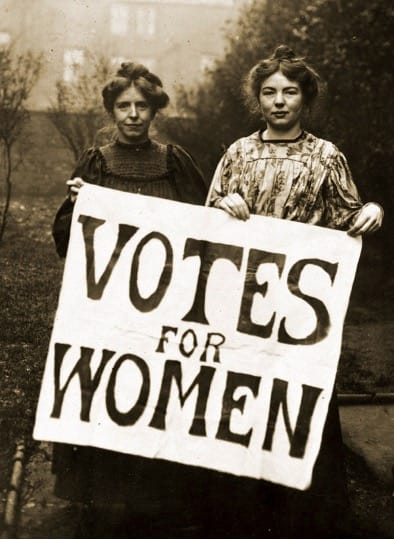
The brands main focus for this campaign was to change the way the phrase #likeagirl was see, before the campaign people took it as an insult however afterwards people started seeing it as a strength particularly the women who watched the video and this is a representation of how we are changing the way people are looking at women. Similarly, ‘in the 1970s and 1980s a new wave of feminism erupted’ with the women in revolt activism exhibition. ‘Women used their lived experiences to create art, from painting and photography to film and performance, to fight against injustice. This included taking a stand for reproductive rights, equal pay and race equality. This creativity helped shape a period of pivotal change for women in Britain, including the opening of the first women's refuge and the formation of the British Black Arts Movement.’ (Tate, n.d.)
Women’s protest
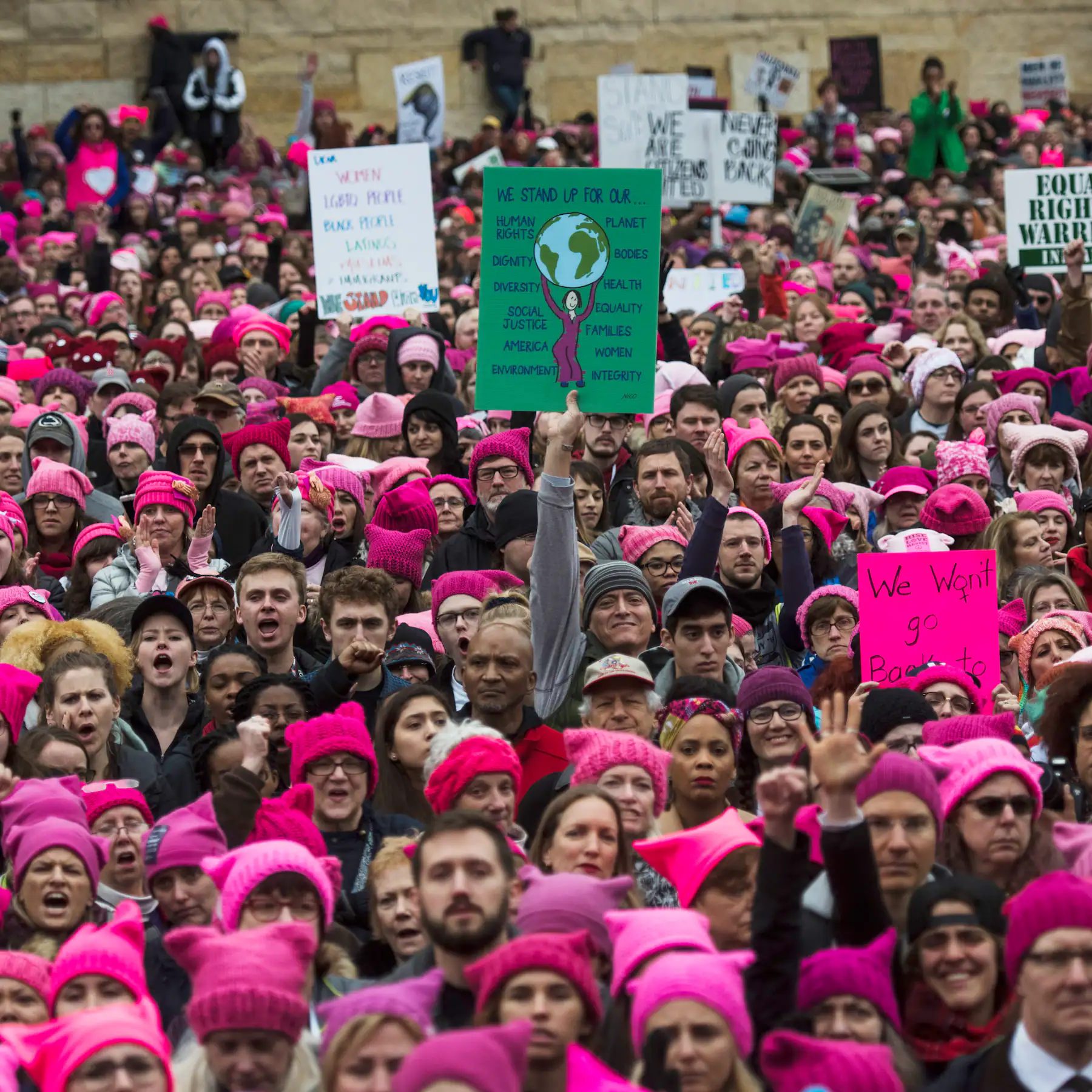
When Donald Trump was elected for the first time on 8th November 2016 people (mostly women) began a protest as a symbol of unity. This protest was a way to show women's rights in opposition to Donald Trump and his policies. The hats made their debut at the Women's March on January 21, 2017, the day after Trump's inauguration. ‘The name of the hats stems partly from Donald Trump’s comments in an infamous 2005 tape that came to light during his campaign. Discussing women, he said: “When you’re a star they let you do it. Grab them by the pussy. You can do anything”’ (The Guardian, 2017) As this protest is at a similar time to the #likeagirl campaign you can see how women are beginning to stand up for themselves as Trump has said some awful things about women, how there weak and belittling them. The women are now standing up against it and protesting ‘in the hope of bringing attention to civil and human rights issues.’ (The Guardian, 2017)
Bibliography
Always #LikeAGirl (2014) Directed by Lauren Greenfield. United States: YouTube. 14th June 2014.
Available at: https://www.youtube.com/watch?v=dxrPeFKtUwQ
Arthurs-Brennan, M (2015) #LIKEAGIRL: WHY FEMINISM HAS NOTHING TO DO WITH HATING MEN [online]
Available at: https://totalwomenscycling.com/longform/likeagirl-standing-up-for-women-has-nothing-to-do-with-hating-men
Berkeley professor explains gender theory (2023) Directed by Big Think. University Of Chicago: YouTube.
Available at: https://www.youtube.com/watch?v=UD9IOllUR4k
Campaign (2015) Always "#LikeAGirl" by Leo Burnett [online]
Available at: https://www.campaignlive.co.uk/article/always-likeagirl-leo-burnett/1301079
Contagious (2015) Insight & Strategy: #LikeAGirl [online]
Available at: https://www.contagious.com/news-and-views/insight-strategy-likeagirl
Dussol, A (2023) Always’ #LikeAGirl Campaign a Triumph of Marketing, Innovation, and Empowerment [online]
Available at: https://medium.com/@madamevision/always-likeagirl-campaign-da8a8628c58b
Gill, C (2017) The 'feminist' campaign from Always is a new low – we don't ask men to feel 'empowered' about their jockstraps [online]
Lupton, Ellen, and Jennifer Tobias. Extra Bold: A Feminist, Inclusive, Anti-Racist, Nonbinary Field Guide for Graphic Designers, Princeton Architectural Press, 2021. ProQuest eBook Central
Available at: http://ebookcentral.proquest.com/lib/leeds-beck/detail.action?docID=6690023
O’Neil, L (2015) What “Meninists” Missed About the #LikeAGirl Super Bowl Ad [online]
Available at: https://www.hollywoodreporter.com/news/general-news/what-meninists-missed-likeagirl-super-770831/
Planned Parenthood (n.d.) What are gender roles and stereotypes? [online]
Available at: https://www.plannedparenthood.org/learn/gender-identity/sex-gender-identity/what-are-gender-roles-and-stereotypes
Poole, C (2025) Women’s Sports Growth Is a Win for Investors, Brands and The Planet [online]
Available at: https://www.forbes.com/sites/clairepoolesp/2025/03/08/womens-sports-growth-is-a-win-for-investors-brands-and-the-planet/
Rock, L (2014) Does it matter if big brands use message of female empowerment to sell their products? [online]
Rushton, V (2015) Type and gender stereotypes [online]
Available at: https://www.alphabettes.org/type-and-gender-stereotypes/
Tate (n.d.) WOMEN IN REVOLT!ART AND ACTIVISM IN THE UK 1970-1990 [online]
Available at: https://www.tate.org.uk/whats-on/tate-britain/women-in-revolt
The Guardian (2017) Casting off Trump: the women who can't stop knitting 'pussy hats' [online]
Available at: https://www.theguardian.com/world/2017/jan/15/casting-off-trump-the-women-who-cant-stop-knitting-pussy-hats
The Rugby Factory (2024) The Growth of Women’s Rugby: Breaking Barriers and Building Legacies [online]
Available at: https://www.therugbyfactory.com/blogs-and-articles/the-growth-of-womens-rugby-breaking-barriers-and-building-legacies
UK Parliament (n.d.) start of the suffragette movement [online]
Available at: https://www.parliament.uk/about/living-heritage/transformingsociety/electionsvoting/womenvote/overview/startsuffragette-/
Wallace, K (2015) How to Super Bowl #LikeAGirl [online]
Available at: https://edition.cnn.com/2015/01/29/living/feat-likeagirl-super-bowl-ad