Mohammed Sami - Beyond the Canon
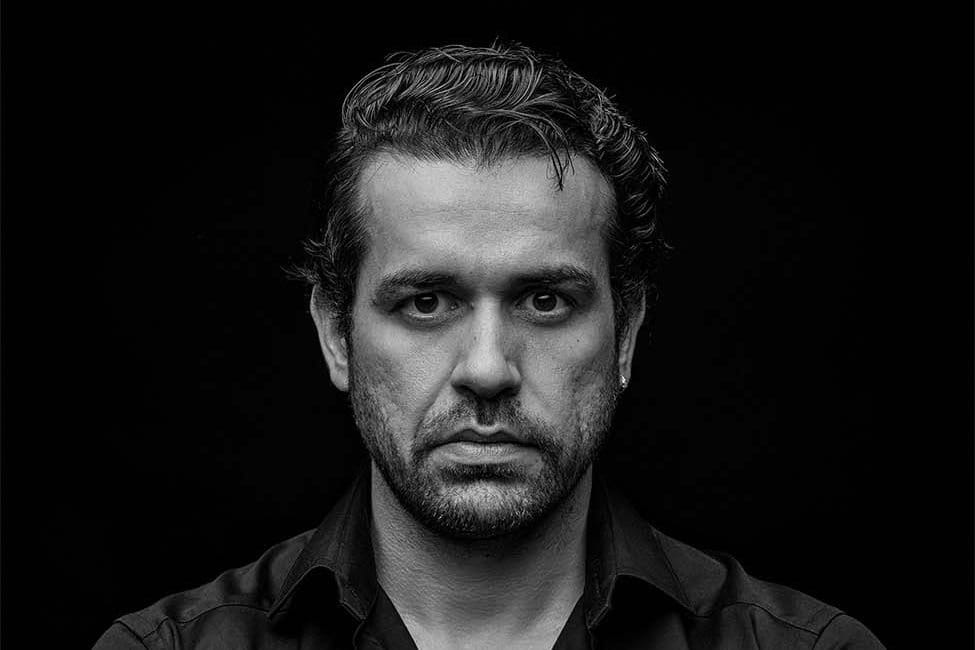
This post includes both my profile and argument.
Mohammed Sami, born 1984. Is an Iraqi painter born in Baghdad, Iraq and is now based in London, England (1) . His work explores the concepts of war, trauma and fragmented memories of his home country. His work uses empty rooms and dark shadows to offer a different perspective of war through painting. (1)
Early Life
Sami was born in Baghdad, Iraq in 1984; during this time a war was raging between Iran and Iraq (Qadisiyyat Saddam, Imposed war). This war was spearheaded by Iraqi leader Saddam Hussein, which saw over 500,000 people lost their lives. (2) Sami, lived with his parents, 6 brothers and 3 sisters, which all of whom shared a house which was 100sq meters. As a schoolboy he painted large propaganda murals for Saddam Hussein during the regime. He used this in exchange to be able to get higher maths and English grades due to him struggling in school with dyslexia.
Notable Work and Exhibitions
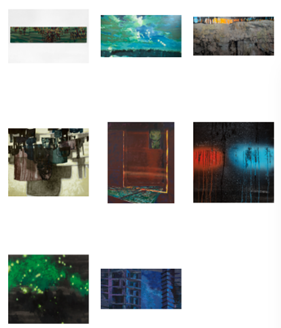
Sami’s paintings focus on memory and the lingering effects of conflict, often showing empty rooms, objects and interiors instead of people. He avoids direct scenes of violence and instead uses absence to suggest past events. Working mainly in oil paint, he builds soft, layered surfaces and uses muted colours to create a quiet, reflective atmosphere. His style blends personal memory with symbolic imagery, giving his work a sense of mystery while still feeling grounded in real experience. (1)
His artistic career first truly started taking off in 2019, after he won the Hottinger Prize in for his painting ‘Unedited Still Life’ (2018). The Hottinger prize works at supporting emerging artists particularly recent graduates. (3)

Sami’s first group exhibitions include ‘The Sea is the Limit’ at York Art Gallery and VCU School of the Arts, Doha (2018-19). (1)
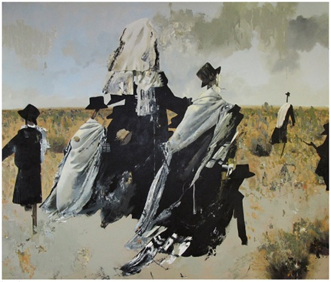
He then went to do his first National Solo exhibition at the ‘Point 0’ at Camden Art Centre (2023) and then went on to do his first international solo exhibition ‘Muzzle of Time’ at Luhring Augustine, New York. (2023), his first U.S. solo with that gallery. (1)

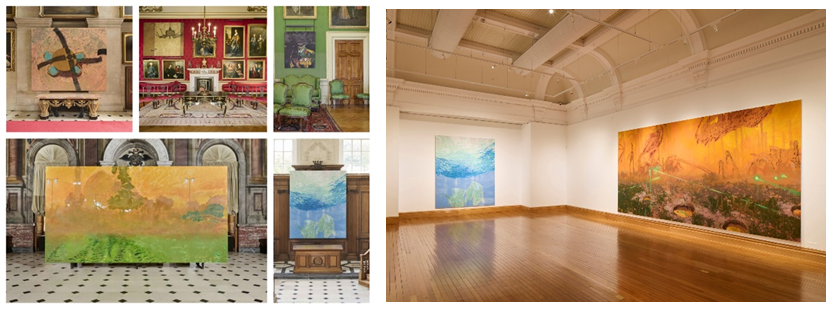
However, 2024 and 2025 is his biggest year for notoriety after a large-Scale Solo show ‘After the Storm’ at Blenheim Palace in Oxfordshire. This subsequently led to him being shortlisted for the Bradford Turner Prize 2025 at Cartright Hall. (1)
Bibliography
Mohammed Sami: Personal Biography (2025) (1)
https://www.mohammedsami.com/
Qadisiyyat Saddam, Imposed War: (N.d) Iraq-Iran War casualties. (2)
https://en.wikipedia.org/wiki/Iran%E2%80%93Iraq_War
Hottinger Prize (2019) (3)
https://hottinger.co.uk/art-hottinger-art-collections-awards-prize-for-excellence-to-mohammed-sami/
Art Viewer (2022) (4)
https://artviewer.org/mohammed-sami-at-modern-art/
FBA Futures (2018) (5)
https://www.a-n.co.uk/media/52549498/
Blenheim Palace (2024) (6)
https://blenheimartfoundation.org.uk/exhibitions/mohammed-sami/
Luhring Augustine (2025)(7)
https://www.luhringaugustine.com/highlights/mohammed-sami-turner-prize-2025
Camden Art Centre (2023)(8)
https://camdenartcentre.org/whats-on/mohammed-sami
Luhring Augustine (2023)(9)
https://www.luhringaugustine.com/exhibitions/mohammed-sami
Argument:
Mohammed Sami: A Significant Artist Who Focuses on Trauma, Conflict, and Displacement
Mohammed Sami is a painter/artist born in 1984 in Baghdad, Iraq (1). As an artist, he is shaped by the concepts of trauma, conflict, and exile from his birth country. His paintings work as mental images of his mind, reflecting the constant link to trauma, even in everyday life (1). He was born into the heat of war during the Iraq-Iran conflict. Sami’s work does not feature violent or grotesque imagery, as he believes it distracts from the central theme of trauma. Instead, his paintings evoke an ominous feeling, leaving the viewer slightly on edge (1). While traditional war art often foregrounds spectacle, violence, and large-scale devastation, Sami focuses on the quieter psychological aftermath of conflict, positioning him as a unique and important voice in the contemporary painting scene. For example, his painting ’23 Years of Night’ “refers to Sami’s life growing up with windows barricaded against bombs – and yet the net curtains are embroidered with delicate stars, mitigating the bleakness.” (7)
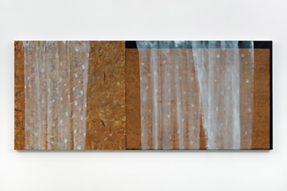
Sami spent most of his life in Iraq, experiencing ongoing warfare. After the Iraq-Iran war, the Gulf War began following Saddam Hussein’s invasion of Kuwait, which led to a 42-country coalition. Not long after, the USA invaded Iraq on the grounds that the country possessed weapons of mass destruction. Reflecting on this period, Sami recalled, “I had to paint with a machine gun next to me” (2). After Saddam Hussein was overthrown and eventually executed, power shifted, and the Islamic State rose to prominence. Between 2003 and 2007, Sami worked for the Iraqi Ministry of Art, recovering stolen artworks. This placed him in extremely dangerous positions in the centre of conflict and contributed to him suffering a minor stroke at the age of 22 (3). His work in the ministry was crucial due to the sheer amount of Iraqi art that was destroyed or stolen, leaving a significant gap in the country’s cultural record and contributing to the underrepresentation of Iraqi art (3,4). Sami’s paintings give voice to this loss, memorializing artworks and people affected by war that can never be recovered. He also paints for his family and, after migrating to Sweden in 2007 and described feeling “the shame of being alive” (2). In 2022, for the Camden Art Centre he did his first solo exhibition featuring his work ‘Refugee Camp’. He later spoke about his time in a refugee camp saying “You live in dust and deserts with the sound of bullets. And suddenly you open your eyes to gardens like heaven.” (7)
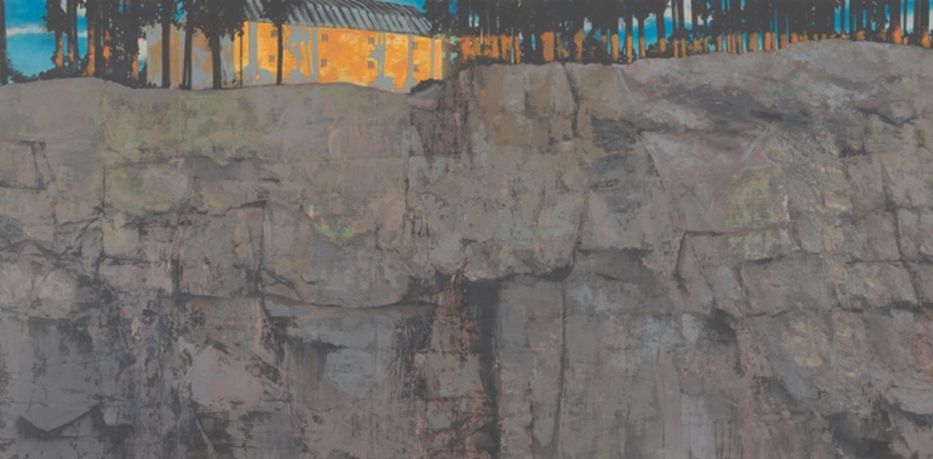
Sami also faced geographic and cultural marginalization in Western art environments. Many Middle Eastern artists, including Sami, confront socioeconomic challenges such as poverty, war, and political instability, which limit access to galleries, networks, and global opportunities (4). In contrast, artists from Western countries are less likely to encounter such barriers. Additionally, Sami’s focus on the psychological aftermath of war rather than uncensored depictions of violence makes his work less immediately marketable to the Western art world. Although Sami has seen a rise in popularity, including a Turner Prize nomination, he remains far from a household name due to the disproportionate representation of Middle Eastern artists globally. Sami studied Fine Art in Baghdad in 2005 (5) However he went back to study at Ulster University Belfast and then went and completed his masters in 2018 (1,5). During his time while doing his masters in London, it was his first taste of success winning the Hottinger Prize in the 2019 Exhibition (6). Without him going back to his artistic studies it would have been more difficult for Sami to first break onto the Contemporary Art Scene.
Concluding my argument, the overall representation of Middle Eastern artists remains limited. However, initiatives from institutions like the Tate Modern, which have created a section for Middle Eastern art, is a positive step in the right direction. Iraqi art in particular is often overlooked, mainly because large portions were lost or destroyed following the raid on Saddam Hussein’s Palace in 2003 (7). Mohammed Sami is significant because his work helps fill in war-related painting. For decades, the war genre was dominated by violent and blooded battles on oil canvases. Sami’s painting style brings a new perspective, focusing on the psychological and emotional aftermath of conflict. Finally, Sami finds himself in the best position in his career after being nominated for the Bradford 2025 Turner Prize. The Turner Prize will allow a much more mainstream viewership compared to a small audience.
Bibliography
(1)Sami, M. (2025)
Personal Biography
https://www.mohammedsami.com/
(2)Hutchinson, E. (2024)‘Making art in Baghdad, I used to paint with a machine gun beside me’: Mohammed Sami on surviving war. The Telegraph.
https://www.telegraph.co.uk/art/artists/mohammed-sami-making-art-baghdad-used-paint-machine-gun-beside/#:~:text=Christmas%20Charity%20Appeal-,Mohammed%20Sami%20on%20making%20art%20in%20Baghdad%3A%20'I%20used%20to,a%20machine%20gun%20beside%20me'&text=I%20remember%20painting%20with%20a,%E2%80%9CThe%20danger%20was%20everywhere.
(3) Ben Uri Research Unit. (2025)
https://www.buru.org.uk/contributor/mohammed-sami
(4) Art Viewer.
(2022) Mohammed Sami at Modern Art
https://artviewer.org/mohammed-sami-at-modern-art/
(5)Woodlard, E. (2019)
https://hottinger.co.uk/art-hottinger-art-collections-awards-prize-for-excellence-to-mohammed-sami/
(6)Fullerton, E (2022)
https://www.theguardian.com/artanddesign/2022/mar/21/mohammed-sami-interview-iraqi-exile-painter-bullets-saddam-hussein
(7)Luhring Augustine (2022)
https://www.luhringaugustine.com/artists/mohammed-sami#tab:thumbnails
(8)Modern Art (2022)
https://www.modernart.net/en/exhibitions/mohammed-sami-2022