Nadina Ali
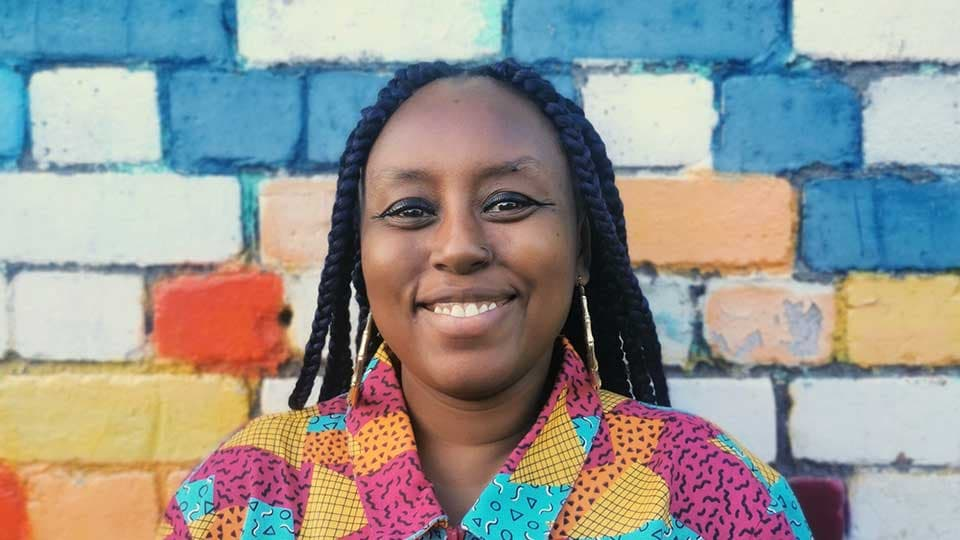
Nadina Ali (born 1984) is a French self-taught graphic designer originally from Marseille and now based in Lewisham, London. Describing herself as passionate about social justice and representation, Nadina Ali is known for her use of bold and colourful typography to address difficult topics around social justice and representation - often issues that draw upon her own experiences as a Black woman in an industry dominated by Caucasian men.
She states that, "As a Black Muslim immigrant woman from a working class background, my life experience and how I navigate the world very much inform my work and practice. As a result, amplifying the voices of under-represented people like myself through my work as much as I can is a key part of practice too."
Biography
Nadina Ali was born and raised in Marseille, France to East-African parents from Comoros. Her identity and upbringing influenced the social themes that appear in her work, which usually includes posters, murals, public campaigns, community-based creative workshops, and digital artwork. She is known for drawing upon her experiences as a muslim Black woman from a working class background to create influential pieces of art that empower and challenge societal issues regarding underrepresentation.
Education & Early Career
Before discovering her passion for graphic design, Nadina Ali studied Clothing Design at Manchester Metropolitan University and graduated in 2009. Following her degree, Ali worked in the fashion industry for 8 years citing roles in product development and quality control.
Ali states that, "My career plans after graduation were very fashion focused and working as a graphic designer was not a career path I had envisioned for myself. I never saw or met any graphic designers who looked like me so becoming one didn't even feel like something I could do." The lack of BAME representation in the design industry was something that had held Nadina Ali back from achieving her full potential as a freelance graphic designer to kickstart her career in a different industry than the one in which she had studied.
Career - Graphic Design
Nadina Ali took a career break in 2017 which led her to explore more creative outputs - ultimately leading to her exploration of graphic communication and visual identity. She found a love for lettering and typography, which led to a full career transition into graphic design after being made redundant from her job in the fashion industry in 2020 due to the impact of COVID-19.
By 2021, Ali was fully recognised as a graphic designer in London, working on typographic statement pieces with bold, colourful lettering to promote and challenge social justice, representation, and inclusivity.
"Art Is For All Of Us"
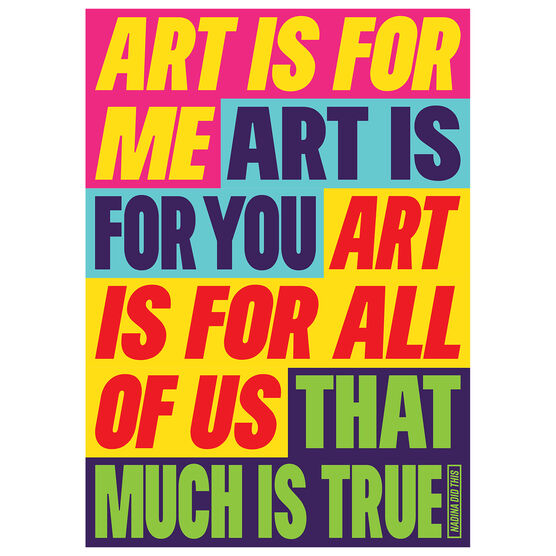
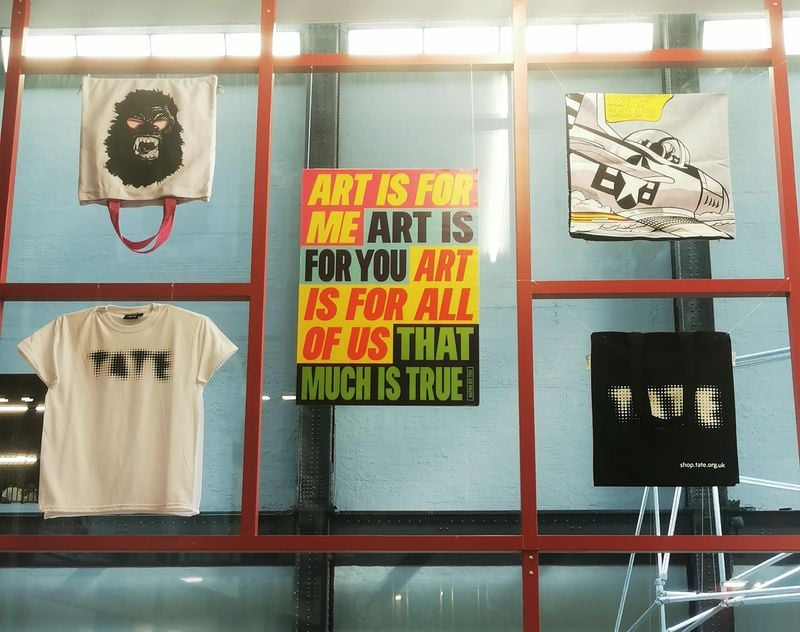
"Art Is For All Of Us" is a graphic artwork poster that Nadina Ali designed and produced as commissioned by the Tate. This typographic poster is a statement piece. The slogan is a call to inspire people to engage with the art industry regardless of their identity, and it’s a powerful visual and political statement about accessiblity and inclusivity. Nadina Ali describes herself as wholly passionate about social justice and breaking the boundaries of underrepresentation in her industry using typography to push her messages across her typical print methods.
Ali described her motivation to create the piece as, “It was inspired by how my limited access to art when I was younger made me feel like art wasn’t something for me or people like me for a very long time. The aim of the poster is to inspire young (and not so young!) people to engage with and take ownership of Art, regardless of who they are and what their background is."
Notable Works
• 2021 - The Joy Is In You - billboard for Black Outdoor Art
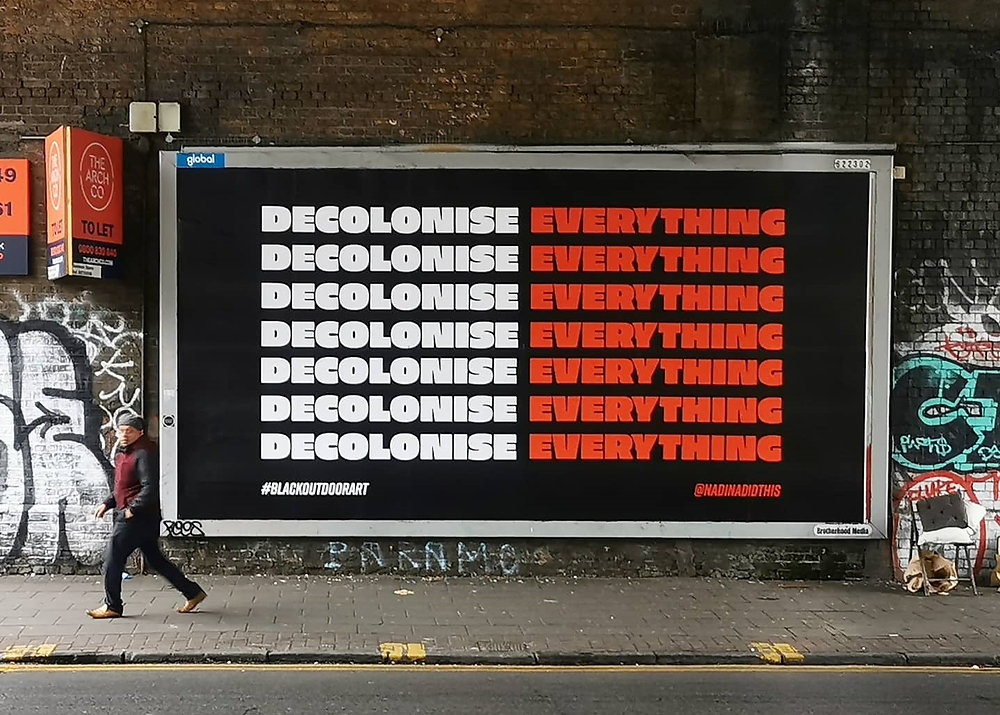
• 2021 - Decolonise Everything - billboard for Black Outdoor Art
• 2021 - Art Is For All Of Us - poster commissioned by the Tate
• 2022 - OK Grow - shipping container mural for OK Grow
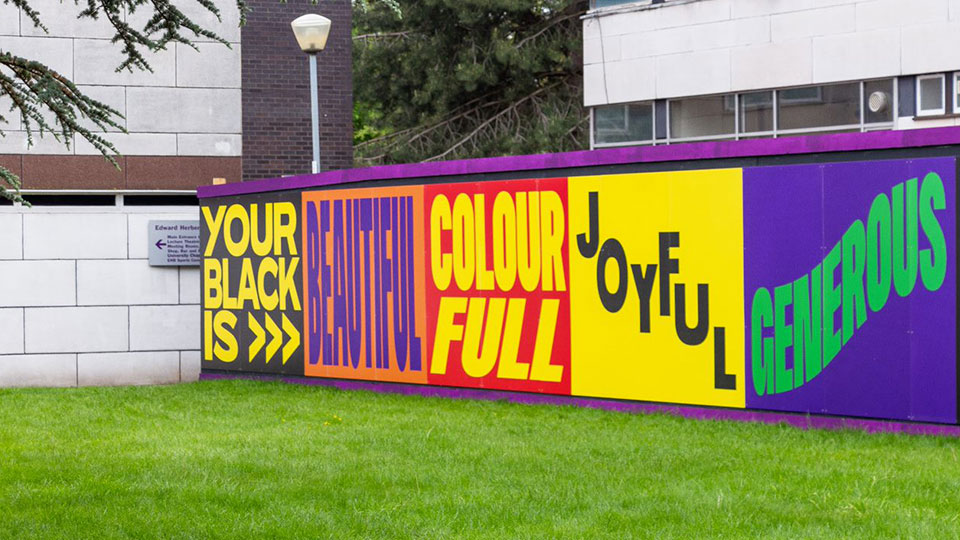
• 2023 - Your Black Is... - community mural commissioned by Loughborough University
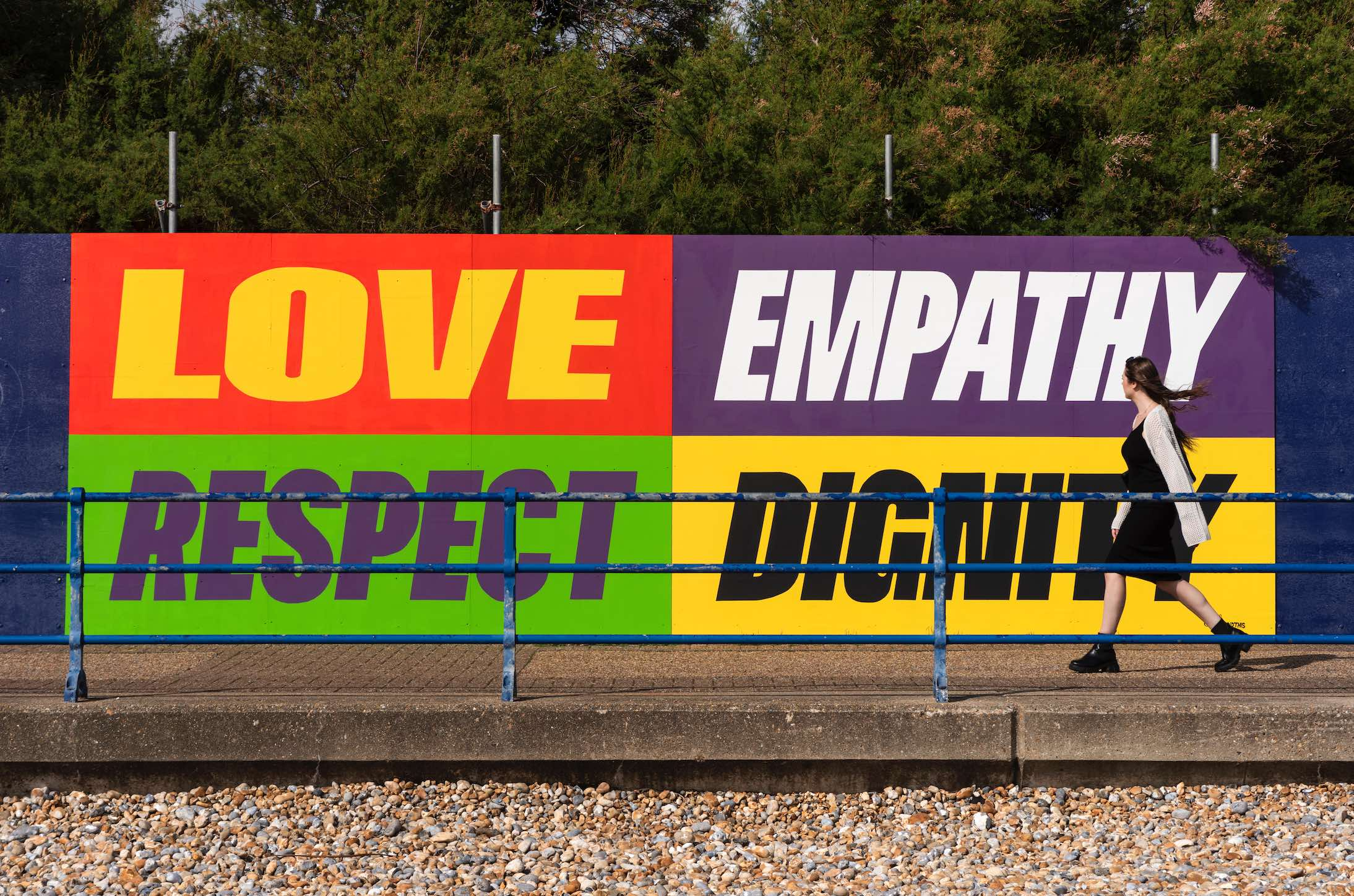
• 2023 - Love, Empathy, Respect, Dignity - seafront mural commissioned by Devonshire Youth Collective

References
About — Nadina Did This (2014). Nadina Did This. [online] Nadina Did This. Available at: https://www.nadinadidthis.com/about-1.
Instagram.com. (2017). Nadina (@nadinadidthis) • Instagram photos and videos. [online] Available at: https://www.instagram.com/nadinadidthis/?hl=en
The Dots. (2021). The Dots. [online] Available at: https://the-dots.com/users/nadina-ali-155983.
Samaneh Mohammadkhani (2025). Meet the Maker - Nadina Ali. [online] Migration Museum Shop. Available at: https://shop.migrationmuseum.org/blogs/meet-the-makers/meet-the-maker-nadina-ali
Hemingway, M. (2021). Nadina Ali – Design by Women. [online] Design by Women. Available at: https://designby-women.com/nadina-ali/
Artuk.org. (2020). Decolonise Everything | Art UK. [online] Available at: https://artuk.org/discover/artworks/decolonise-everything-307669
Loughborough University. (2023). Your Black is…: LU Arts and Nadina Ali’s installation to celebrate Black joy. [online] Available at: https://www.lboro.ac.uk/internal/news/2023/june/nadina-ali-installation
Eastbourne Alive. (2023). Nadina Ali— Eastbourne Alive. [online] Available at: https://eastbournealive.co.uk/our-artists/nadina-ali
Artuk.org. (2021). Ali, Nadina, b.1984 | Art UK. [online] Available at: https://artuk.org/discover/artists/ali-nadina-b-1984
fatstudio.co.uk. (n.d.). Graphic Design & Illustration — F.A.T. Studio. [online] Available at: https://fatstudio.co.uk/Graphic-Design-Illustration.
Tate.org.uk. (2024). Nadina Ali Art Is For All Of Us poster | Posters | Tate Shop | Tate. [online] Available at: https://shop.tate.org.uk/nadina-ali-art-is-for-all-ofus-poster/29533.html
Underrepresentation In The Industry
Underrepresentation is when a group of people, for example a specific ethnicity, is not present in a group, organisation, or industry in proportion to their numbers in the general population (often due to systematic barriers). This means that there are not enough people from that group to accurately reflect their share of the overall community and their experiences within it. A report from Creative Industries Policy & Evidence Centre (CPEC) notes the UK “creative occupations” workforce remains largely white, and documents that those from working-class backgrounds are under-represented.
Nadina Ali, a self-taught graphic designer and self-described socially-engaged visual artist, is currently based in London but was born and riased in France to immigrant African parents. She suggests that designers like her can flow more comfortably into the design industry through challenging the systematic barriers. She argues that, “a lot of companies in the creative industries are predominantly - if not entirely - white, and that’s not being challenged enough”.
Argument
I decided to use Nadina Ali and an example of her work for my case study because she uses her creative output of typography to address difficult topics around social justice and representation - often issues that draw upon her own experiences as a Black woman in an industry dominated by Caucasian men.
Ali details that, “As a Black Muslim immigrant woman from a working class background, my life experience and how I navigate the world very much inform my work and practice. As a result, amplifying the voices of under-represented people like myself through my work as much as I can is a key part of practice too.” She faced a range of problems that have prolonged the launch of her career as a graphic designer - mainly problems surrounding the lack of representation that was visible to her growing up that led to a lack of motivation to break out into a big industry lacking in diversity.
Ali described her motivation to create the piece as, “It was inspired by how my limited access to art when I was younger made me feel like art wasn’t something for me or people like me for a very long time. The aim of the poster is to inspire young (and not so young!) people to engage with and take ownership of art, regardless of who they are and what their background is.”
Nadina Ali places a lot of importance on the accessibility of her artworks because she knows that her designs carry more weight when people can engage with them directly. Using her bold designs and colourful positive messages, Ali is able to reach wider audiences due to the simplicity yet social complexity of her work, often making heavy topics like underrepresentation and marginalisation seem easier to discuss and challenge.
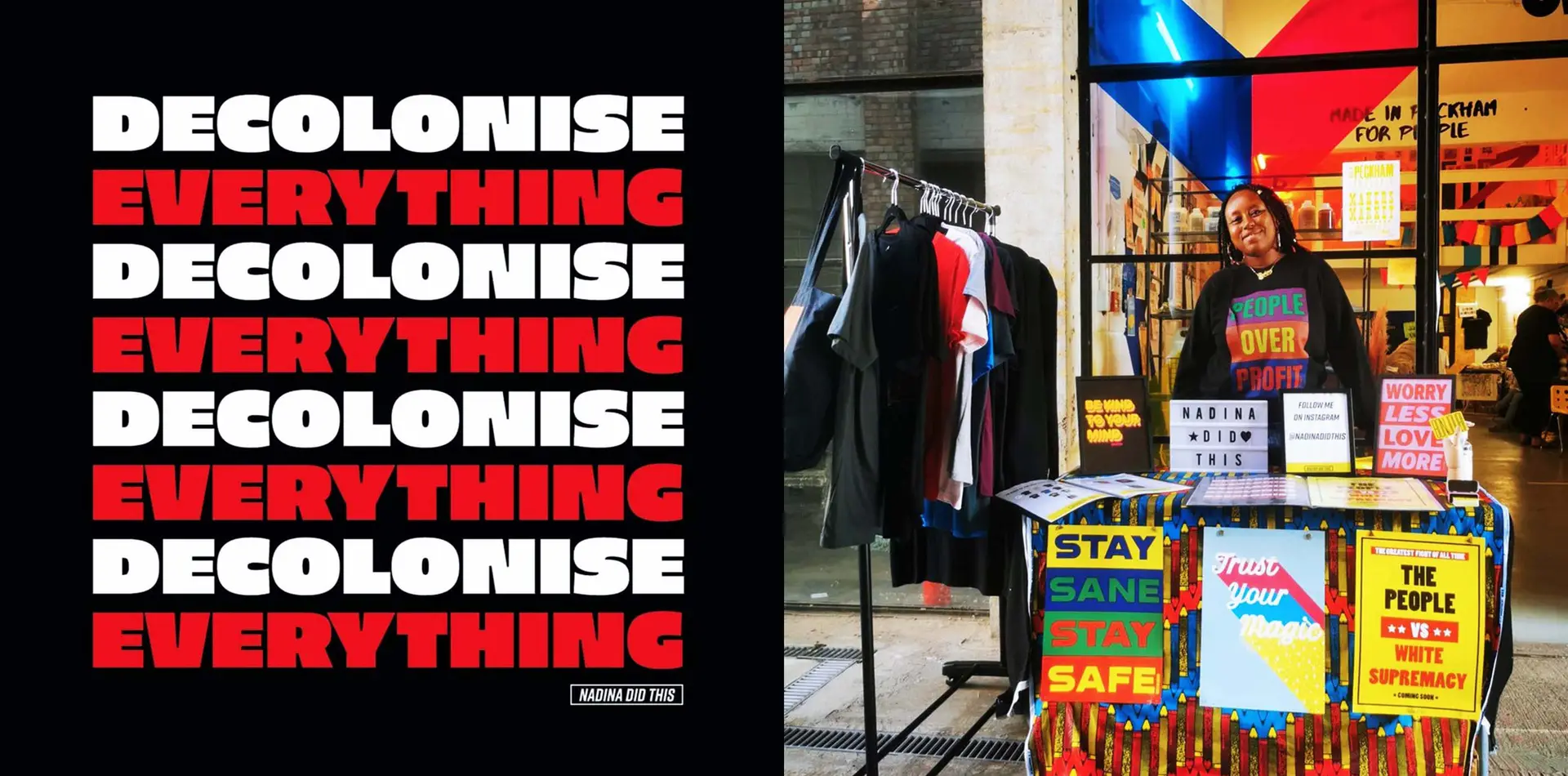
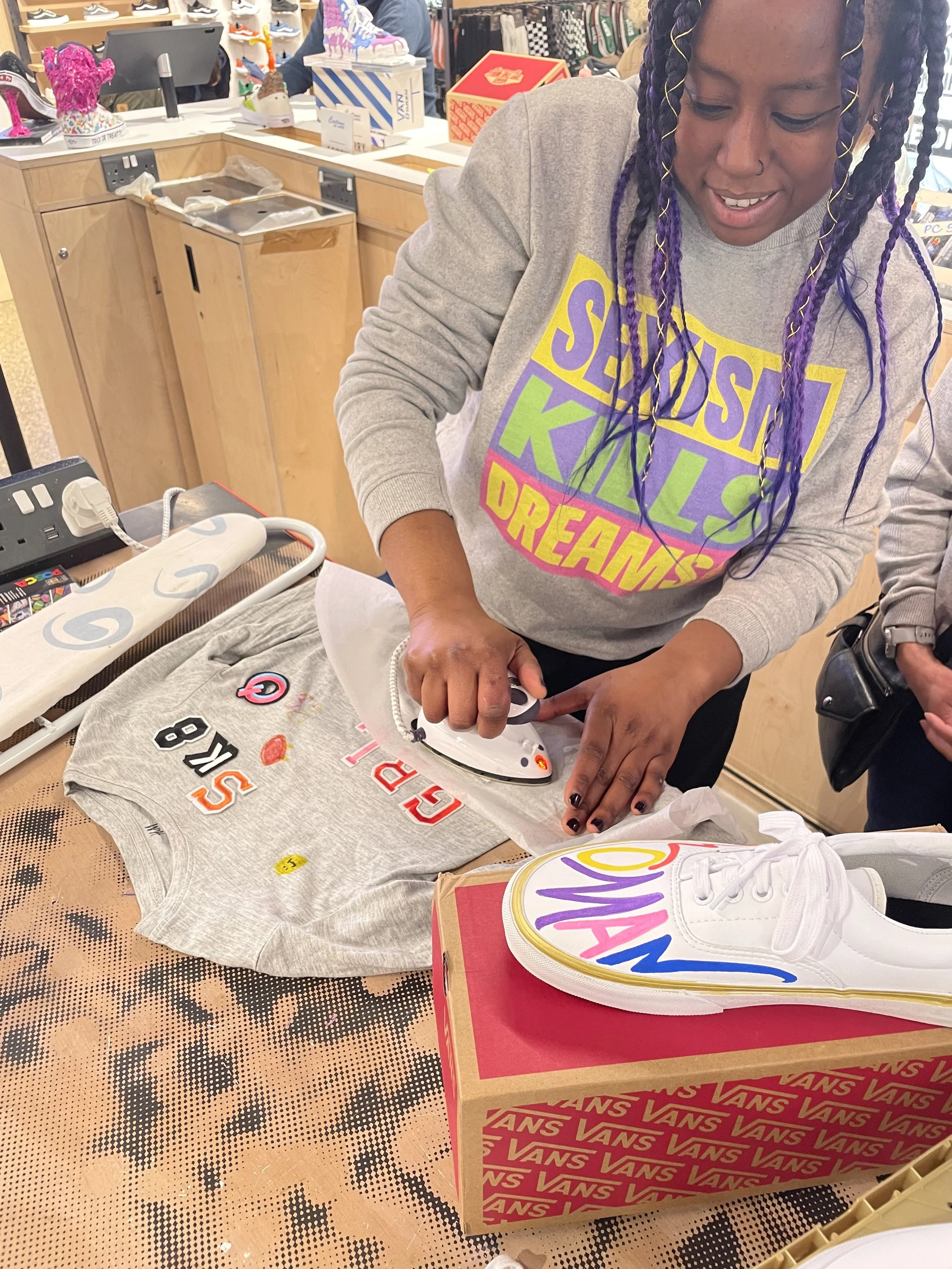
She frequently displays and sells her design work at pop-up shops and galleries. The casual setting of a pop-up gives Nadina Ali the chance to talk with people and share the meaning behind what she creates - much more than what is able to be done if the piece is displayed in a gallery with just a small plaque to introduce her and a brief summary of the deep meanings of her posters and murals. Her audience outreach attempts are successful in providing the public with justification that art really is for everyone as she proclaims with her poster seen in the previous slide.
In “The Black Experience in Design”, Emory Douglas introduces the idea that the unique experiences of BAME designers are crucial to the industry and the furthering of inclusivity in artistic practices; “Their unique experiences... offer invaluable insights into the possibilities for understanding our collective experiences.” I believe that, in the case of Nadina Ali, her experience of witnessing underrepresentation and it affecting the beginning of her career does provide such a valuable perspective on this wider issue. Her relation to this quote makes her a perfect example for the argument I have presented for this module; Nadina Ali is underrepresented within the graphic industry and she overcame adversity to then centre her career around inspiring others and challenging the roots of the representation issues.
References
About — Nadina Did This (2014). Nadina Did This. [online] Nadina Did This. Available at: https://www.nadinadidthis.com/about-1.
Instagram.com. (2017). Nadina (@nadinadidthis) • Instagram photos and videos. [online] Available at: https://www.instagram.com/nadinadidthis/?hl=en
The Dots. (2021). The Dots. [online] Available at: https://the-dots.com/users/nadina-ali-155983.
Samaneh Mohammadkhani (2025). Meet the Maker - Nadina Ali. [online] Migration Museum Shop. Available at: https://shop.migrationmuseum.org/blogs/meet-the-makers/meet-the-maker-nadina-ali
Hemingway, M. (2021). Nadina Ali – Design by Women. [online] Design by Women. Available at: https://designby-women.com/nadina-ali/
Artuk.org. (2020). Decolonise Everything | Art UK. [online] Available at: https://artuk.org/discover/artworks/decolonise-everything-307669
Loughborough University. (2023). Your Black is…: LU Arts and Nadina Ali’s installation to celebrate Black joy. [online] Available at: https://www.lboro.ac.uk/internal/news/2023/june/nadina-ali-installation
Eastbourne Alive. (2023). Nadina Ali— Eastbourne Alive. [online] Available at: https://eastbournealive.co.uk/our-artists/nadina-ali
Artuk.org. (2021). Ali, Nadina, b.1984 | Art UK. [online] Available at: https://artuk.org/discover/artists/ali-nadina-b-1984
fatstudio.co.uk. (n.d.). Graphic Design & Illustration — F.A.T. Studio. [online] Available at: https://fatstudio.co.uk/Graphic-Design-Illustration.
Tate.org.uk. (2024). Nadina Ali Art Is For All Of Us poster | Posters | Tate Shop | Tate. [online] Available at: https://shop.tate.org.uk/nadina-ali-art-is-for-all-ofus-poster/29533.html
Berry, A.H., Collie, K., Penina Acayo Laker, Noel, L.-A., Rittner, J. and Walters, K. (2022). The Black experience in design : identity, expression & reflection. New York: Allworth Press.