Kruttika Susarla
Below is a factual, wikipedia style entry about designer Kruttika Susarla, accompanied with a written argument explaining why she is underrepresented both as a designer and in Indian culture, with a list of references.
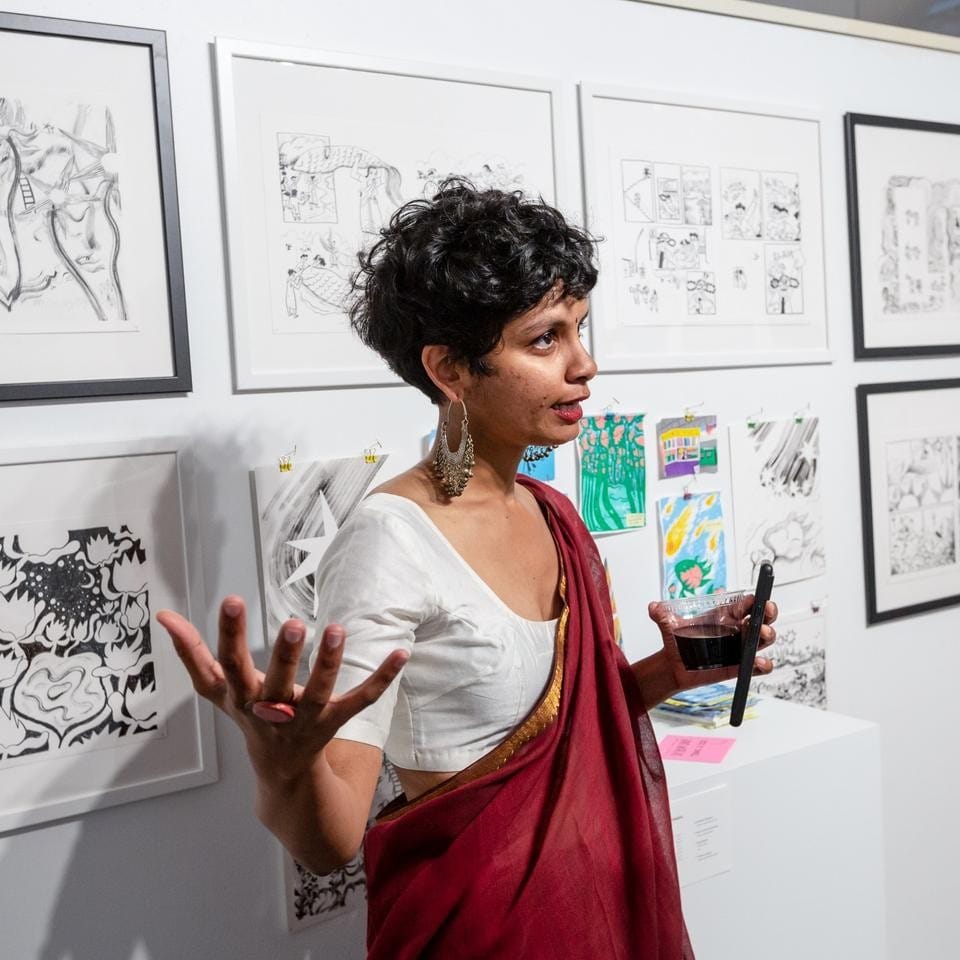
Kruttika Susarla is a cartoonist and illustrator from Andhra Pradesh, India, primarily working on illustration, picture books, and comics, currently living and working in the United States (Susarla, 2025).
Education
Susarla graduated from the DJ Academy of Design as a communication designer in 2013. Her inspiration for becoming a designer first came from one of her uncles, who studied at a design school. Her parents encouraged her to pursue this career path, and she believes that she knew early on that she would study either Fine Art or Design (PrintWeek India, 2019). During her first year at the DJ Academy of Design, Susarla believed that she would become a filmmaker, but grew fond of drawing as a way to share stories and experiences, which led to her eventually pursuing a career in illustration (PrintWeek India, 2019).
Career
Susarla began freelancing after her first internship in design school. After graduation, she worked at a few different studios while continuing to freelance alongside this (Girls Club Asia, 2019). Some of the studios she worked at include: NH1 Design, Studio Eksaat, and Dev Kabir Malik Design (PrintWeek India, 2019). Susarla graduated from the MFA in Illustration & Visual Culture (MFA-IVC) program in 2022, and has since stepped away from working within studios and has freelanced for outlets such as The New Yorker and Penguin Random House India (WashU Sam Fox School, 2025).
Feminist Type Project
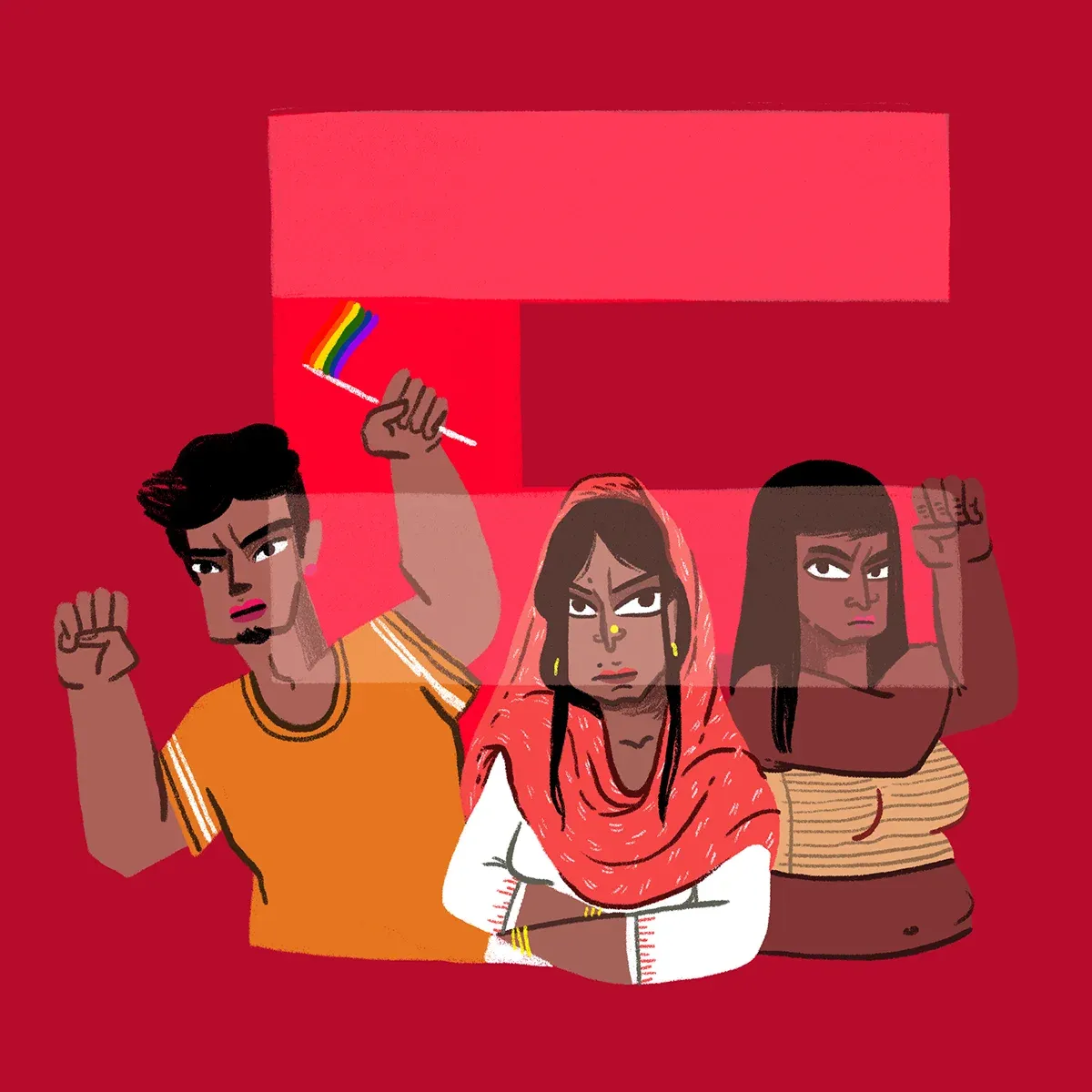
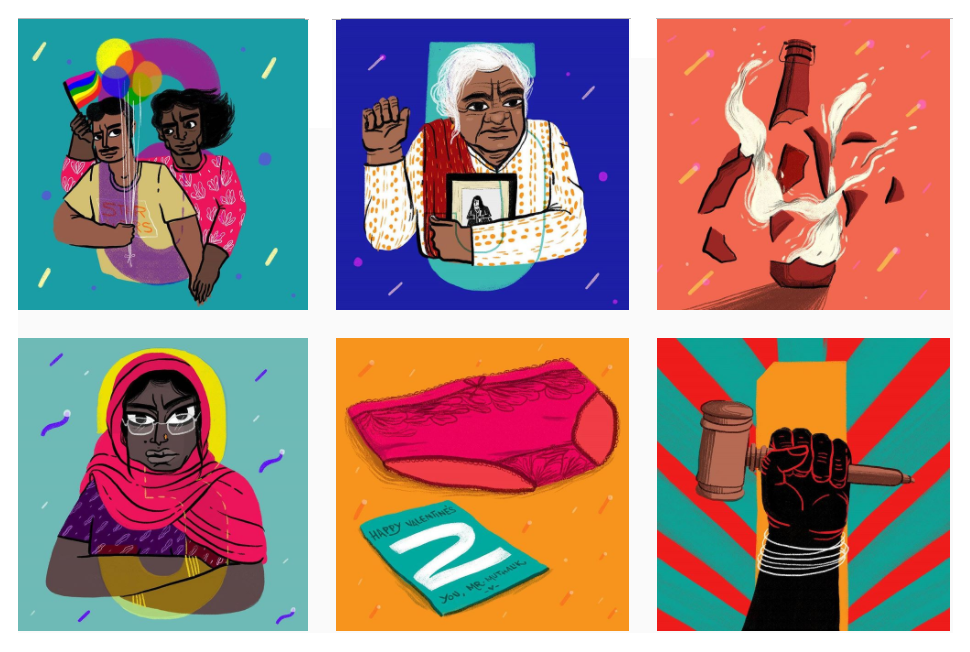
Susarla participated in the public 36 Days of Type project, and named her take on it Feminist Type. 26 concepts were based on feminist thought and the remaining days were based on Indian struggles for gender equality (Snoad, 2019).
She stated that she wanted to “work on a series that would contextualise the feminist movement within the realities and experiences of women and minorities in India. I sought to keep this within the realm of Indian feminism because the issues surrounding women and minorities here are so complex—it’s mixed with religion, caste, sexuality and majority of public discourse is devoid of these intersectional realities,” Susarla expected to receive backlash due to the feminist content of her project, but it actually opened up healthy dialogue and opinions (Feminism in India Team, 2017).
As seen in figure 1, Susarla used bold colours and type in tandem with detailed illustrations of individuals from minority groups.
Taxi Fabric Project
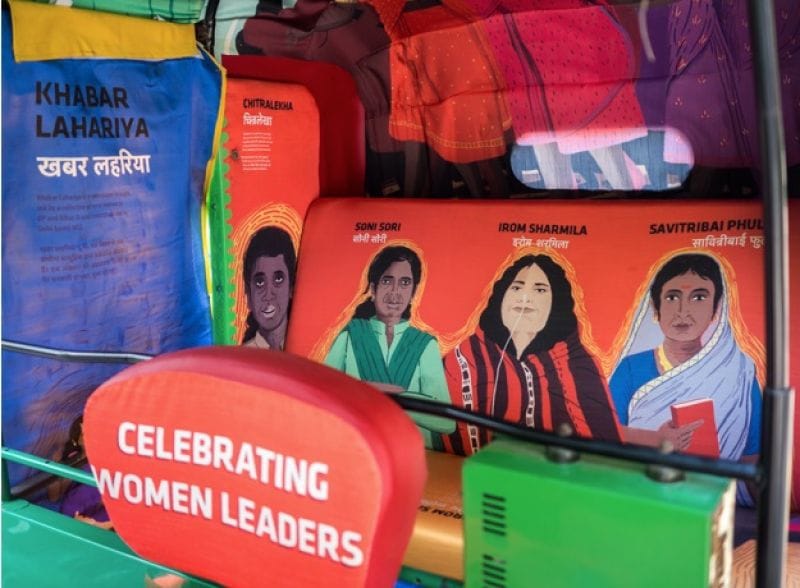
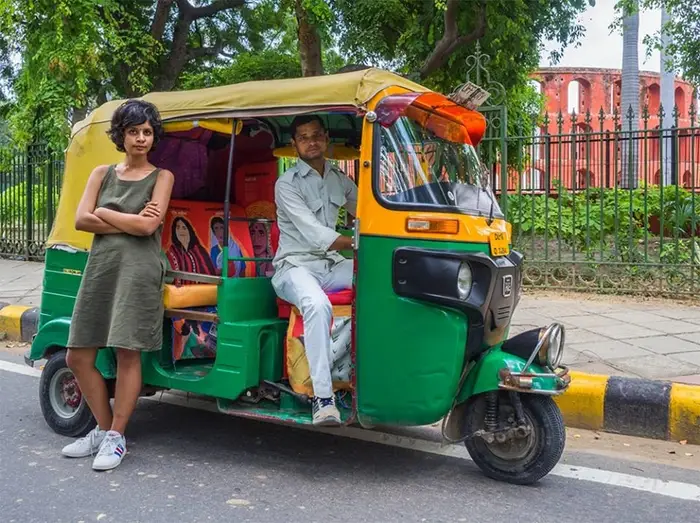
Susarla started this project, in collaboration with Manas Foundation and Mumbai-based Taxi Fabric, when she decided that the feminist movement was not spoken about enough in India (Thomas, 2016). She was eager to take on this project as she believed that an auto-rickshaw would catch attention more so than a graphic novel or other form of design (Sharma, 2017) She illustrated prominent feminist leaders such as Irom Sharmila, Savitribai Phule, Bhanwari Devi, Soni Sori, women-led media organisation Khabar Lahariya and more. She also provided text in both Hindi and English that passengers could learn from (Thomas, 2016).
Drawing on Rights
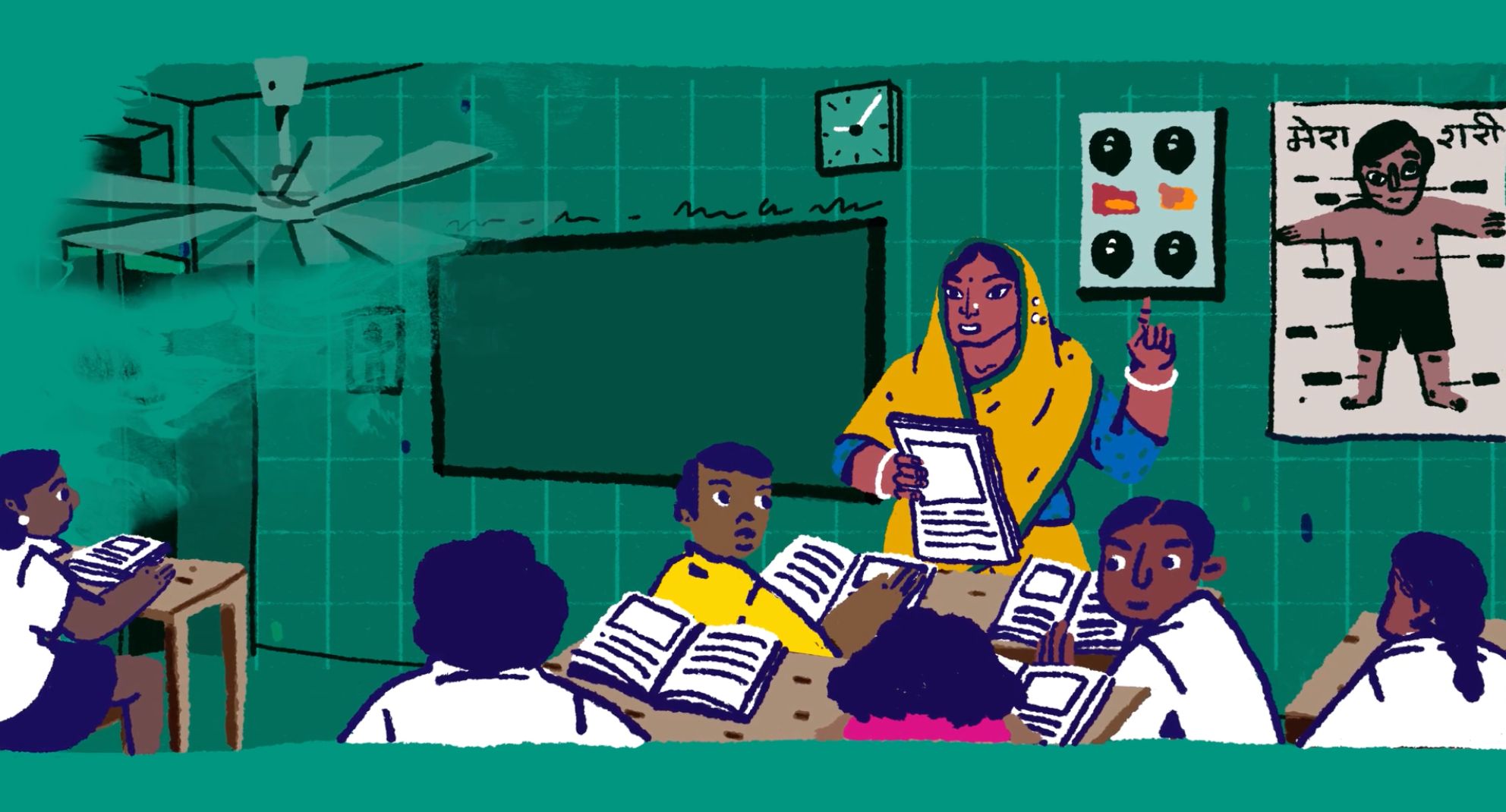
Susarla has worked as part of the organisation Positivenegatives, who create podcasts, animations and comics based on social, humanitarian and environmental issues and she is listed as a member of their team on the organisation website (Positivenegatives, 2023). Susarla has illustrated multiple projects for the organisation, but most significantly, she was the illustrator for Drawing on Rights, a collaborative project with Enriche, Barefoot College International and Hogan Lovells Citizenship, which concerns access to human rights in rural India (Positivenegatives, 2023). The project consisted of multiple comic videos, covering education, health, equality and violence, as well as an introductory video on human rights. The comics follow Asha, a teacher from a rural village, and the stories in these videos were based on real-life experiences of women at Barefoot College, so the stories would resonate more with the audience (Positivenegatives, 2023).
Argument
Underrepresentation is the inadequate representation of a group in a workplace, institution, media or in the general population. This is often due to systematic barriers and results in a lack of inclusion. Kruttika Susarla is an illustrator and cartoonist from Andhra Pradesh, India (Susarla, 2025). Her work is based around a breadth of issues, mainly concerning underrepresentation. Indian female designers often find themselves facing underrepresentation due to several factors, such as subconscious gender bias, financial exclusion and a lack of senior role models (Sastry, 2023).
Susarla is significant within the theme of underrepresentation because her work subverts the predjudices in Indian visual culture, using illustration as a form of feminist activism.
Kruttika Susarla addresses this complex intersectionality in her work and challenges it as she feels that it is absent from mainstream media. As her work has gained significant recognition over the years, Susarla focuses on using the platform she has built to represent the voices of those who are underrepresented. This is done through her illustrations of diverse individuals, showing a range of body types, skin tones and facial features that directly counter dominant beauty standards in Indian media. By doing this, Susarla actively challenges the societal norms in India, giving her audience the opportunity to recognise bias and privilege.
36 Days of Type is one of Susarla’s most well-known projects. It combined type and her illustration style to convey issues surrounding Indian Feminism. Susarla stated that she “wanted to work on a series that would contextualise the feminist movement within the realities and experiences of women and minorities in India. I sought to keep this within the realm of Indian feminism because the issues surrounding women and minorities here are so complex—it’s mixed with religion, caste, sexuality and majority of public discourse is devoid of these intersectional realities” (Feminism in India Team, 2017).
As seen in these figures, Susarla’s illustrations for this project are expressive, while she utilises type to keep within the requirements for her project, the focus is the individuals she is showcasing. Illustration is an effective medium for this context as it draws attention with a range of colour and detail, allowing Susarla to highlight Indian feminism to her audience.
While Susarla anticipates controversy around the themes she illustrates, these issues simply reflect the structural barriers faced by women and minorities in India.
These barriers are evident in India’s employment sector, where even today, women remain underrepresented. 88% of employment in India is informal, leaving women with no worker’s protection, as well as a 34% gender pay gap in hourly wages, although this is narrowing over time. Male members of their families restrict the work women do and are told what would be suitable for them (Fromaget, 2020). The book ‘Introducing feminism’ explores the idea of biology is destiny, stating that “essentialism sees men as able to think logically, abstractly and analytically, while women are mainly emotional, compassionate and nurturing creatures” (Jenainati, 2019, p. 10). The fact that male family members restrict the work of women in the family, due to what they believe is suitable, could suggest that they take on this essentialist ideology. Susarla’s designs intervene with gendered ideologies, by highlighting women, uplifting them and challenging patriarchal norms.
Overall, Kruttika Susarla’s practice is significant within the theme of underrepresentation as it questions the visual standards of Indian culture. Susarla recognises that design choices are political, and challenges inequalities rather than reinforcing them. Through illustration, she provides an educational tool that reveals the experiences of minorities, bringing light to their situation in the hopes that it will encourage reflection upon issues that lie within Indian societal norms.
Bibliography
Feminism in India Team (2017) Meet Kruttika Susarla – The Artist Behind 36 Days Of Feminist Type. [Online]. Feminism in India. Available from: https://feminisminindia.com/2017/05/04/kruttika-sarla-36-days-feminist-type/ [Accessed 22nd November 2025]
Fromaget, M (2020) Gender (in)equality in India: Women and the informal economy. [Online]. AXA Investment Managers. Available from: https://www.axa-im.com/gender-inequality-india-women-and-informal-economy#footnote4_P2V6V7RaC8R2ElRUTM7v6X-6VWwKalh4LizzBd0qeyE_kXZ2E1kWbxs7 [Accessed 23rd November 2025]
Girls Club Asia (2019) Meet visual designer and comic maker from New Delhi, Kruttika Susarla. [Online]. Girls Club. Available from: https://girlsclub.asia/meet-the-artist/kruttika-susarla/ [Accessed 18th November 2025]
Jenainati, C., Groves, J. and Milton, J. (2019) Feminism: A graphic guide. London: Icon Books Ltd.
Kruttika Susarla (2025) About – Kruttika Susarla. [Online]. Kruttika. Available from: https://kruttika.com/about [Accessed 18th November 2025]
Positivenegatives (2023) Drawing on Rights. [Online]. Positivenegatives. Available from: https://positivenegatives.org/story/drawing-on-rights/ [Accessed 25th November 2025]
PrintWeek India (2019) Design Dialogue with Kruttika Susarla. [Online]. PrintWeek. Available from: https://www.printweek.in/features/design-dialogue-with-kruttika-susarla-41080 [Accessed 18th November 2025]
Sastry, V (2023) Bridging the Gap: Addressing the Design Disparities for Indian Women. [Online]. Medium. Available from: https://medium.com/@varshasastry.k/bridging-the-gap-addressing-the-design-disparities-for-indian-women-7e1c38d38fd3 [Accessed 29th November 2025]
Sharma, S (2017) Women power, rebranded. [Online]. Deccan Chronicle. Available from: https://www.deccanchronicle.com/sunday-chronicle/style-sutra/260217/women-power-rebranded.html [Accessed 25th November 2025]
Snoad, L (2019) Kruttika Susarla on using illustration to smash stereotypes around sexuality and gender. [Online]. It’s Nice That. Available from: https://www.itsnicethat.com/articles/kruttika-susarla-human-rights-watch-frida-illustration-290419 [Accessed 22nd November 2025]
Thomas, S (2016) This Delhi Auto Rickshaw Is A Salute To Badass Indian Women Leaders. [Online]. Buzzfeed. Available from: https://www.buzzfeed.com/soniathomas/this-delhi-rickshaws-badass-interiors-serve-as-a-primer-on-i [Accessed 25th November 2025]
WashU Sam Fox School (2025) Kruttika Susarla, MFA-IVC '22. [Online]. Sam Fox School of Design & Visual Arts. Available from: https://samfoxschool.washu.edu/people/alumni-spotlights/180-kruttika-susarla-mfa-ivc-22 [Accessed 18th November 2025]