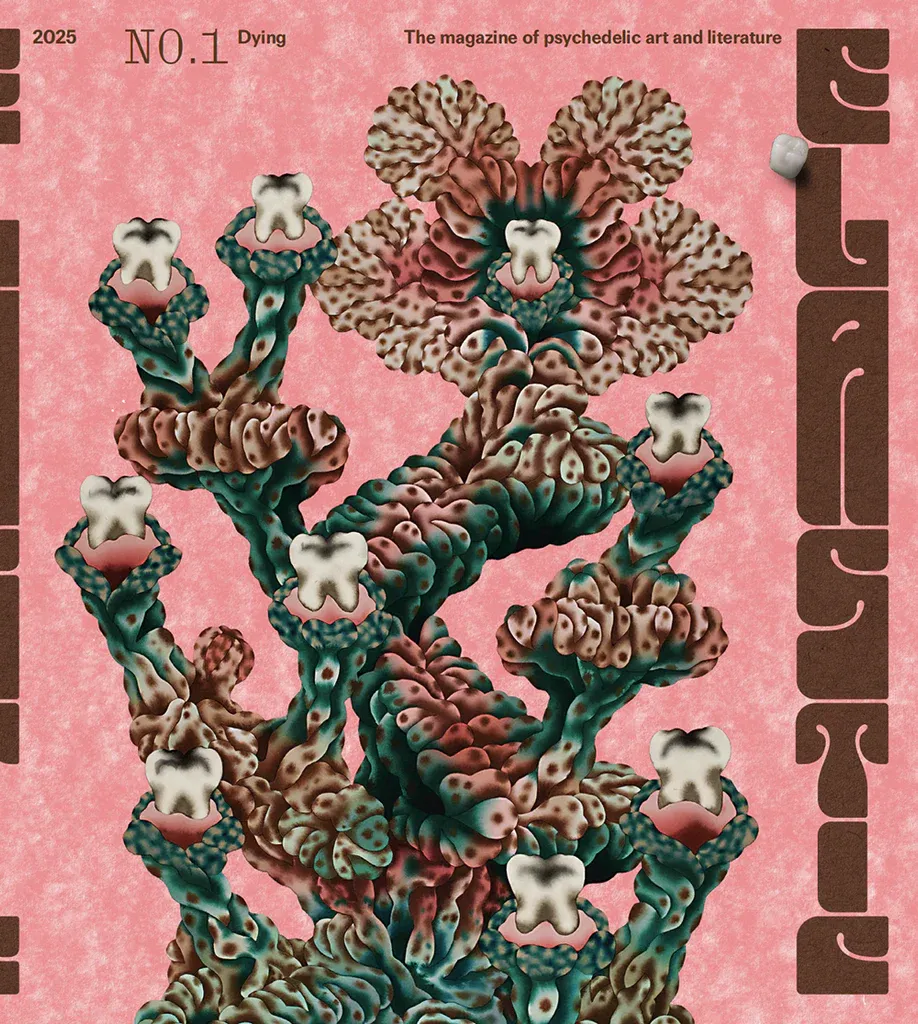
Beyondthecanon: Is my language too anti-woke?
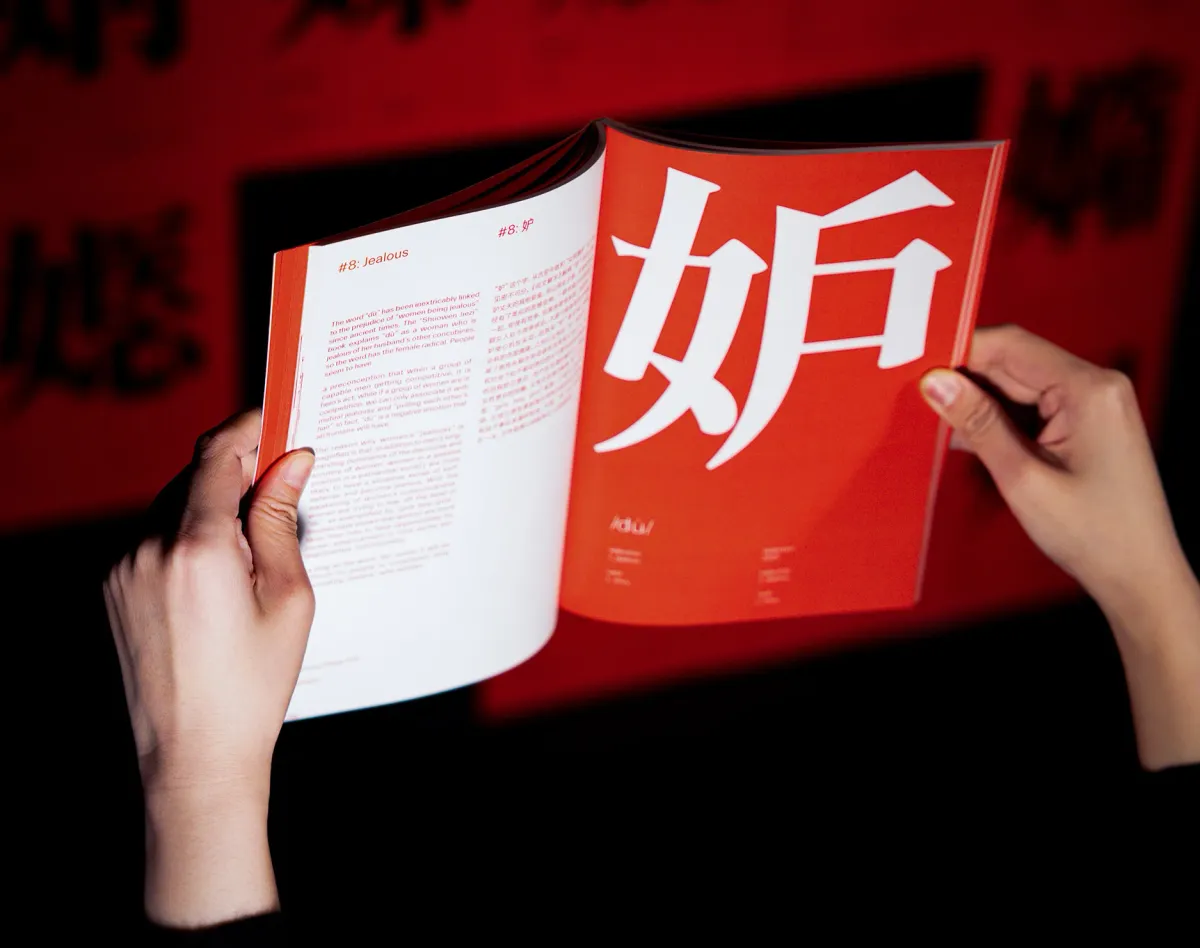
This is my wikipedia style page as well as my argument.
Zoe (Yu) Cui
Zoe (Yu) Cui is a Chinese multidisciplinary designer. Born in a Northeastern industrial city in China, their passion for art from childhood allowed them to travel across the world to the United States at 15 (VoyageATL,2023). A range of work from typography and visual communications to diverse exhibitions. They are now based in London, working at Southbank Centre (2025).
Selected Works
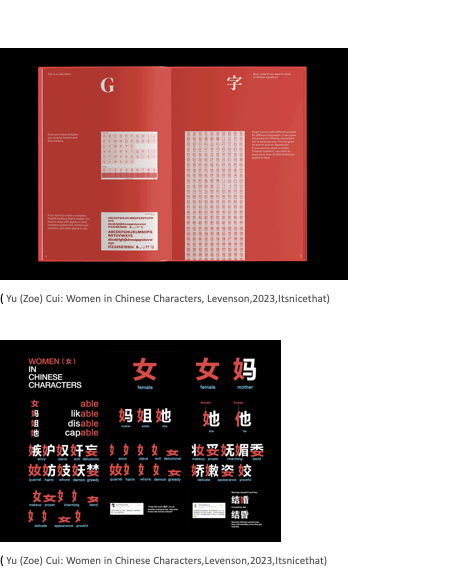
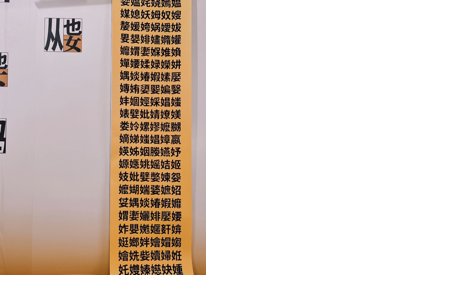
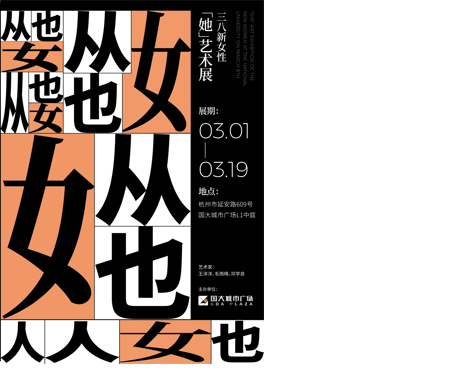
1. “Women in Chinese Characters” was completed in May 2023. It’s an interactive exhibition that explores the notion and stereotypical connotations of female radical characters in Chinese. The audience can visualise the silenced problems prominently through a collection of publications, motion graphic videos and immersive space. It brings attention to the issues of “how language shapes cultural attitudes towards people” (Thompson, 2025,). This topic is a part of the phenomenon of linguistic sexism and historical linguistics.
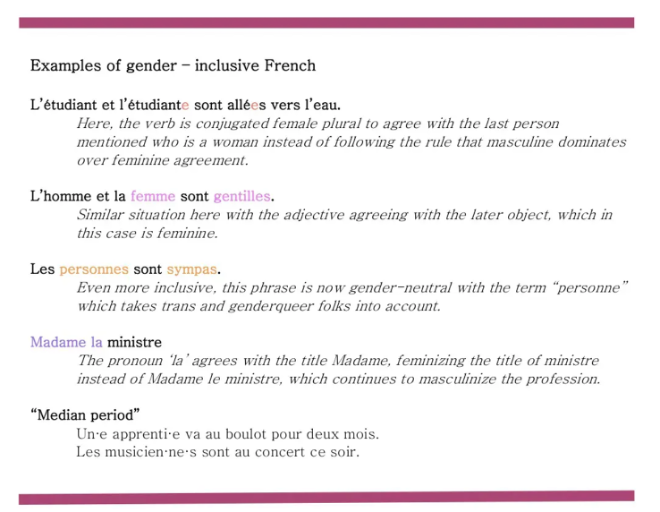
Cui was inspired by the injustice of Chinese women. The tension between traditionalists and gender -inclusive French movements. “They advocate that linguistic forms of gendered hierarchy contribute to the acceptable sexism that is still prevalent in France today” (Dauge-Roth, 2020, Frenchly). Eugenie Bidaut does this through “using type design as a way to experiment with other, more harmonious and less binary ways of practising inclusive writing.” allowing for more objective thinking (Thomas, 2022).
Cui’s research was inspired by a large collection of personal and intimate languages in the book “Politics of Design”. “Contemporary language” contains variety of “scripts” however, non-Latin ones lack this stemming from the outdated and implied hierarchy. (Pater, 2023: pg31) This shows how language can be creating barriers creatively due to dominance of the west. Cui examines this notion in “Women in Chinese Characters”. That form of character called “radical woman” has existed since Kangxi (Emperor of the Qing dynasty), a form of patriarchal power.
Cui mentioned that she used the article 妇女节艺术展:哪些女字旁的字,带有性别偏见? [Women's Day Art Exhibition: Which words next to women's characters have gender bias?] It was an exhibition made by Wang Yangyang, Mao Yuquing and Deng Xueliang; it was made to “empower women through highlighting all the radical characters used to condemn women and the gender bias and reflect the imbalance of social rights” (数英网, 2023).
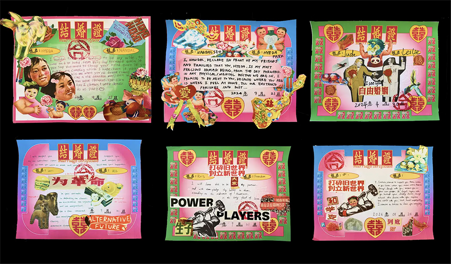
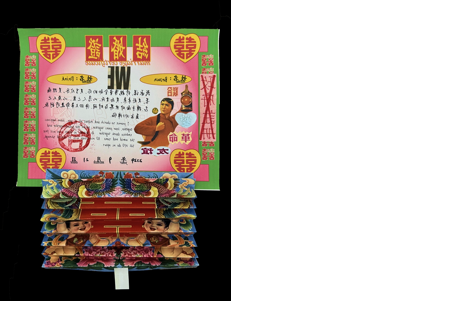
2. “Forever United Gay Hearts”, tackles queer love, through marriage certificates. Cui redesigns vintage Chinese propaganda posters which were once used for heteronormative messaging, highlighting the legal absence and silence of queer love as it is forbidden in many East Asian countries (Wilson, 2025). Cui runs workshops and creates “self-initiated projects” with ESEA (East and Southeast Asian) communities. (Cassidy, 2025).
Education
Cui attended Royal College receiving a bachelor’s degree in Communication Design (2017-23) and masters’ in Visual Communication (2023-24). (RocketReach) Cui’s global education has allowed them to get a broader sense of language and how differently it can be perceived and interpreted and the historical context behind different words. Their main drive is cross-cultural communication on brand design, as it’s integral to their cultural background. Cui described themself as a creator and is passionate about communication. Stemming from their childhood. Overall, in Cui’s work there has never been a separation between visual art and sociopolitical issues, as they denote what has been suppressed and been invisible to the public. Cui’s visual language is critical and thought-provoking as it may stem from culture but it has a ripple effect on many other countries as well. E.g., France and Spain. (Lin, personal communication, 2025)
Argument
Language is a complex system where it is made up but it's also full of patriarchal power, race, gender, age and sexuality The visual layout of a woman bending down naked to a man. Illustrates Judith Butler’s argument of “traditional expectation of gender” being based on how most people behave in their culture” during that time period. (Thompson, 2025). However, people make language include all of these attributes all the positive implications as well as the negatives. Many languages are archaic and have history thousands of years back.
Throughout history, language has involved if that means shortening words; adding slang to the dictionary or questioning past language. Women have been the victim of language denoting negativity or having sexist historical past. These systems ensure the subordination of femininity, gender and people who are perceived to be a woman. Language itself is a social construct however; it’s an integral part of society and can be seen as an “invisible structure of patriarchal oppression/domination. Traditional Confucian beliefs around gender are constantly linked to employment and professionalism and politics. “Language mirrors the society and its inequalities, therefore constructions about the ideal women, work to disadvantage generations of women throughout time” (Howard, 2017).
Radical Women in Chinese history
A plethora of categories within this radical system of words and many are intersectional with age, gender, appearance etc.
An example of this intersected gender and age within a hierarchy at home e.g. “zi” meaning elder sister highlighted the hierarchical power upon age in a home. The devaluation of women in Chinese philosophy (Confucian) proverb "a man at thirty is like a blossoming flower; a woman at thirty is like cow dung” (Howard,2017, The power of language) - this is a saying which demonstrates the perception of women when they are seen as unwanted and worthless. During the one child policy it is important to note that only sons were wanted and the daughters were disregarded and even though that isn't seen now this worship around sons and men is still a big factor in Chinese society. When mothers have sons, they could acquire status power within the household. In addition, women in households are always wrapped around a man sociolinguistic as the word for aunt ‘shen’ specifically recalls the wife of a father’s younger brother.
Women are often seen carrying the burden of the word jia (a woman marrying). The secondary meaning (to lay blame) suggests, marriage is connected to the implication of a burden on the husband’s family by taking on ownership of a woman.
A large part of the negative words that contain the female radical denote sexual immorality. These behaviours should be challenged and have been through exhibitions like Cui’s work. Characters aren’t developed verbally it is designed “The “woman” radical is found in the characters and words for “jealousy” (妒 dù), “suspicion” (嫌 xián), “slave” (奴隶 núlì), “devil” (妖 yāo).” (GoEast,2022)
Language isn’t just audible; it mirrors “ our systems of inequalities e.g. classism, white supremacy and cis- heteropatriarchy”. The colour “white seen as clean and neutral” it stems from the patriarchy of whiteness corresponding to goodness. Denoting how deep-rooted language is and how people don’t even question the words we use and the connotations it alludes to. (Mokoena.L, 2025)
Language is often seen as an invisible weapon and how powerful it can really be as soon as we see the towards, we use nearly every day and the implication it can have on others. As sexist ideology still lives on so will the language it creates, even though it might not be as blatant its still lives within our speech especially seen subtly in Chinese. Regardless that Chinese is grammatically genderless it still holds gender remarks. It isn’t something that can be fixed in a day. It’s continuously and adapting due to history and culture and willingness to change.
Bibliography
Cassidy, I. (2025) Yu Zoe Cui on design, community and cultural connection, Creative Lives In Progress. Available at: https://creativelivesinprogress.com/articles/zoe-cui (Accessed: 20 November 2025).
Dauge-Roth, C. (2020) France claims its language is already gender-inclusive. history shows it’s not. - frenchly, France Claims Its Language is Already Gender-Inclusive. History Shows It’s Not. Available at: https://frenchly.us/france-claims-its-language-is-already-gender-inclusive-history-shows-its-not/ (Accessed: 26 November 2025).
Goeast (2022) Sexism in the Chinese language, GoEast Mandarin. Available at: https://goeastmandarin.com/sexism-in-the-chinese-language/ (Accessed: 26 November 2025).
Howard, G. (2019) “The Power of Language: The Female Radical and the Representation of Women in Chinese Society”, Footnotes, 10. Available at: https://journal.lib.uoguelph.ca/index.php/footnotes/article/view/5237 (Accessed: 26 November 2025).
Lakarra, J. (2018) ANUARIO DEL SEMINARIO DE FILOLOGÍA VASCA «JULIO DE URQUIJO»International Journal of Basque Linguistics and Philology, How many language families are there in the world? Artikuluaren Ikuspegia. Available at: https://ojs.ehu.eus/index.php/ASJU/article/view/20195/18319 (Accessed: 26 November 2025).
Levenson, J(2023) Challenging the female radical characters of Chinese with artist Zoe Cui, It’s Nice That. Available at: https://www.itsnicethat.com/articles/zoe-cui-women-in-chinese-characters-project-graphic-design-120423 (Accessed: 23 November 2025).
Lin, E. (2025). Direct messages [Instagram to Zoe Cui].
Mokoena, L. (2025) A beautiful mess: Moving towards non-binary language, Futuress. Available at: https://futuress.org/stories/beautiful-mess/ (Accessed: 26 November 2025).
Pater, R. (2016) The Politics of Design. Amsterdam: BIS Publishers. (Accessed 20 November 2025))
Rocketreach lead intelligence: Phone and email finder. Available at: https://rocketreach.co/ (Accessed: 20 November 2025).
Sherry, M (2023) Berkeley professor explains gender theory | Judith Butler. Available at: https://www.youtube.com/watch?v=UD9IOllUR4k (Accessed: 26 November 2025).
Thomas, E. (2022) Eugénie Bidaut on tackling the erasure of women in design history and breaking down binaries in type, It’s Nice That. Available at: https://www.itsnicethat.com/articles/eugenie-bidaut-graphic-design-080322#:~:text=“Based%20on%20these%20observations%2C%20I,part%20solution%3A%20her%20typeface%20Adelphe. (Accessed: 04 December 2025).
Thompson, K. (2025) Judith Butler: Gender and Performativity , ReviseSociology. Available at: https://revisesociology.com/2025/02/24/judith-butler-gender-and-performativity/ (Accessed: 26 November 2025).
Voyage ATL Magazine | ATL City Guide. (2023) Rising stars: Meet Zoe (yu) cui. Available at: https://voyageatl.com/interview/rising-stars-meet-zoe-yu-cui-of-new-york/ (Accessed: 01 December 2025).
Wilson, A. (2025) Rewriting the rules: Yu Zoe Cui on language, love, and Soft Power, Our Culture. Available at: https://ourculturemag.com/2025/07/25/rewriting-the-rules-yu-zoe-cui-on-language-love-and-soft-power/ (Accessed: 21 November 2025).
数英网: 妇女节艺术展:哪些女字旁的字,带有性别偏见?Women's Day Art Exhibition: Which words next to women's characters have gender bias?) (2023) 数英. Available at: https://www.digitaling.com/projects/239378.html (Accessed: 26 November 2025).