5.2 Process Document
5.2.1 Public Space, Public Voice
Copy of Written Reflection:
For the first task of this module, we were asked to create a campaign to raise awareness about the neurodiverse experience in and of public spaces. We were aiming to make challenges that neurodiverse people face visible and spark conversations about inclusivity and what can be done. I worked alone for this task as I already had my idea from the brief - wayfinding difficulties as a neurodiverse person and how that could be challenged or improved based on more awareness.
I began with the decision to use PowerPoint to present my campaign as it is the presentation software that I am most familiar with at the moment despite recent usage of Adobe InDesign for other projects. The simplicity of PowerPoint was appealing as I wanted to focus on the content of my campaign instead of the arrangement of my page on InDesign with its less friendly-looking UI. I then began researching on the topic - neurodiversity and the accessibility problems with public spaces. I read from a range of sources including news articles and research publications that detail the struggles and inconveniences; providing me with extra detail to back up my idea - a piece of software (app/web) to provide insights on things that might be difficult for neurodivergent people like crowding levels in a certain train station, noise levels around an area, how accommodating a certain business may be to people's needs or disabilities etc.
5.2.2 Media Diet
I have created a separate post on Ghost for my media diet content as part of the brief - choosing three things that caught my attention this week and post them to the site with research for each. Who made it? How was it made? What are the entry points? This was a really interesting task for myself personally as I was able to delve back into content I'd consumed this week and think about it in a graphic designer mindset. The movie that I watched I had immediately made comment on the title sequence as typography was still fresh on my mind following the work I'd been doing. I really enjoyed relating my studies to my personal life because it reinforces the point that graphic design is everywhere and sometimes we aren't aware of it when we aren't thinking about it deeply. In this, I found a website called Art of the Title which I've uploaded separately for others to explore; it details the processes and technological details behind film title sequences.
5.2.2 Jitter Animations
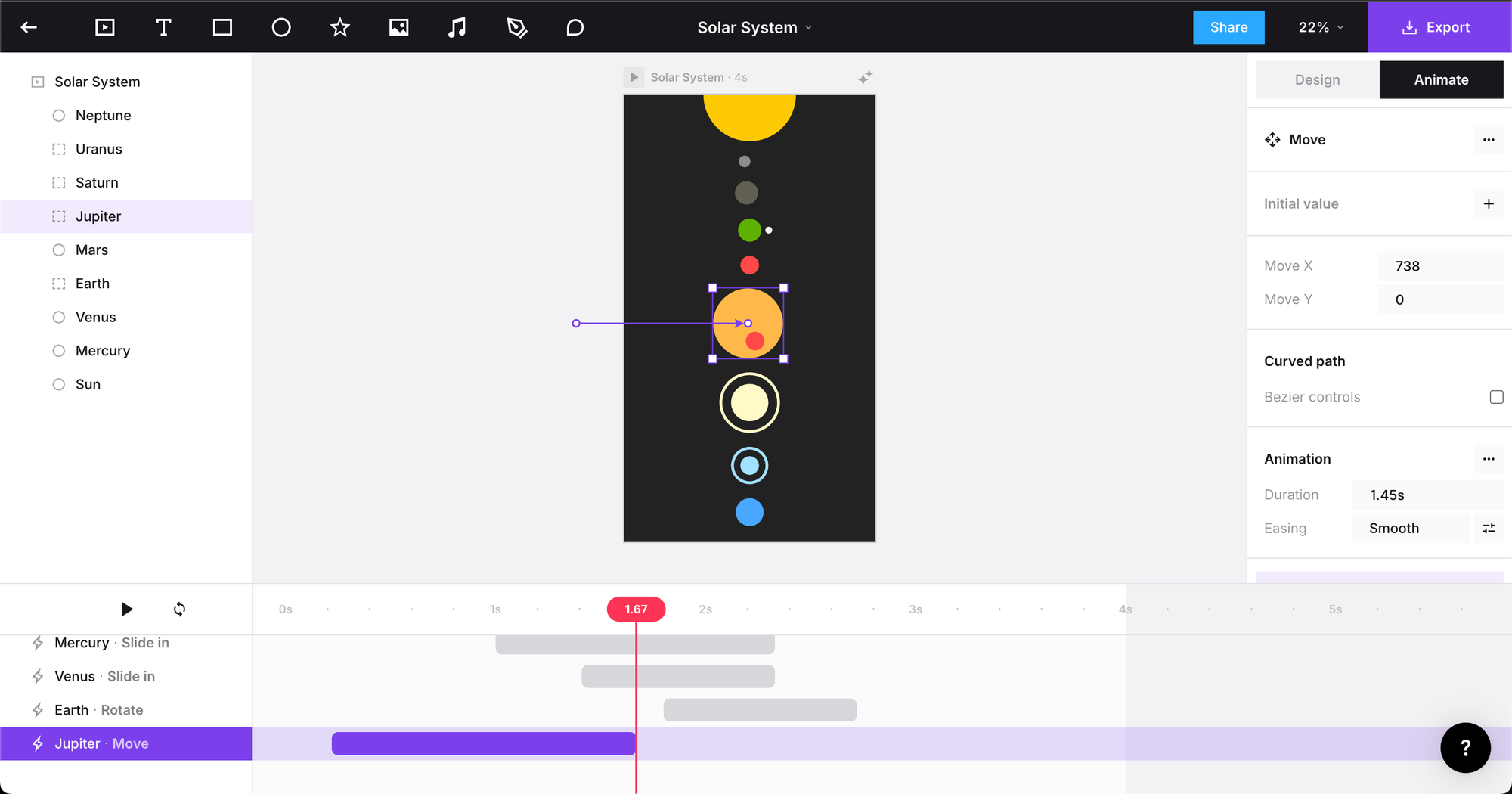
I uploaded my finalised Jitter animations to my CAGD journal following the workshop with Graham. I found this easy to follow from the beginning of the workshop and enjoyed the range of animation options I had for each planet of the system. I hadn't used Jitter before today - it was interesting to navigate and something that I can see myself revisiting in the future for a project or self-led experimentation.
5.2.4 Processing Workshop
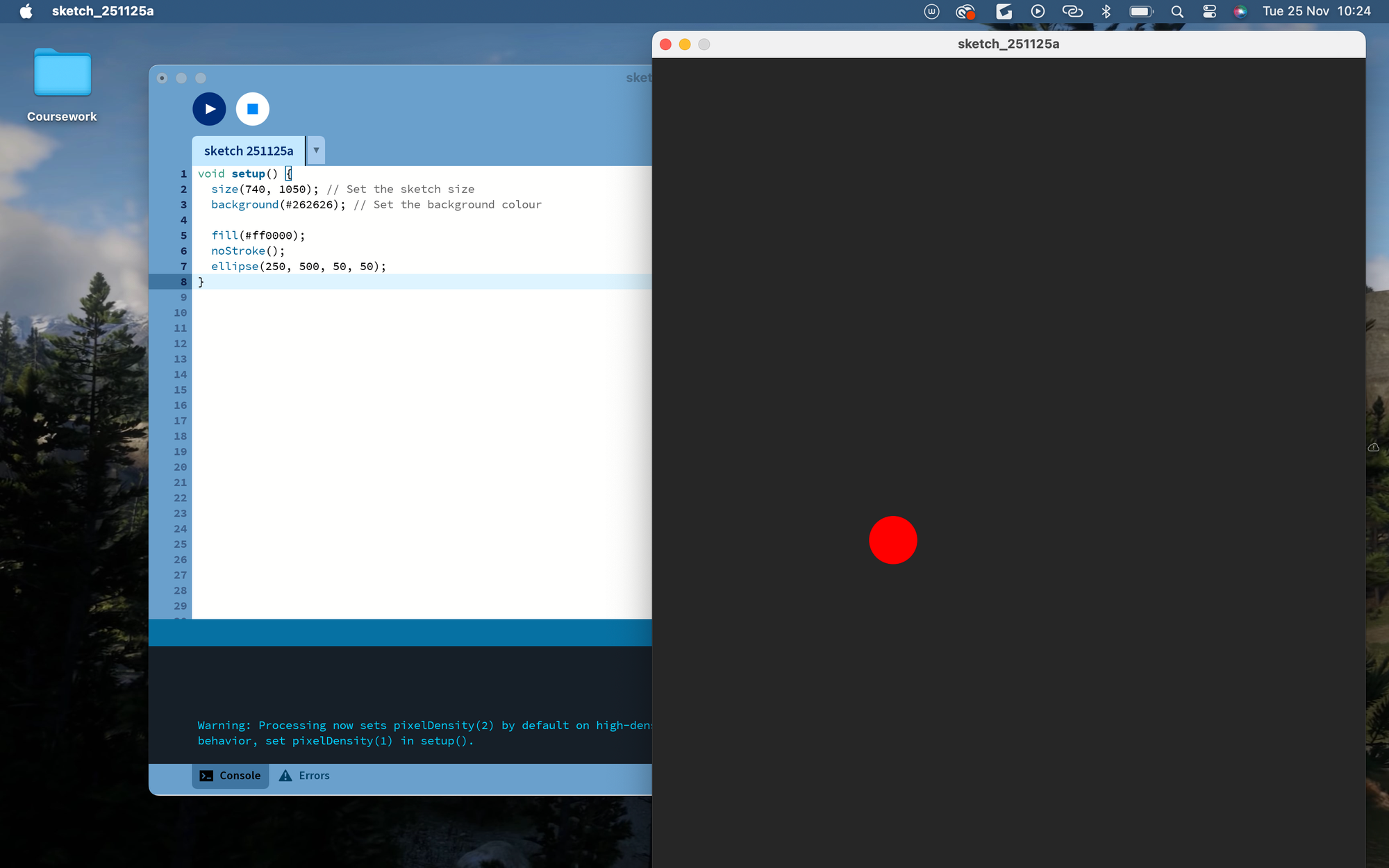
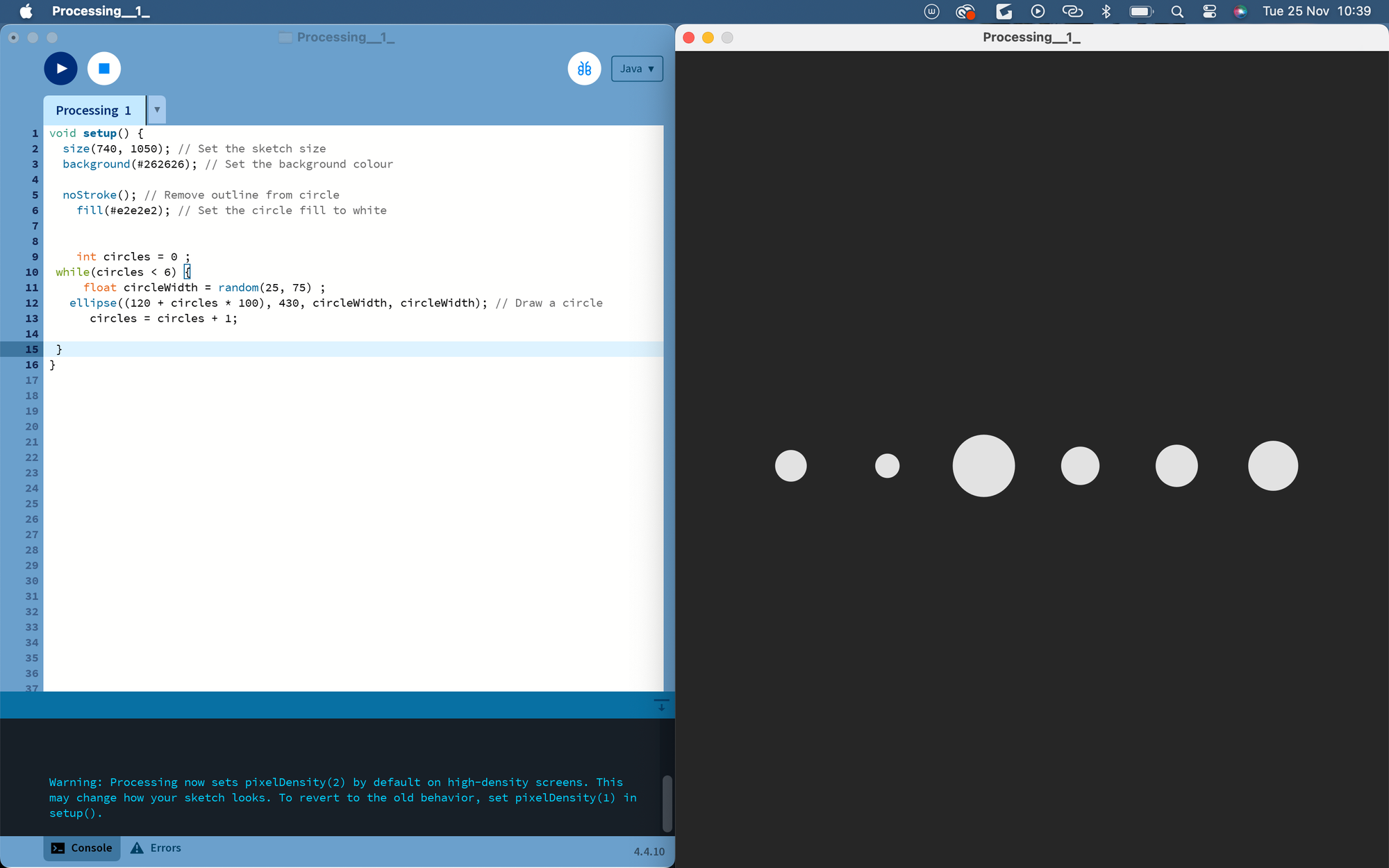
Using Processing to automate the creation of 100 unique cover designs was very eye-opening. I've never done anything in terms of coding before and I've always found the concept of code to be quite intimidating. Creative coding is a newfound concept that I have taken great interest in - I've had a tutorial with Graham (referred to in below section) and discussed what I can do moving forwards using this technology in ways that incorporate my other interests of the course such as visual identity and branding. Instead of manually producing each cover variation, we used lines of code to generate an entire series of outputs with a consistent structure based on the rules we set in the program. Being able to explore such visual outputs created from what looked to me like a blank page with some written instructions was so fascinating and something I definitely need to delve into further.

5.2.5 4𝑥6
Revisiting an old brief from Level 4 was beneficial to identifying my own creative processes - this isn't something I do often. Part of my creative process is to grind out the final iterations and the final product then make sure any of my initial processes have been documented adequately. I never go back to my submissions and see if my perspective on it has changed. For the 4𝑥6 task, I chose my most successful brief and an outcome that I've never done before to create uncertainty for myself and develop on skills I feel like are crucial to my development and future career as a graphic designer. I've created a separate post on Ghost for this task and its processes but, in reflection, I feel as though this is definitely going to improve my work process and allow me to look back on past projects and see what I can do, with skills and softwares I've learned since that project, to develop it further as I have done with the app prototype now having an animated loading screen!
5.2 Further Reading & Experimentation
During my tutorial with Graham, he explained to me that my love for specifically creating rules and guidelines in terms of visual identity in branding could be paired with technological skills to help me delve further into applying those visual rules in different ways. I mentioned that the recent Processing workshop we did was fascinating to me and, as someone who plays a lot of games, was something I was interested in looking into as I've always been put off by the idea of coding seeming complicated and for very technologically-advanced people.
Here are the links he sent me:
https://news.design.systems/issues/1#start
-> https://www.patrik-huebner.com/method/
https://reas.com/process
https://flexiblevisualsystems.info/
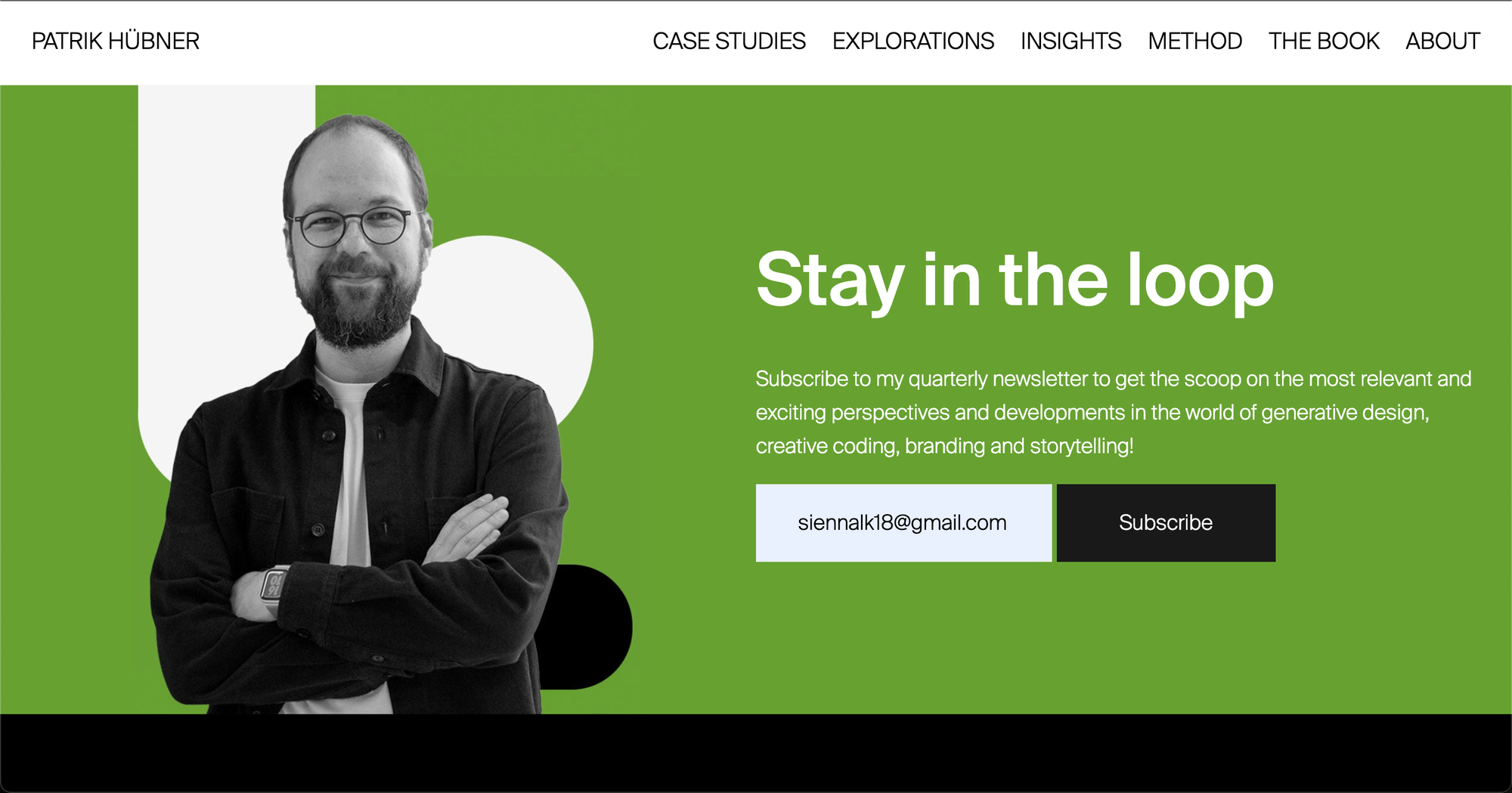
I was particularly interested in Patrik Huebner and his work with generative design. I've never thought of a merge between branding and coding in THIS WAY - using coding to create a set of rules that create a beautiful visual image.
https://www.patrik-huebner.com/creative-coding/generative-shape-explorations/
I've subscribed to his newsletter to find out more about his works and processes 😼
Conclusion
Understanding the Technological Landscape
My personal design process does involve technology quite heavily. I rely on digital forms of notetaking and compiling my ideas before beginning a task, such as the notes app or opening a PowerPoint presentation.
I believe that there is a balance between established tools and emerging technologies as the established tools we have, eg. Adobe Creative Suite, have been proven over time through use by a wide range of creatives and professionals to where they are predictable and form the basis for the use of emerging new technology. New tools and apps can give us more efficient ways of doing things from the basis of the existing ones we've been using. It's nice having that foundation of the predictable softwares to then explore new ones as a new layer of depth.
I find myself over-relying on the Adobe Creative Suite for the sake of convenience and a lack of knowledge for alternatives. This module has opened my eyes to such a range of alternative options for different design processes and I am less inclined to open up Adobe software now when beginning to put any research or initial ideas into form.
Experimentation and Process
Recently, I have explored the following tools/technologies:
• Jitter
• Cinema 4D
• Processing
• WACOM Graphics Tablet
In the recently 4x6 project, the use of Jitter had a significant impact where I'd revisited an old brief to develop my outcomes using new software I've since been introduced to.
Coding and generative design have shaped my thinking as these were two things that I had never experienced before this module. I've been able to see generative design as something that I can use as a tool in my chosen approach of graphic design for my future which is branding and visual identity; inspired by the work of Patrik Huebner. Through these experiments, I was able to understand that my own process is flawed in how I limit myself to the known, predictable tools available to me which therefore limits what outcomes I can create. For example, I've never created an animation because I hadn't introduced myself to any software to do so.
There were definitely moments of failure through my exploration of Cinema 4D in Jon's workshops. It was very complicated initially and I struggled to follow along with the guidance because of the unfamiliar workspace and processes. From these, I learned to not close myself off from a tool or technology just because it is unfamiliar and looks complex - I thought the same of Adobe InDesign when I first used that and I am now very familiar with it!
Other prompts previously covered.
Reflection and Summary
This year, I've learned some important things about technology and design including the need to not rely on the common technologies provided to me as a student. The transition from student to graphic designer, to me, is where you move away from the typical suites of softwares and explore new ones like ones I've now learned. My perspective has widened and I think it's revealed a lot about my creative identity and values and how I have been close-minded with my design process leading up to this point in my academic development.
In the future, I definitely am going to explore the pathway of generative design for visual identity as discussed with Graham to link my recent 5.2 studies with my future career.