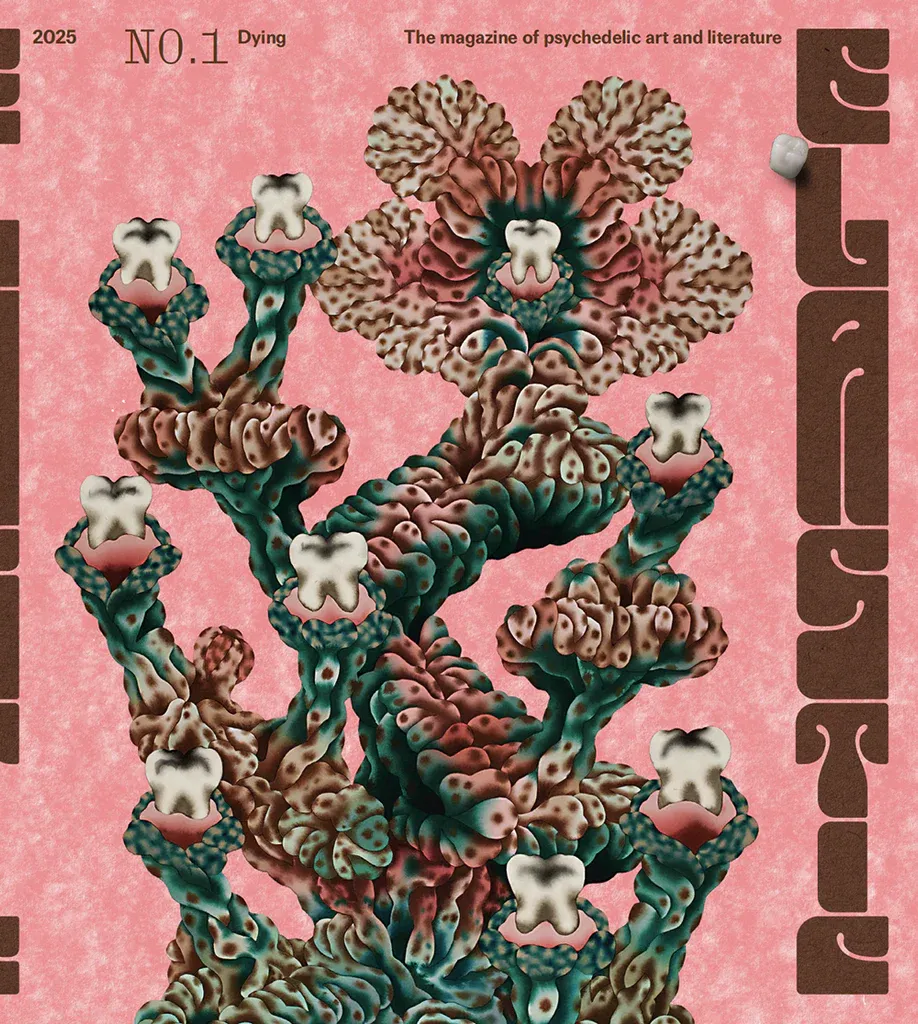
5.3 part 2 Wikipedia style page #beyondthecannon
Biography
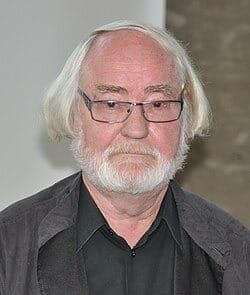
Fabian-Lilian Korner also known as Lilian Korner is a legally blind art science theorist and inclusion activist (born 1996) raised in Nordhorn, Lower Saxony, Germany they initially studied philosophy, German and art history in Düsseldorf. Since 2021 they have been part of the interdisciplinary Master of Aesthetics at Goethe University. (Koner, n.d.)
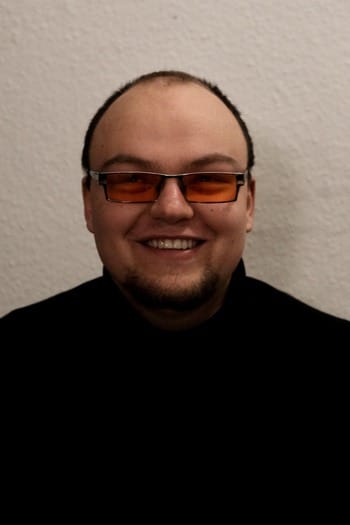
In Frankfurt they went into early childhood blind art and cultural sciences, and increased in the study of sensory perceptions as a tactile researcher. As a member of the autonomous inclusion department they support the student body at Goethe University Improving study conditions for chronically ill and disabled students. They have been a cultural scientist and inclusion activist since 2022 in Frankfurt and the surrounding area involved in improving cultural participation of blind/visually impaired people. (Koner. F, n.d.)
Korner works predominantly with Frankfurt museums; (MMK) Museum fur Moderne Kurnst, museum Angewandte Kunsy. (Magel. V, 2024)
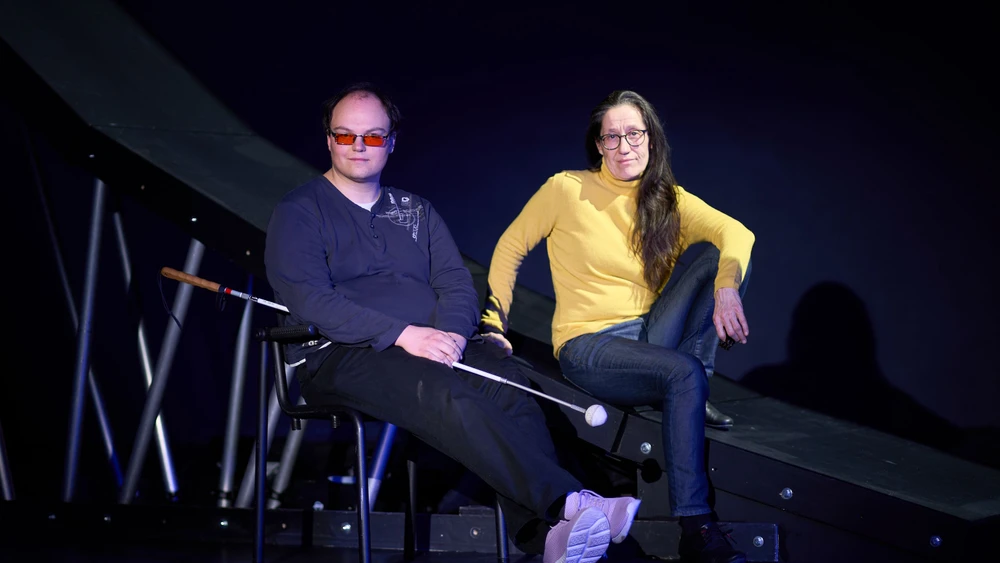
Their work with the (MMK) Museum of Modern Art in Frankfurt

In 2023 they initiated the “MMK with all senses format"(MMK, n.d.) as a guide, a guided tour examining non-visual moments within exhibitions. The format asks which aspects of an artwork can be opened up through hearing, smelling, and touching. For example they would prompt their audience to engage with audio-visual spatial installations through sound, or let them explore the surface and weight of ceramics art. (Korner. L, 2025).
To properly use their practices of the creation of a multi-sensory experience they with the approval of the (MMK) allow the temporary lift the no touching for specific exhibits, but once the tour was over the ban was enforced again. (Korner. L, 2025)
Views on blind and visually impaired treatment in museum spaces
“As places of seeing, art museums are exemplary for demonstrating the invisible side of discrimination against the Blind and visually impaired people.” - Fabian-Lillian Korner (Korner. L, 2025). They show their belief and knowledge of Germany's lacking of keeping up with “Anglo-North American countries on the Rights of Persons with Disabilities (UNCRPD)” - Lilian Korner, (UNCRPD,2006) this is according to the 2023 United Nations state review report (United Nations,2023).
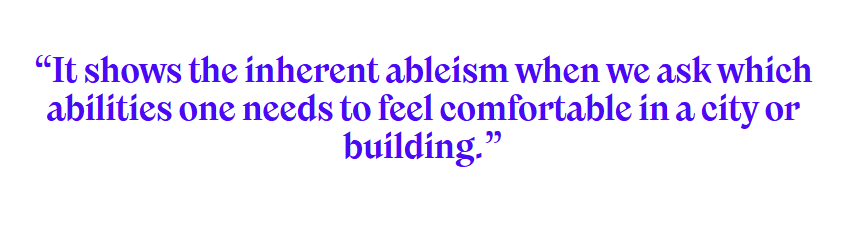
They reference the Finnish architect Juhani Pallasmaa (Wikipedia, 2025) as they describe the orientation of the architecture going towards visual features “side-lining hearing, the sense of temperature, and other perceptions when it comes to navigating a building” -Lilian Korner (Korner. L, 2025) this is what they describe as “ocular-centrism” (Korner. L,2025)
They often use themselves as a personal reference for the audience to understand the blind point of perception “What I am or am not allowed to feel is beyond my control, and is often preservation considerations that dictate what and how I am allowed to perceive.” - Lilian Korner (Korner. L, 2025)
Their work outside of the museum space
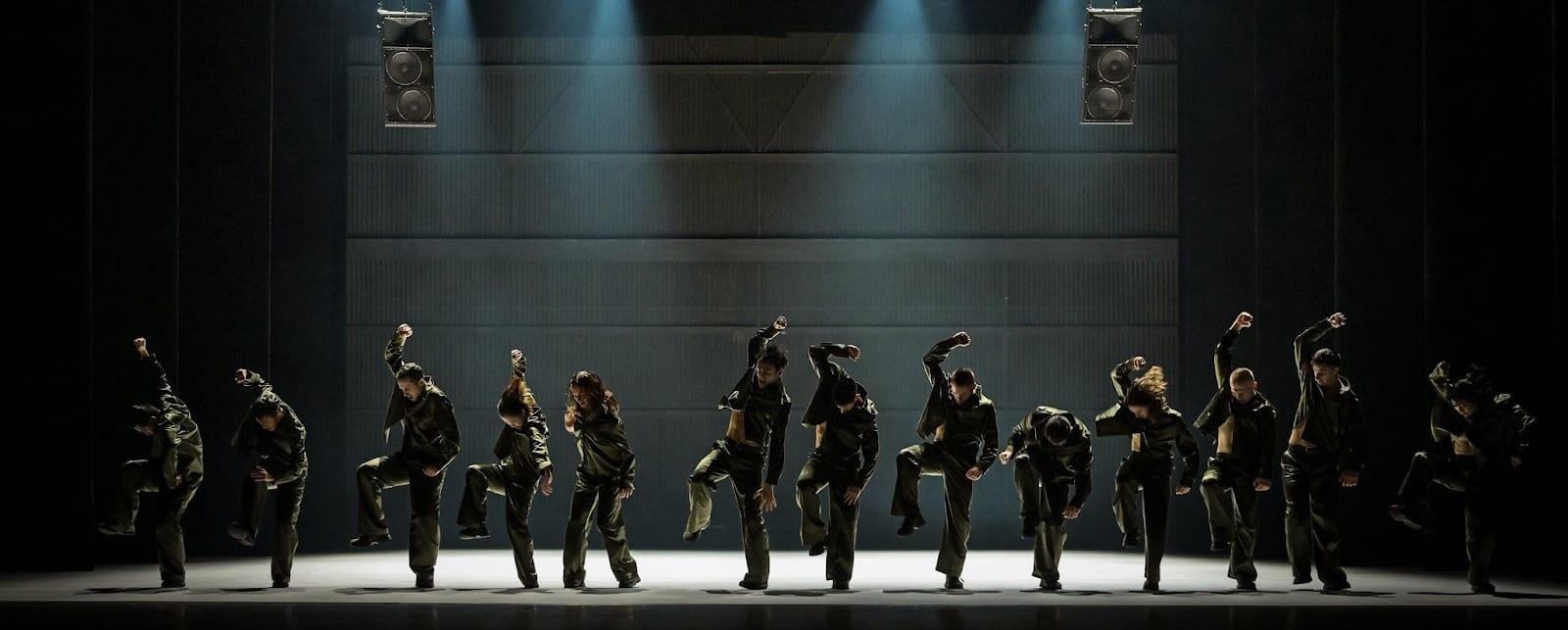
In 2024 working alongside other blind, visually impaired and sighted people; Melanie Hambrecht (Tanzhaus nrw,2025), Nine Blind (Benz. S, n.d.) and none credited persons and audio description author groups worked together for 4 months in a training program as audio description authors on equal footing to properly place the issues of the target group (blind/visually impaired) when experiencing dance performances in specific the dance "Chronicles" (a contemporary dance in Germany) (Tanz Plattform, 2024).
Argument for their inclusion
Blind activism by itself is a small voice in the ever growing chorus of activism in recent years (Kelly. C, 2010) but as Korner states “In Germany, I am one of few. Even if I repeatedly draw on discourse from English-speaking contexts, the place of my narrative remains Germany—a country, that, according to the 2023 United Nations state review report, is still lagging behind Anglo-North American countries when it comes to implementing inclusion measures as defined in the U.N Convention on the Rights of Persons with Disabilities (UNCRPD).” (Korner.L, 2025) this goes to further my the notion in of a need for more voices on not just blind ‘inclusion’ but co-design in fundamental areas that affect them, and the necessity for a wider range of voices from not just English speaking countries being amplified, platformed. And their message and information consistently put in areas that are easy to find and spread. Fabian-Lilian Korner specifically is difficult to find information about their works and messages and is so wildly spread out with little connecting links.
Fabian-Lilian Korner as someone who mediates exhibitions (MMK, n.d.) for both sighted audiences and the blind, while being blind themselves provides a unique perspective both as a participant and critic of museum culture that being a niche form of culture that most don't think twice about (Koustriava. E, 2023) and why would they? (RNIB, 2023) Something that has little to no impact on their lives that they'd never go out of their way to learn about and especially if that information is difficult to get their hands on and too spread out on the internet, this is why works from artists and activists like Korner is so necessary to have in one place such as this, with connections to others in the same field to open up a whole network of thoughts and ideas to people around the world, to inspire, to shape and to mould people's perspectives to think about more just what happens in their small view point of not just art and artistic culture but how people of varying physical and mental abilities get through life.
“Art is not what you see, but what you make others see” - Edgar Degas (Volpe,2022), “Vision is the art of seeing what is invisible to others” - Jonathan Swift (Ross,2009). These quotes made by some of the most famous artisans in history show an unfortunate trend in the art loving and producing world, That to see is to experience and if you fall out of that majority then its unfortunate but nothing can be done, this is even more evident in museums and historical sites where the lack of accessibility is truly evident (vocaleyes,2022) the normalcy of exclusion of the visually impaired is commonplace; a general ban on touching exhibits, basic if any audio tours, a lack of multi sensory experiences (Heritage fund, 2022).
In conclusion through the mixture of blind awareness and integration in the art perception space and the view point of how countries can and are so far behind in their pushes for co-design and awareness of others limitation especially through poor societal and business practices it should be more than evident that change needs to be made for the blind and visually impaired communities not just in lip serves of accommodations but with proper thought out design and work, with not only the comments and complaints by the public but through in-depth personal, first hand experiences from the ground up to properly show the care and dedication given.
Bibliography
(Online) Benz. S. (n.d.). ‘Audio description in dance’, Tanz, n.d. Available at :https://www.der-theaterverlag.de/tanz-international/magazine/tanz-international-edition-0425/in-practice-dancemap-john-cranko-schule-audio-description-in-dance/
(Online) Heritagefund.(2022) ’Report: museums and heritage sites need to improve online accessibility information’, Heritagefund, December 2022, pp 1. Available at: https://www.heritagefund.org.uk/stories/report-museums-and-heritage-sites-need-improve-online-accessibility-information#:~:text=there%20were%20no%20major%20improvements,online%20access%20information%20at%20all
Hessisches Staatsballet (n.d.) ‘Chronicles’ [online] Germany: Available from: https://www.hessisches-staatsballett.de/en/stuecke/chronicles/ [accessed 05/11/25]
(Online) Kelly. C. (2010) ‘Wrestling with Group Identity: Disability Activism and Direct Funding’, DSQ, August 2010, pp 1. Available at: https://dsq-sds.org/article/id/1115/#:~:text=Partially%20because%20of%20expanding%20disability,to%20policy%20and%20program%20development
(Online) Koustriava. E. (2023) ‘Spatial and Information Accessibility of Museums and Places of Historical Interest: A Comparison between London and Thessaloniki’, MDPI December 2023, pp 1. Available at: https://www.mdpi.com/2071-1050/15/24/16611#:~:text=Previous%20work%20has%20emphasized%20the,on%20the%20paintings%20%5B43%5D
Fabian Korner (n.d.) About me [online] Germany: Available from: https://fabiankorner.de/tastforschung [accessed 10/11/2025]
(Online) Korner, L. (2025) ‘Feeling The Museum, Toward Multi-sensory Mediation’, Futures, April 2025, pp 1. Available at: https://futuress.org/stories/feeling-the-museum/
(Online) Magel. V. (2024) ’Why the theater should be audible and fine art palpable’. Frankfurter Allgemeine, March 2024, pp 1. Available at: https://www.faz.net/aktuell/rhein-main/fabian-korner-bietet-barrierefreie-kunstfuehrungen-an-19606817.html
(Online) Magel. V. (2024) ’Why the theater should be audible and fine art palpable’. Frankfurter Allgemeine, March 2024, pp 1. Available at: https://www.faz.net/aktuell/rhein-main/fabian-korner-bietet-barrierefreie-kunstfuehrungen-an-19606817.html
MMK (n.d.) ‘MMK with all senses’ [online] Germany: Available from: https://www.mmk.art/de/whats-on/mit-allen-sinnen-64/?ref=futuress.org [accessed 20/11/2025]
MMK (n.d.) ‘MMK with all senses’ [online] Germany: Available from; https://www.mmk.art/en/whats-on/undermining-the-immediacy-11 [accessed 21/11/2025]
Ross, Breaking the 4th wall (2009). ‘“Vision is the art of seeing what is invisible to others”’ [online] Available from: https://alwaysactingup.wordpress.com/2009/08/26/ [accessed 26/11/2025]
(Online) RNIB. (2023) ‘What we know about public attitudes and understanding’. RNIB December 2023, pp1. Available at: https://www.rnib.org.uk/professionals/research-and-data/reports-and-insight/what-we-know-about-public-attitudes-and-understanding/#:~:text=On%20the%20whole%20people%20aren,among%20the%20public%20are%20worsening
Tanzhaus nrw (2025). ‘Sahra Huby HEY BODY?!’ [online] Available from: https://tanzhaus-nrw.de/en/event/2025/01/hey-body
Tanz Plattform (2024) ‘Dance Platform in Germany’ [online] Germany: available from:
UNCRPD. (2006) ‘Article 1 Purpose’ United nations: United nations. Available from: https://www.un.org/disabilities/documents/convention/convention_accessible_pdf.pdf#:~:text=Article%201:%20Purpose%20The%20purpose%20of%20the,society%20on%20an%20equal%20basis%20with%20others
United Nations. (2023) ‘Convention on the rights of persons with disabilities’ United Nations. Available from:
Vocal eyes (2022), ‘Heritage access 2022’ [online] Available at: https://vocaleyes.co.uk/research/heritage-access-2022/ [accessed 20/11/2025]
Volpe (2022), ‘“Art is not what you see, but what you make others see.”’ [online] Available at: https://streamlinepublishing.com/inside-art/art-is-not-what-you-see-but-what-you-make-others-see/ [accessed 15/11/2025]
Wikipedia (2025), ‘Juhani Pallasmaa’ [online] Available at: https://en.wikipedia.org/wiki/Juhani_Pallasmaa