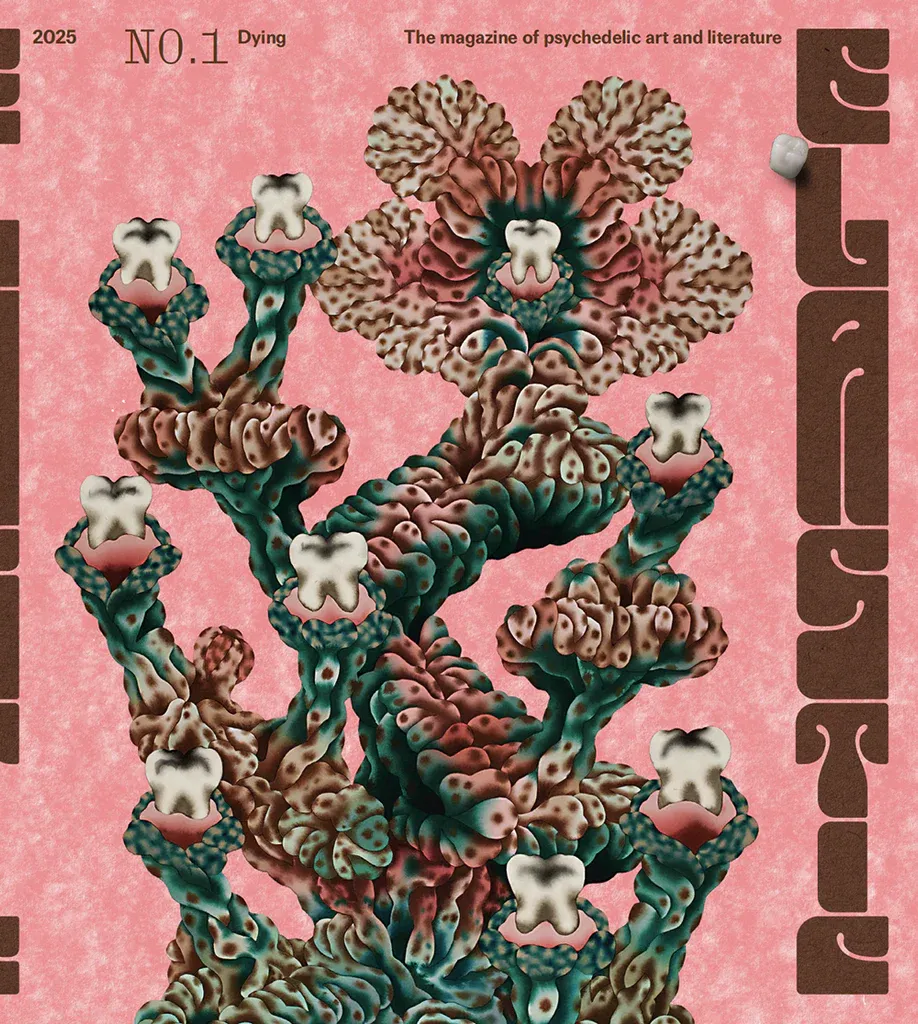
5.3 WIKI + ARGUMENT
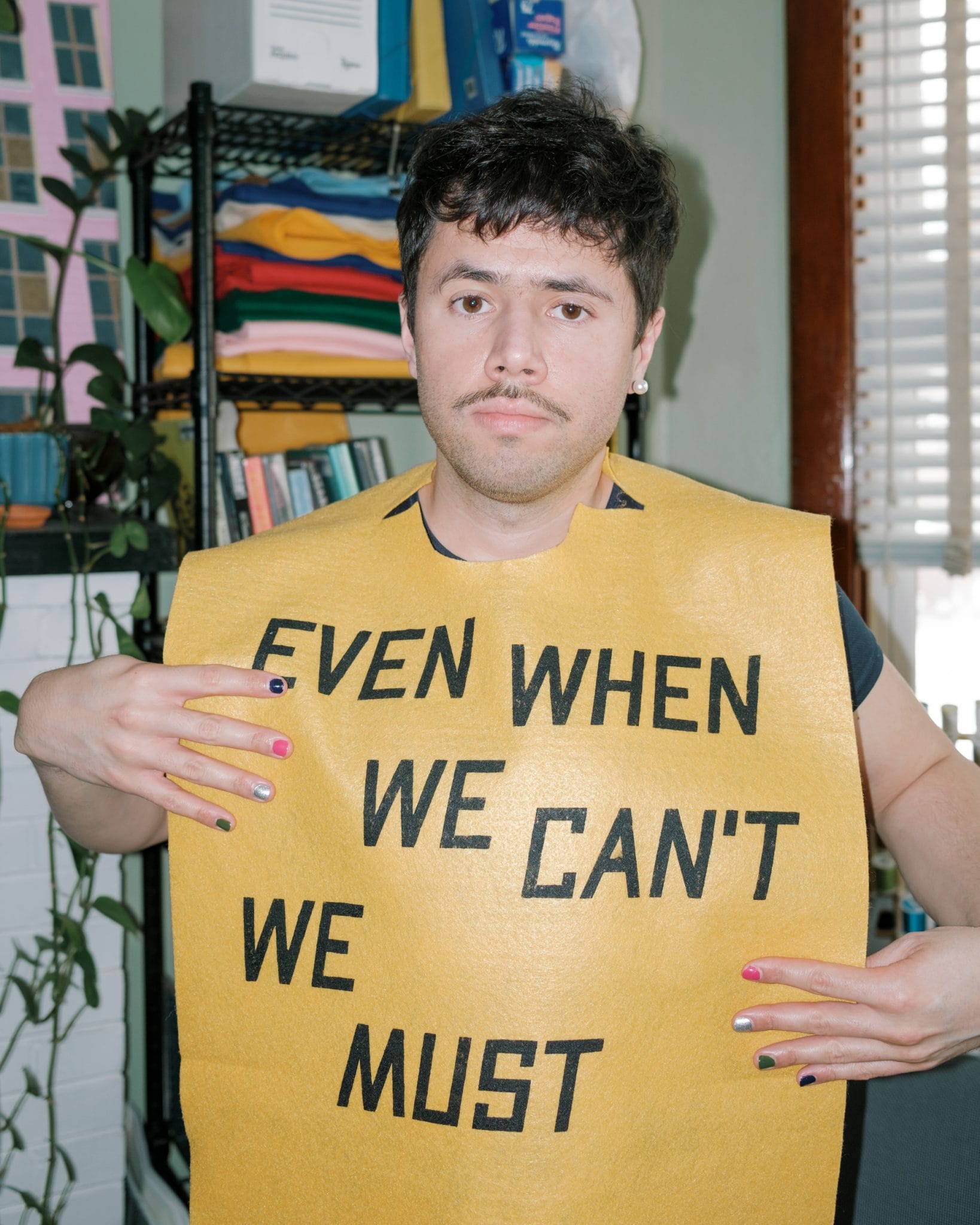
Nat Pyper is a Brazilian-American alphabet artist based in Brooklyn, NY, with a focus on fonts, video, performance, and poetry linked to ongoing research on queer publishing histories. [1] Pyper graduated from the Milwaukee Institute of Art and Design with a Bachelor of Fine Arts and from the Yale School of Art with an MFA in 2018. [2] They are best known for their book ‘A Queer Year of Love Letters | Alphabets Against Erasure’.
THEMES –
Pyper uses ‘publishing as a praxis and literacy as a tool for liberation.’ [2] Their work focuses on queer history and bringing light to the otherwise forgotten topic. Pyper does this through both type and spoken word. They aim to make overlooked queer history accessible to everyone through art.
Pypers’ work focuses heavily on queer anarchist publishing and the history of queer zines in particular. They have spoken about the lack of a “definitive map of queer zine history” [2] and how they don’t want to dig up this history, but recontextualise and reinvigorate the material, giving it a new lineage and perhaps a new meaning and history.
WORKS –
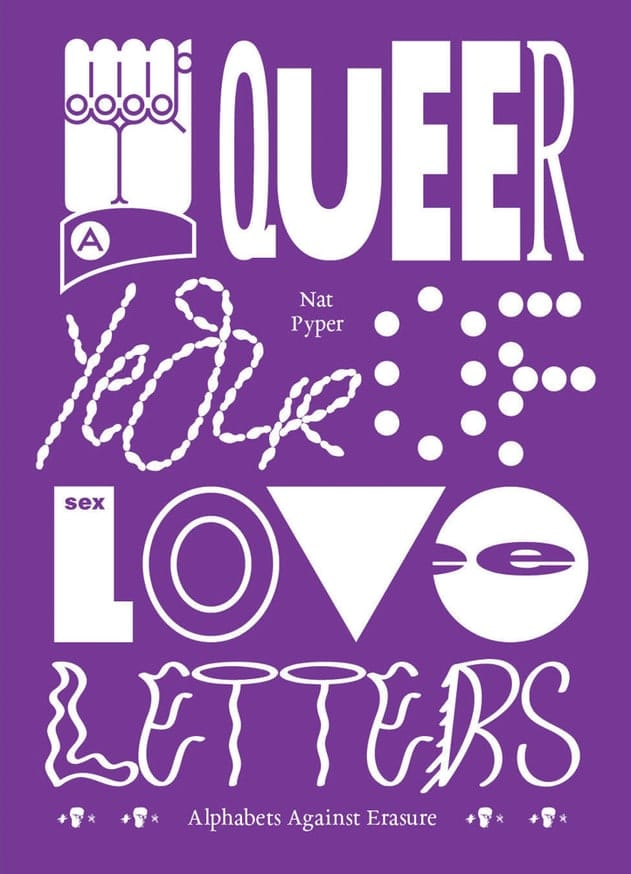
Pyper has many notable works, including Publishing is Pleasure, Love Handle: Plagiarism in My World Creates Community, and fonts such as Third World Gay Revolution font, Women’s Car Repair Collective, Moonstorm and Martain Wong, to name a few. [3] Many of these fonts are featured in Pypers’ most notable work, A Queer Year of Love Letters | Alphabets Against Erasure.
A Queer Year of Love Letters is a collection of fonts, love letters, and stories to remember both queer and trans histories. The fonts are inspired by notable queer individuals and their stories from the past several decades. [4] Pyper uses biographies, unseen archival materials and the fonts as a sort of a time machine to bring awareness to queer history. The book serves as an archive, allowing readers to easily connect with the history through Pypers’ fonts and learn about both the artists and their contributions to the queer and trans communities.
Pyper chose different queer artists/activists to inspire their fonts, such as Canadian filmmaker, musician and artist G.B. Jones, American painter Martin Wong, and American activist Ernestine Eckstein.
The people Pyper chose to inspire their fonts all played their part in the fight for queer rights in America. Each person has a story to tell, and Pyper uses the fonts to do this.
For example, G.B. Jones, who is best known for producing the queer punk zine J.D.’s and her Tom Girls drawings. Jones changes the narrative with her Tom boy drawings and questions authority figures, the abuse of power and gender roles for both sexes. [5]
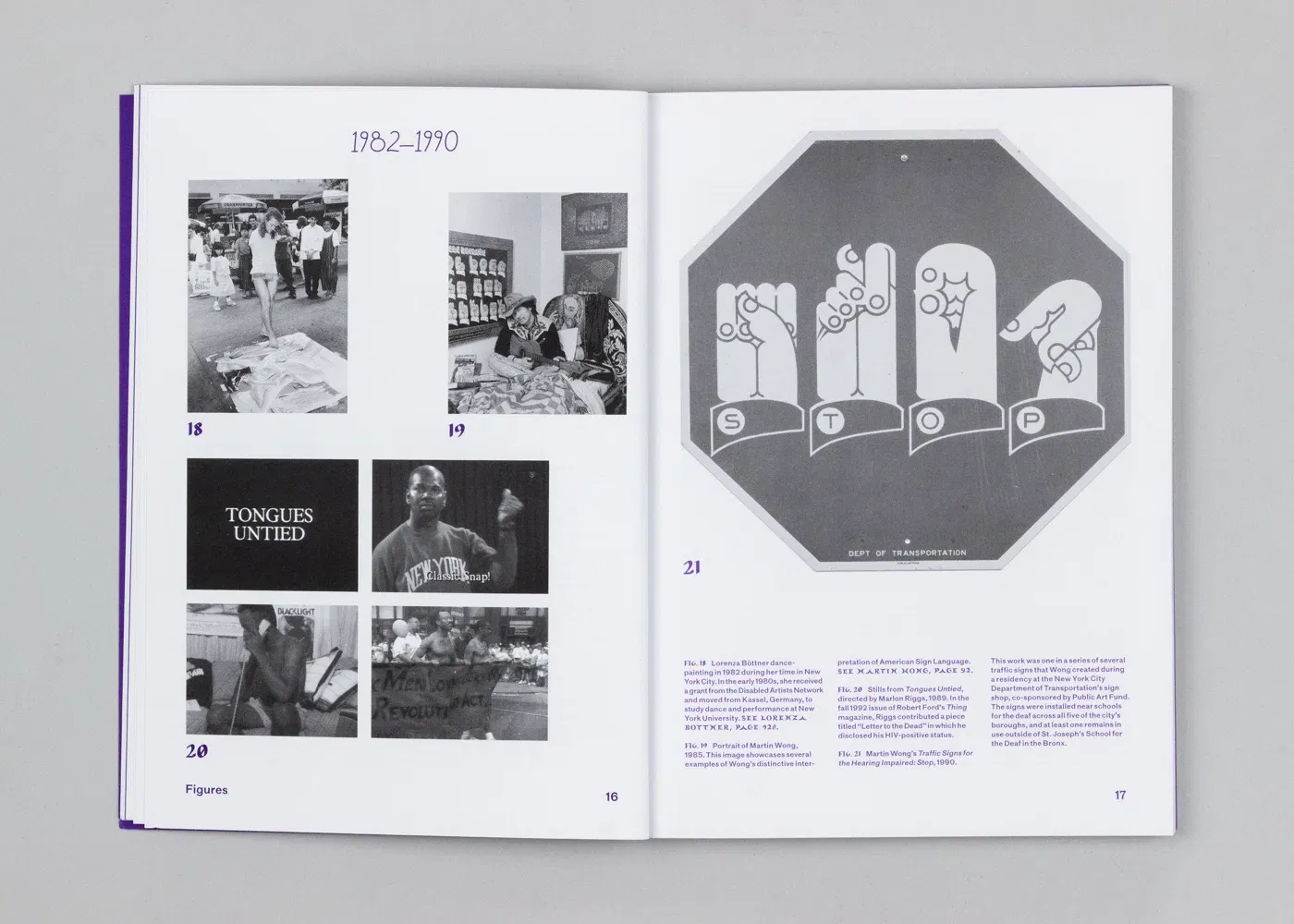
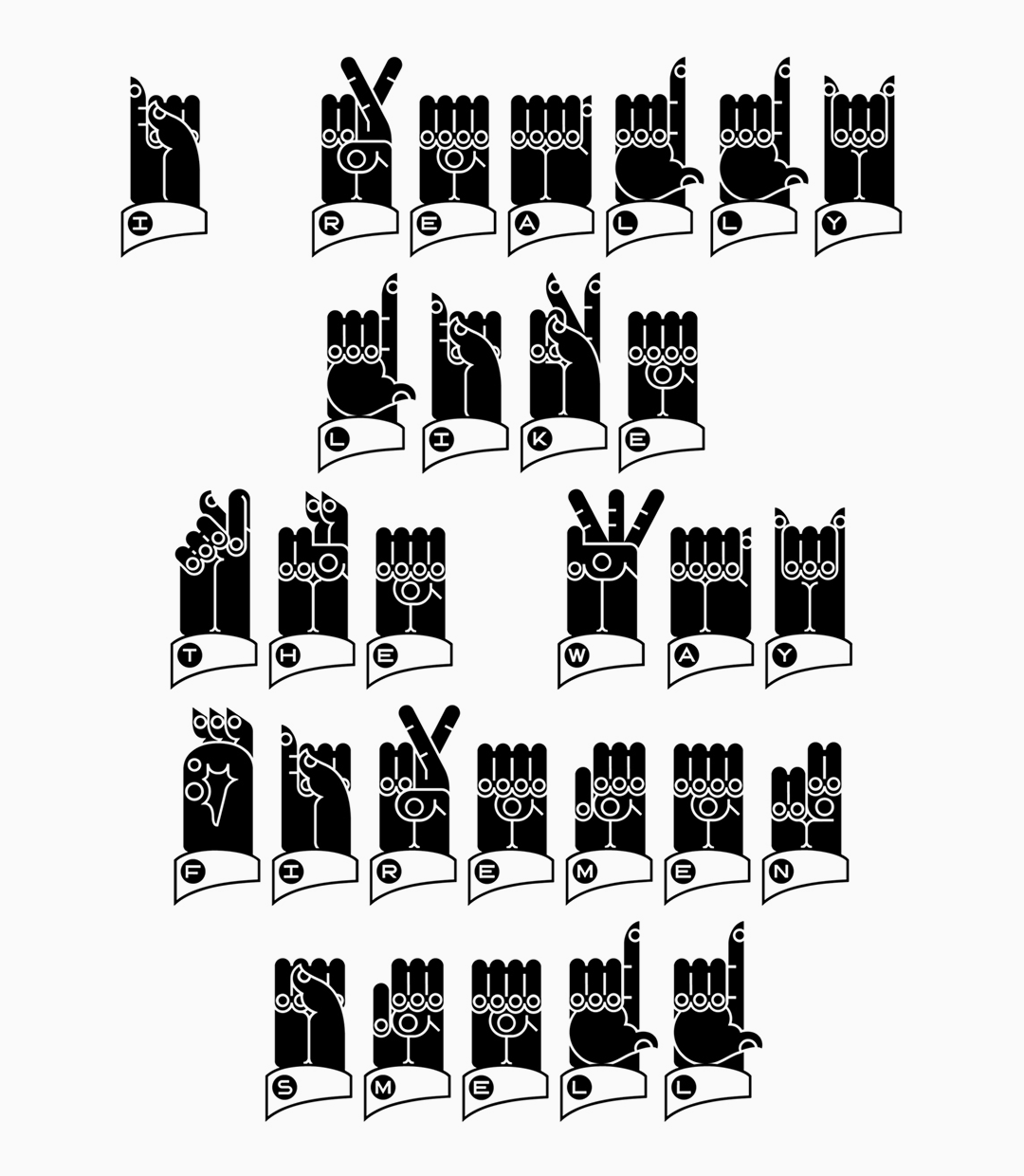
Martin Wong was an openly gay [6] Chinese American Painter born in 1946 [7] and was described as an outsider among outsiders. He worked in Manhattan from 1978, and the city inspired a lot of his work, which was described as a blend of visionary art styles and social realism. His work explored both identity and culture in terms of race and experiences. It also celebrated his queer sexuality. Pyper based the font on the hands Wong used in many of his works to spell out words, such as poems, in American Sign Language in his work.
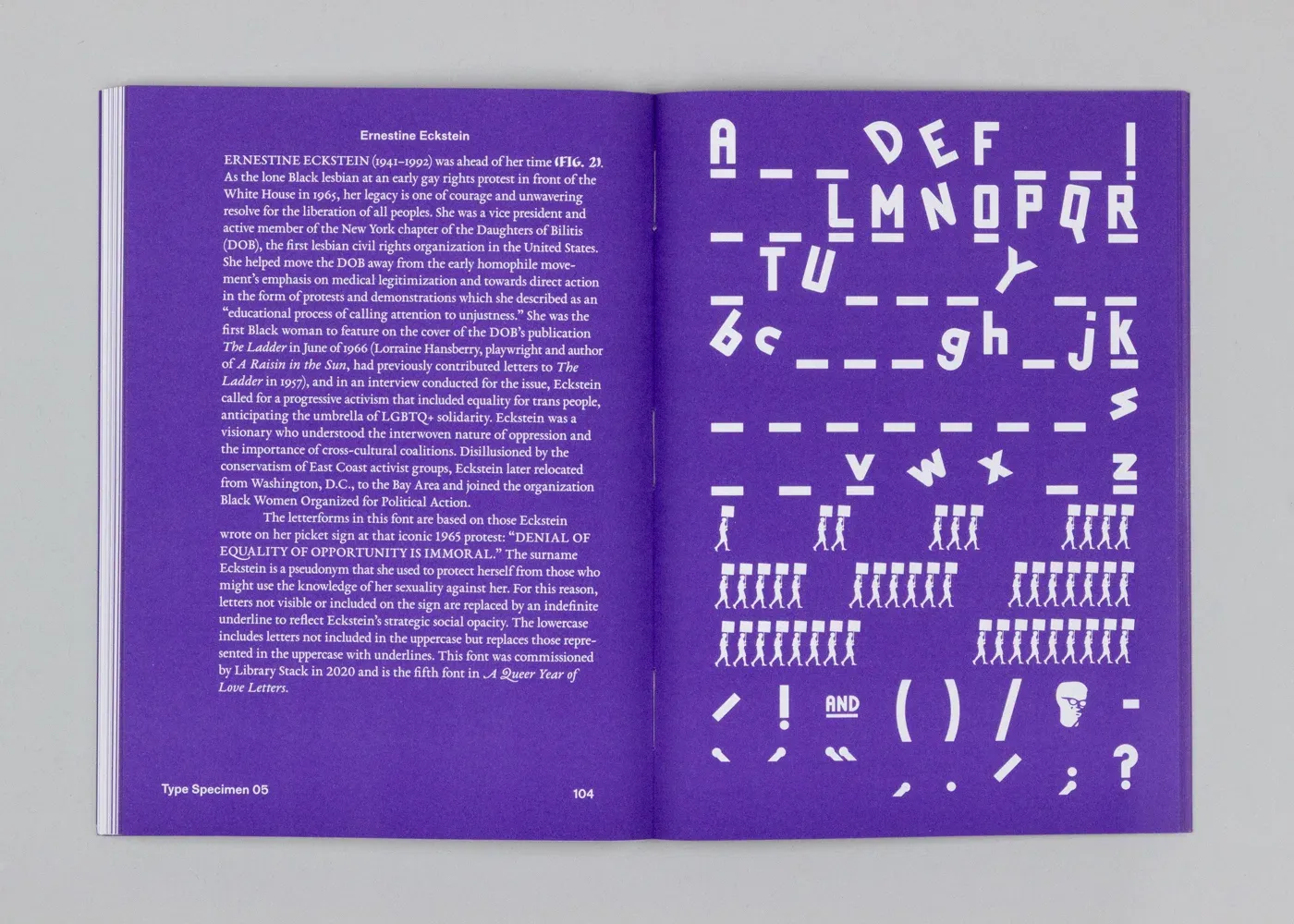
Ernestine Eckstein was an African American woman who was heavily involved in the gay and lesbian rights movement in the 1960s. She played a significant role in both the queer rights movement and the civil rights movement. She was the lone black lesbian protester at an early gay rights protest in front of the white house in 1965. As well as the vice president of the New York chapter of the DOB, the first lesbian civil rights organisation in the US. Pypers’ font is inspired by the picket signs she used at the 1965 protest and features missing letters, which pays homage to the fact that she used a pseudonym to protect her identity. [8]
Argument:
Without artists like Nat Pyper researching and designing around this underrepresented queer history, it would stay somewhat unknown. Pypers’ work brings the topic to a whole new demographic by combining it with typography and other design elements. Pyper and their work also bring a whole new set of ideas and meaning to queer design and history as they set out to remonetize queer design history. This is important as the idea of queer history and queer art is constantly changing and evolving with the ever-changing state of not only the USA but the world as a whole.
Reaching new demographics in both queer design and queer history is now more important than ever, especially in the USA. Around 10,000 books were banned from public schools in the US in 2024, nearly triple the number in 2023. [9] This includes books that have any homosexuality in them. [9] Judith Butler said, ‘One does need to know history in order to make sure it does not repeat.” [10] I believe this is truer now more than ever with the current state of the government in the United States. With laws regarding the LGBTQ+ communities constantly being reviewed, changed and attacked under the Trump administration, it has become clear that history is somewhat repeating itself and that many people can’t see the part being repeated.
It wasn’t until 1962, starting in Illinois, that same-sex sexual activity was decriminalised [11] and in 2003, under Lawrence v. Texas, that all laws left against same-sex sexual activity were made invalid. Same sex marriage was only fully recognised in the USA in 2015 (Obergefell v. Hodges) [12], only a decade ago. Due to the fact that it has only been 10 years since the law was passed, people have only recently begun to research and share parts of queer history, such as Pypers’ work with A Queer Year of Love Letters. Works like Pypers allow us to view otherwise unseen archival materials through a different medium, thanks to their typefaces.
Another element in Pypers’ underrepresentation is their own queerness. Less than 2% of American adults identify as non-binary, and with the Trump administration trying to pass executive orders stating there are only two recognised genders, it becomes hard for this small percentage of Americans to have a voice and share their opinions. Not only are non-binary Americans under attack, but the transgender population as well, and Pypers’ work brings well-deserved attention to many trans artists such as Lorenza Bottner.
Pyper isn’t afraid to question and bring forward the past with their work. Their book enables us, as readers, to learn about somewhat forgotten artists, explore ideas from other notable artists, and examine design from multiple perspectives, while also providing the public with access to overlooked biographies. The book brings together various opinions from various artists with different experiences, which, in my opinion, is one of the most essential elements when it comes to keeping design alive, as well as forming opinions and making important decisions that will change the lives of many. Without the views of underrepresented artists, the design world wouldn’t change or be questioned, and in my opinion, would be dull and uninspired. People and Artists like Pyper are constantly changing the world and the design world for the better with their work. Without them, underrepresented artists, activists, and individuals would continue to be underrepresented.
1. Pyper (2025) Whatnot. Available from: <https://www.natpyper.com/whatnot> [Accessed 20th October 2025].
2. Filchak (2021) Nat-Pyper. Available from: <http://ryanfilchak.com/tag/nat-pyper/> [Accessed 27th October 2025].
3. Pyper (2025) Work. Available from: <https://www.natpyper.com> [Accessed 20th October 2025].
4. inventorypress (2025) A Queer Year of Love Letters. Available from: <https://www.inventorypress.com/product/a-queer-year-of-love-letters> [Accessed 20th October 2025].
5. xtramagazine (2005) Ms Jones. Available from: <https://xtramagazine.com/culture/ms-jones-2-39738> [Accessed 21st November 2025].
6. Mann, R.G. (2007) Wong, Martin (1946-1999). http://www .glbtq.com: glbtq. Available from: <http://www.glbtqarchive.com/arts/wong_m_A.pdf> [Accessed 21st November 2025].
7. Johnson, M.D. (2022) Martin Wong: Illustrated Narrative Chronology. Cologne, Germany: Verlag der Buchhandlung Walther und Franz König.
8. Making Gay History (2019) Ernestine Eckstein. Available from: <https://makinggayhistory.org/podcast/ernestine-eckstein/> [Accessed 20th November 2025].
9. Victoria University (2025) What’s happening with US book bans under Trump. Available from: <https://www.vu.edu.au/about-vu/news-events/news/whats-happening-with-us-book-bans-under-trump> [Accessed 23rd November 2025].
10. Big Think (2023) Berkeley professor explains gender theory | Judith Butler. Available from: <https://www.youtube.com/watch?v=UD9IOllUR4k> [Accessed 23rd September 2025].
11. CBS (2010) The Gay Rights Movement In Illinois: A History. Available from: <https://web.archive.org/web/20220528161639/https://www.cbsnews.com/chicago/news/the-gay-rights-movement-in-illinois-a-history/> [Accessed 26th November 2025].
12. Supreme Justia (2015) Obergefell v. Hodges, 576 U.S. 644 (2015). Available from: <https://supreme.justia.com/cases/federal/us/576/644/> [Accessed 26th November 2025].