Morcos Key
What is Morcos Key?
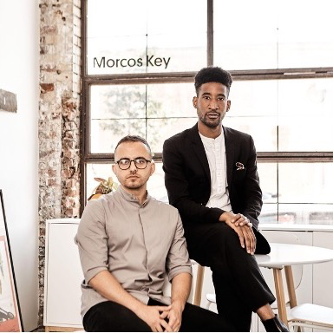
Morcos Key is a design studio based in Brooklyn, founded by Jon Key and Wael Morcos as a duo partnership. The studio ‘collaborates with arts & cultural institutions, non-profits, and commercial enterprises in North America and the Middle East’ (Morcos Key, n.d.). Their aims are based on translating stories and information into visual systems. Morcos Key demonstrate how expression and conversation can be turned into design that resonates with people.
They are invested in diasporic and queer identities, which has helped them develop a process embedded in community building across multicultural contexts. ‘To facilitate understanding while avoiding oversimplification, they leverage design choices as guideposts between the injustices of the past and a more equitable future’ (Books Arts Newsletter, 2021). From looking at their works, you can see a strong use of language and letter design. Their collaborations in editorial design give clients the platform and visual identity needed to showcase their stories.
Career + Background
Wael Morcos was born in Beirut, Lebanon. As an immigrant, Morcos is drawn to creating work that resonates personally and bridges his nostalgia for Beirut and Lebanon with his life in the United States (Vilcek Foundation, 2024). ‘Wael has been featured in Print Magazine’s 15 under 30, was named a Young Gun by the Art Directors Club and an Ascender by the Type Directors Club’ (Type Directors Club, 2018).
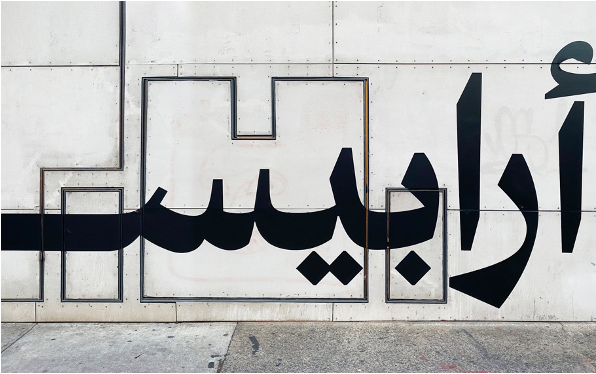
He earned a degree in graphic design at Notre Dame University in Lebanon and worked for four years in the branding and design department of Saatchi Beirut on multilingual identities, sparking his interest in Arabic typography. He also studied a master’s at RISD. “[Jon] was an undergrad, I was on the grad programme, but he was hanging out in the graduate students’ studios more than he was in his (…) We started working together since then and eventually both moved to New York,” (Creative Review, 2021).
Jonathan Key was born in Seale, Alabama. You can find past works in the Jeffrey Deitch Gallery and Armory Show in New York, as well as publications like The New York Times and The Atlantic. ‘Jon holds an MA in Design Research, Writing and Criticism from SVA. His writing has featured in publications like The Washington Post, The Black Experience in Design and AIGA’ (The One Club, n.d.). He received a BFA from Rhode Island School of Design—where he crossed paths with Wael (Creative Review, 2021)—and went on to start his design career at Grey Advertising in NYC.
Works + Case Study
Morcos Key takes viewers through a selection of print materials displayed alongside items from their personal library, demonstrating the conceptual and aesthetic influence on their design process and practice (Books Arts Newsletter, 2020).

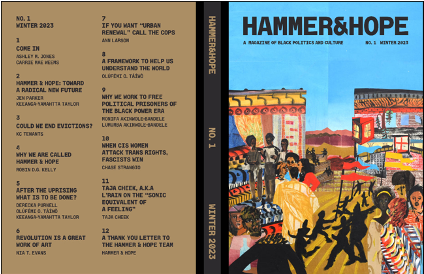
‘Hammer & Hope’ is a free magazine on politics and culture in the Black radical tradition. Morcos Key teamed up with co-founders Keeanga-Yamahtta Taylor and Jen Parker to craft the name, brand strategy, visual identity, custom typeface and website design, launching it in February 2023. It borrows its name from Robin D. G. Kelley’s 1990 book Hammer and Hoe, which follows Black Communists in Alabama during the Great Depression.
Parker said Hammer & Hope contributes something particular to journalism. “Our focus on race and class differentiates us (…) there’s no meaningful coverage of Black life, working-class and poor life in mainstream media. So, when mass protests occur, there may be a flurry of articles, but no systemic effort to understand what drove people to the streets. Hammer & Hope wants to get to the roots of the crises that plague us, so we can better understand our world,” (Teen Vogue, 2023). Taylor said keeping the magazine free to readers is a priority. “We believe as part of our politics that you can’t build a movement behind a paywall,” (The Nation, 2023).
After five years, the success of Morcos Key continues as it plans to release more Arabic typefaces with designers, expand collaborations and develop a new book project with the New Orleans Museum of Art (It’s Nice That, 2022).
Redefining Representation in Design
‘The work designers make is inspired by taste, and taste is often derived from what we’re exposed to during our upbringing. But design values and history are taught through a canon (…) that work by predominantly European and American male designers sets the basis for what is deemed “good” or “bad.” The authority of the canon has undermined the work produced by non-Western cultures and those from poorer backgrounds’ (Eye on Design, 2019).
Morcos Key are significant within the issues of underrepresentation as they are a design studio who collaborates with people who share their beliefs in being culturally and socially aware, looking to amplify multicultural identity, bilingual design, intersectional narratives which all sit outside mainstream design histories. Morcos Key represents diversity and showcase design through it, where the work gives a voice and a vision to real life stories, movements and issues.
They recognise the responsibility of working at an institutional scale to advocate for the perspectives of underrepresented groups and to prioritise their points of access. “Graphic design is everywhere around us and has a power to permeate conversations and shape narratives,” says Wael Morcos. “It not only accentuates stories but also imbues them with nuanced depth. It’s a means to express our present zeitgeist with contemporary urgency” (Vilcek Foundation, 2024).
Morcos Key believes in how design can be a powerful tool for self-expression, while sharing stories and building and strengthening communities.
“We want to create work that gets people excited and resonates with their personal stories, we want to create work that transcends the everyday into meaningful and useful interactions, be it the cover of a book, the logo for an institution or the look of a typeface” (It’s Nice That, 2022).
Personal Resonance to their Beliefs
Both Morcos and Key are from non-dominant cultural and linguistic backgrounds, with Wael Morcos born in Lebanon and moving to the USA as an immigrant, and Jon Key being a black, queer designer. The majority of design treats Western modernism as the default, overlooking everything Morcos Key looks to give a voice to, that being practices rooted in heritage, storytelling or political context.
Key stated that during his education, he did not learn anything, or about anyone, that intersected with my identity. “During critiques, my work was met with muted voices and blank stares. I was the only black person in my graphic design section. I was one out of two or three black people in my graduating class!” (Oxford American, 2024).
He ended up studying at the Rhode Island School of Design, which didn’t have much diversity and was very stifling in terms of conversations that were happening. “While I was at RISD, I was really questioning, what does it mean to be a graphic designer? What does it mean to be a designer from Alabama? What does it mean to be a designer from the south? What does it mean to be a designer who is Black?” (Creative Review, 2021).
Hammer & Hope – A case study in Inclusive Design
Hammer & Hope is a free digital magazine on politics and culture in the Black Radical tradition. They drew inspiration from the symbolic hammer of struggle and the power of hope. The custom typeface designed by Morcos Key, serves as the unifying force behind the magazines voice. It gives a rhythm, while maintaining an authentic expression throughout the messaging (Morcos Key, n.d.)
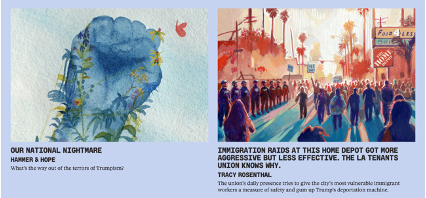
It is filled with stories, news and articles across the world that covers issues that may not necessarily be covered by mainstream media. The stories that have been chosen to be voiced are in favour of the underrepresented. Each story is paired with eye catching, colourful and interesting designs. They bright colours, bold text in that custom typeface and structured layouts. The design choice celebrates and shows off black identity as opposed to a plain, neutral look. This helps bring attention and respect to what deserves it.
Reference List
Itsnicethat.com. (2022). Morcos Key on its work for the Cooper Hewitt, M7, and Kimberly Drew and Jenna Wortham’s Black Futures. [online]
Available at: https://www.itsnicethat.com/articles/morcos-key-graphic-design-220222
Khandwala, A. (2019). What Does It Mean to Decolonize Design? [online] Eye on Design.
Available at: https://eyeondesign.aiga.org/what-does-it-mean-to-decolonize-design/
Morcos Key. (n.d.). Morcos Key. [online]
Available at: https://www.morcoskey.com/about
Morcos Key. (2023). Morcos Key. [online]
Available at: https://www.morcoskey.com/projects/hammer-and-hope
Oxford American. (2024). From Black, Queer, & Untold: A New Archive of Artists, Designers, and Trailblazers. [online]
Available at: https://oxfordamerican.org/eyes/from-black-queer-untold-a-new-archive-of-artists-designers-and-trailblazers
Retta, M. (2023). Hammer & Hope is The New Magazine Focused on Race and Class. [online] Teen Vogue.
Available at: https://www.teenvogue.com/story/hammer-hope-profile-taylor-parker
https://www.thenation.com/authors (2023). This New Magazine Aims to Be a Home for the Black Left. [online] The Nation.
Available at: https://www.thenation.com/article/society/hammer-and-hope-black-left/
The One Club (n.d.) ADC Awards. [online]
Available at: https://www.oneclub.org/awards/adcawards/-judge/8475/jon-key
UWE (2020-2021). Book Arts Newsletter,
www.bookarts.uwe.ac.uk/pdf/newspdfs/136.pdf
Vilcek Foundation. (n.d.). Wael Morcos: ‘Graphic design is everywhere around us’. [online]
Available at: https://vilcek.org/news/wael-morcos-graphic-design-is-everywhere-around-us/
Williams, M. (2021). Morcos Key’s community-based approach to design. [online] Creative Review.
Available at: https://www.creativereview.co.uk/morcos-key-design/