5.3 Factual Wiki Page/Argument
Jodi Hunt is a Bristol – based freelance graphic designer working across publication, music and brand design. Rooted in her Jamaican heritage and Black British heritage, her work is an exploration of culture, heritage and commitment. Included in her range of clients include Penguin Random House[1], Vintage Rooms[2], Orion Books[3], Atlantic Books [4]and others.
[1] https://www.penguinrandomhouse.com/search/my-fathers-daughter?page=1&q=my%20fathers%20daughter
[2] https://www.penguin.co.uk/books/54850/my-fathers-daughter-by-pool-hannah
[3] https://www.orionbooks.co.uk/imprint/orion/page/orion-books-page/
[4] https://atlantic-books.co.uk/authors/?letter=H
After Studying Visual communication at Birmingham City University, She worked in multiple in – house roles including a lead designer for a restaurant called turtle bay[1]. She became a full – time freelance designer in 2021.
[1] https://turtlebay.co.uk
Her Work has been published and seen in publications like Its Nice That[1], SPINE Magazine[2] and got nominated for the best Book Covers of 2023 according to the Library Hub[3]. Throughout her career, while designing covers, she also appeared on several industry speaks and events including at St Brides Library[4] in London and Watershead[5] at her beloved Bristol.
[1] https://www.itsnicethat.com/articles/jodi-hunt-graphic-design-discover-120224
[2] https://spinemagazine.co/articles/jodi-hunt
[3] https://lithub.com/the-138-best-book-covers-of-2023/
[4] https://sbf.org.uk/library/
[5] https://www.watershed.co.uk
Her work style is described by people as a 70s “Jamaican Rude Girl” because it refers to the way she uses bold colours in her posters, specific words from typography and confident flashy themes. The word rude comes from her rooted attitude in Jamaican heritage and her street wise, stylish individual beliefs.
Jodi Hunts Work is inspired by the cultural influence and expressions of the 1960 and 1970s and her bold colours and bold lettering and her vast collection of Black Music Magazines is evidence of that. Every opportunity Jodi Hunt had of designing was to explore methods and understand her identity.
Notable Work
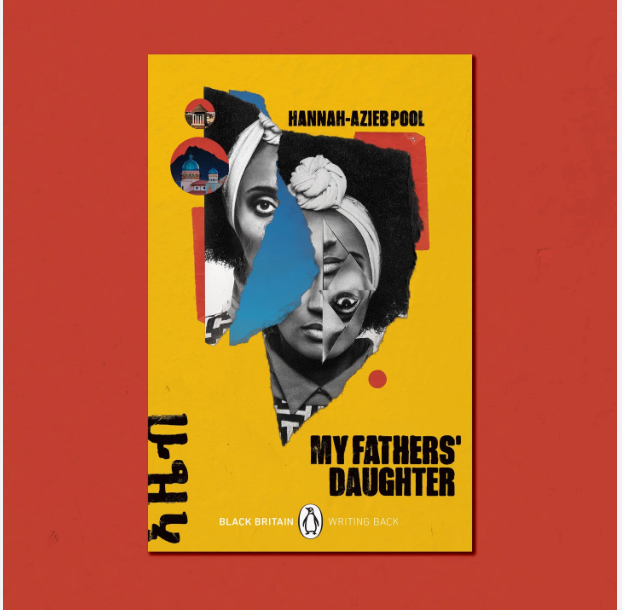
One of her Most Popular pieces of work is the “My Fathers Daughter” Book Cover. The story of the poster is made with identify, family, and the feeling of being at home. The designer was approached by penguin books who designed the book cover as part of a project called ‘Black Britain’ Writing back; which is a series about Black Britain.
Jodi Hunt explained that the goal for the cover was to create a vibrant, vulnerable and intimate feel. Penguin Books suggested an editorial style that could be vibrant but serious at the same time.
Secondly, another notable piece of work by Jodi Hunt is called ‘Manny and the Baby’. This is based around the way division was used in the 1930s and two siblings who coped with conditions. The book showed warmth and passion, heart and tenderness. The actual book cover itself is based on an underground jazz theme using collage and typography to reflect the story.
One of her most recent Projects is an awareness poster with the name “Making A Rukus”. The poster was the aim of creating an identity rooted in queer culture, Gay and black celebration and activism. Every design decision was to celebrate stories with depth, realism and in-depth playfulness. Bringing a sense of vibrant narratives. Regarding Colour choices, the poster includes Pink, Yellow, Blue and Black. On the poster are a range of shapes including triangles which she talked about during a media interview to say that the symbols represented “pride and resistance”. Shapes were layered out in a specific way to disrupt traditional assets referencing both African dolls and Original Rukus icon.
Regarding the actual font Jodi hunt used in the project was thought through. It was Windsor Ultra Bold Font as it ties the design with the legacy and idea of protest and imagination into what people were going through. Also, The Font and typography was a connection to the past, present and future in what Jodi Hunt called as “flexible”. Finally, The variety of size and effect symbolised difference in power
5.3 Argument
“Rooted in my Jamaican heritage and Black British culture”. This shows that Jodi is not all about creating visual projects, it is all about creating identity, story, and meaning. Originating from Bristol, Jodi Hunt is a freelance graphic design specialising in Book covers, posters and magazines. In my opinion Jodi Hunt resembles her work in a specific work as it shows in her words “exploration of culture, resistance, and emotion”. Throughout Jodi Hunts entire portfolio, she has stuck with the same theme which I think is interesting as it shows she is dedicated In an aspect of work. “We also need to understand that society is built upon this power. This includes all the things that perpetuate and reproduce the legacy of colonialism in areas like education, housing, finance, policing, healthcare and many more”. This quote helps with my debate as it goes back to why Jodi Hunt started designing in the first place and why she wanted to make change in the culture.
One of the main reasons I think that Jodi Hunt is underappreciated is because the focus of the public is on other industries like Film and TV, Sport, so many people don’t understand the work and effort she has put into changing and celebrating the culture.
In one of the lectures, we looked at a PowerPoint named “Decolonising Design”. For my debate I took my reference from a man called David Oluwale who was from Leeds and treated badly because of his race so therefore drowned in the river. “The Remember Oluwale charity has organised a set of arts – based events to remind everyone of Davids life and to support the city of Leeds in its campaigns to be more inclusive, more hospitable and more equal”. The reason I am talking about this is it equals like Jodi Hunt as the way the police saw their perspective of life which led to racial abuse and riots.
“Systemic Racism also affects our understanding of art, design and culture. To understand systemic issues means no longer viewing racist behaviours as isolated events and instead acknowledging the connections and historical underpinnings that contribute to the problem” (Sales, May 13 2021, Page 16). This quote backs up my point on why people should not focus on the background of the individual rather than the meaning and connections of the projects which is think is important.
What makes Jodi Hunt different from other Designers is her high client list which shows she is working at a high-level including Penguin House, Atlantic Books, Scribe, Unbound and Yale University press and the way she has worked goes down to her variability.
This kind of culturally imbedded design work helps bring stories and aesthetics to the front and for many people that’s wonderful and groundbreaking because it challenges mainstream designers as work does not get visibility praise or same recognition as someone doing logo design for example.
According to Bookstr “The 2023 study, conducted with 190 companies and 8640 people, revealed that white workers made up 72.5% of the publishing workforce, the number is significantly down from the 2015 and 2019 surveys” (Bookstr, Ashley Lewis, February 28th2024). This information shows that over the last few years more women have come through the design system and produced book covers which makes it more equal.
Overall, in my opinion Jodi Hunt can be considered underappreciated not because of the way her work is in lack of skill, depth. But because her qualities fall outside of the typical mainstream design industry. Although she has produced projects across publishing, branding and book design, her impact focuses on storytelling, heritage and culture rather than broader creative communities.