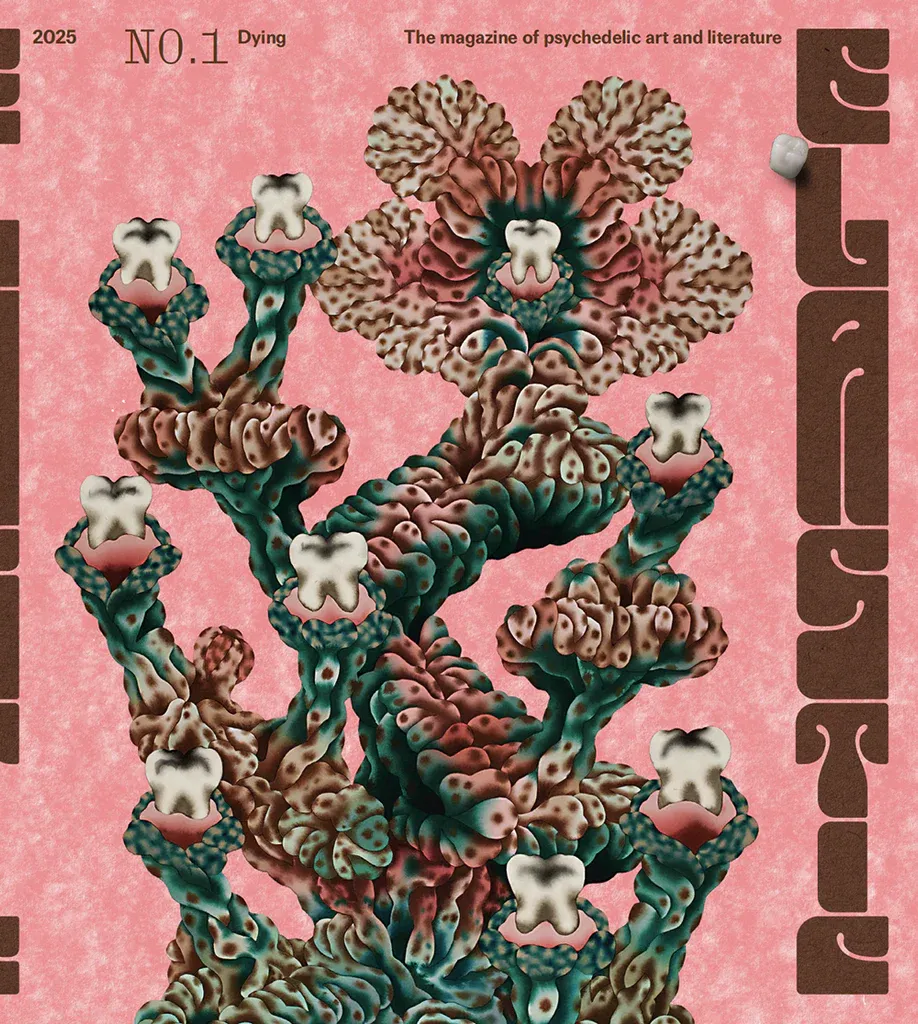
Katharina Brenner

Katharina Brenner (no pronouns) is a queer graphic designer and researcher biased in Berlin, that works at the intersection of queer feminism, institutional critique, radical pedagogy and activism, developing formats such as collaborative learning environments, public events and publications. Katharina studied Visual Communication at the University of the Arts Berlin, Estonian Academy of the Arts and at the Kassel University of Art and she co initiated the student organized seminars Klasse Kilma and Eine Krise bekommen. Katharina is currently working as a research Associate in the FemPower project at the Burg Giebichenstein University of Art and Design Halle.
Fem Power project
The Fem Power project is a part of a joint FEM POWER Vision which has been promoting equal opportunities within science and research in Saxony-Anhalt but also integrating gender research into scientific context sine 2016. The fem power project aims to make the practices of art and design a more inclusive and a progressive environment for students at the Burg, through structural change, networking and knowledge transferal.
The Fem Power project at the Burg Giebichenstein University of Art had two phases the first phase was an initial funding phase which led to them establishing a strong network for gender equality work, which ran from 2016 till 2022. The second phase builds on from the strong network established in phase one, which aims to integrate queer feminist, gender equality issues and practices across all disciplines in art and design, while also focusing on innovative approaches to integrating at the BURG which will run from 2025 till 2027.
Glowing Red Letters

Glowing red letters is a project where German art students are tackling discrimination and the difficulty of raising critiques and complaints within the hierarchic of German Art schools by publishing anonymous forms, these anonymous forms were published on the Instagram account of machtmissbrauch which translates to abuse of power in English; the account is a part of a student self-led initiative in Germany.In 2021 the team at @machtmissbrauch were working on analysing the data of over 300 hundred participants and published 35 reports on their Instagram account; at the time of this article to show the results of these report counts. The project was informed by an article from (2017 by Berta Bella) for the magazine Merkur which explored the fact that many German Art schools enjoy a reputation of being progressive and diverse places for learning, but when you arrive there, it is in fact the opposite and the traditional gender stereotypes are still prominent.
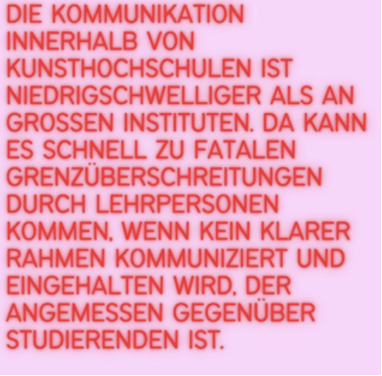
Katharina wrote an article on Glowing red letters which was published on Futuress in 2021, where she explores the issue that German Art schools have towards diversity and how they appear to be progressive places for students but in reality, it still holds the traditional gender stereotypes. For example, Katharina stated “Many of these institutions enjoy a reputation of being progressive, critical, and diverse places of learning” (Katharina 03/21). prominent but is often ignored and “brushed off as artistic temperament” (Katharina 03/21). For this article Katharina interviewed @machtmissbrauch to find out more about their motivation behind the project and their goals.
Argument
I believe that female and queer designers are underrepresented within the design industry and that Katharina Brenner is a perfect example of this as she is actively tackling this subject within the work Katharina has done as a research associate for Fem Power and articles that Katharina has written on the issue. Art and design is often viewed as a universal language to break barriers between cultures and tackle real world issues to bring people together and expresses your perspective on the matter in creative ways, then how come this isn’t the case for the designers behind the work?
The underrepresentation of queer and female designers starts at university level for example, “the design industry in the UK is 78% male, despite women making up nearly two-thirds of students studying design at university” (Design Council 2020). Which shows the lack of opportunity women designers have after university where there are a number of women active in the industry at university, so it’s not a lack of people just a lack of understanding and or opportunities that women need to progress. Which we can suggest that this issue is deeply rooted within the industry and stems from the past in 20th century where the Bauhaus would push women students into weaving and textile workshops as they were deemed as suitable for their sex. This was under the impression that they would have equal opportunity, as Walter Gropius “declared No distinction between the beautiful and the strong sex” (Gropius 1919) which we know was not the case and we know that it has nothing to do with the work they produce as many of those women “excelled in their assigned domain but also and redefined It, transforming textile design into a language of modernism that bridged art and industry”.(Nicole Rowe Mar 29).
After looking at some of Katharinas work I can say that her work is significant in the way that it is tackling serious issue within the design industry that need to be improved to create a more diverse industry but also give equal opportunities to those from marginalized backgrounds/unrepresented. The work that I wanted to focus on was an article she did on Futuress called Glowing Red Letters where she explores how many German Art schools have the appearance of being this progressive and diverse school/institution but in reality, they still hold true to the traditional values and gender stereotypes. Katharina opens the article with this statement “The majestic facades of German art schools are crumbling-figuratively speaking” which to me sets the tone of the article but is also the perfect analogy of what is going on at these German schools. Thought out the article Katharina explains the problems and issue that are prominent at these art schools and interviews the team at @machtmissbrauch where Katharina asked what were there inspiration to which they stated, “Me Too movement, blew up on a global scale and led to a more transparent approach of talking about structural problems and long-needed change”( @machtmissbrauch 2021). Which shows me that the people at @machtmissbrauch are more focused on this being a success in bringing structural rather than publicity which is also backed by them wanted to keep the forms and names anonymous.
I find this piece of work from Katharina to be significant because she is tackling a real important issue going on within some German art schools and that writing about will reach more people, to then try and help push for real change to follow. However, I can also see how this type of piece from Katharina could play a factor in her underrepresentation as it is a real big issue and could raise concerns may lead to backlash from these institutions, which furthermore backs up the importance of this piece from Katharina because of the importance of it.
Bibliography
https://www.burg-halle.de/en/university/facilities/fempower
https://futuress.org/stories/glowing-red-letters/
https://futuress.org/stories/challenge-the-status-quo/
https://www.theguardian.com/artanddesign/2009/nov/07/the-women-of-bauhaus