Cooperativa de Diseño
Cooperativa de Diseño
Cooperativa de Diseño is a design collective based in Argentina. Founded in 2012 (Behance, 2025), they strive to make design accessible to marginalised communities in Argentina. Stating that they “construir el diseño desde y para el pueblo” (build design from and for the people) their work includes projects for LGBT+ media, feminist and other social movements and offer workshops to make design more accessible (Cooperativa de Diseño, 2024). The collective offers its services to small, self-directed organisations, especially those that have a social impact, removing the barriers for accessing design to these groups (Cooperativa de Diseño, 2024).
Projects
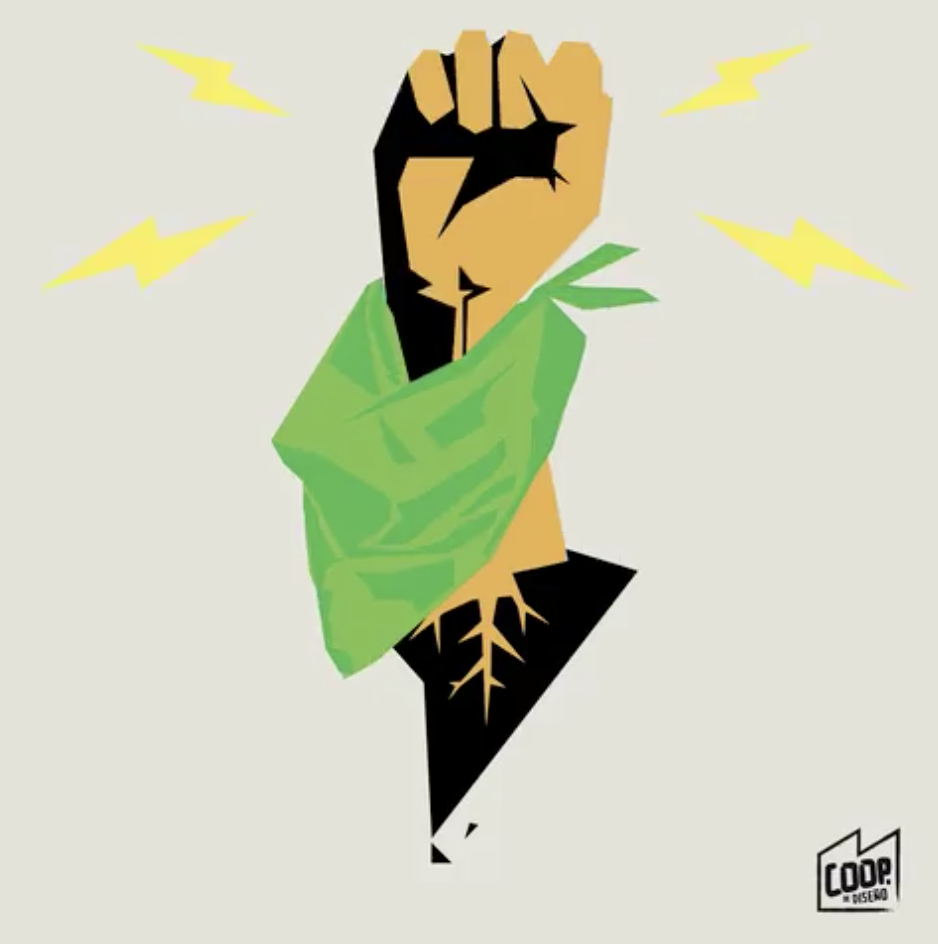
Fig. 1 Green Bandana
Gráficas de Activismo (activist design)
Cooperativa de Diseño’s work takes a large focus on activism. They have made graphics relating to many popular social causes. These include workers’ rights and especially pieces that highlight feminist issues not only in Argentina but across Latin America as a whole. One of their pieces in this project is simply a fist raised with the green bandana tied around it (Fig. 1). Highlighting not only the connection to current feminist struggles in Argentina, it calls back to the long history of uniting symbols in intersectional movements and the fight that women in Argentina have made across decades. The use of the green bandana pays homage to the Mujeres de la Plaza de Mayo, who fought in the 70s for the recognition of murdered women’s deaths that have never been investigated (Por Patricio, 2009). Recent projects include the Green Wave, Argentina’s fight for women’s rights. Their work highlights the fight for abortion legalisation as well as raising awareness of the prevalence of femicide in Argentina. The main symbol of this is the green bandana(Fig. 1), uniting women across the nation (Amnesty International, 2024).
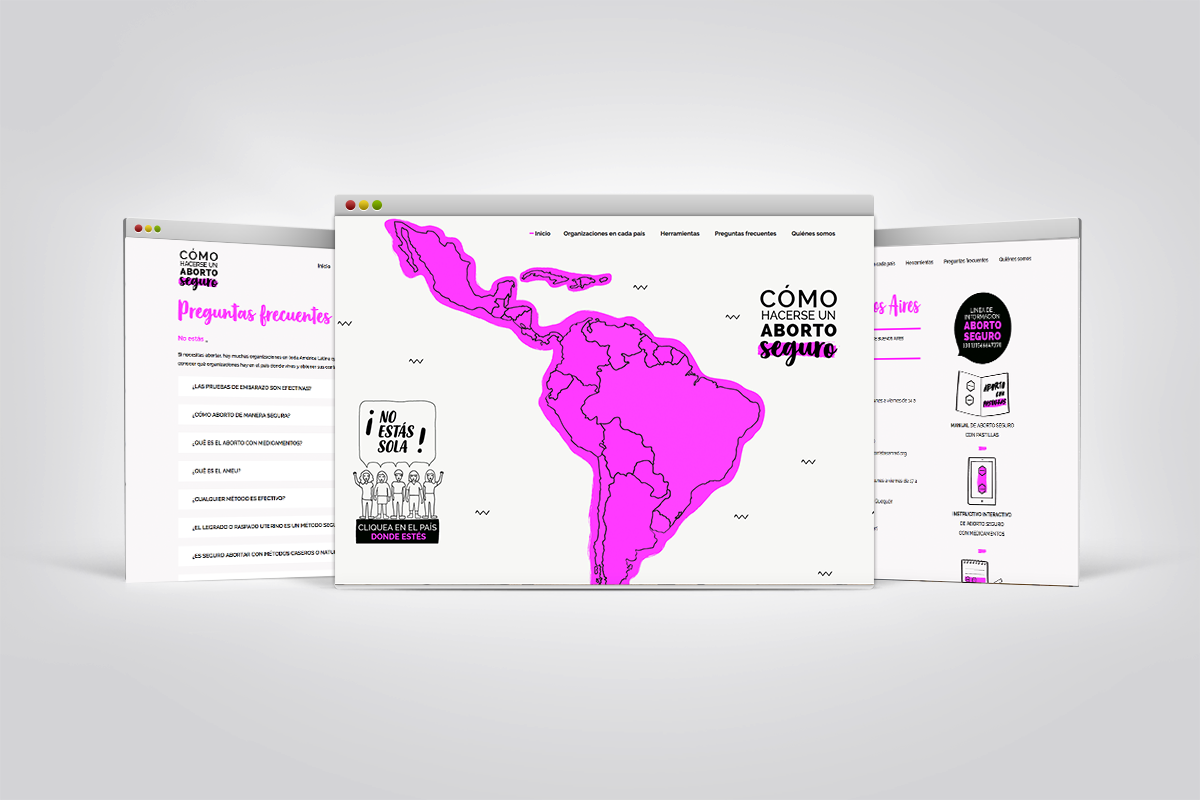
Fig. 2 How to access a safe abortion
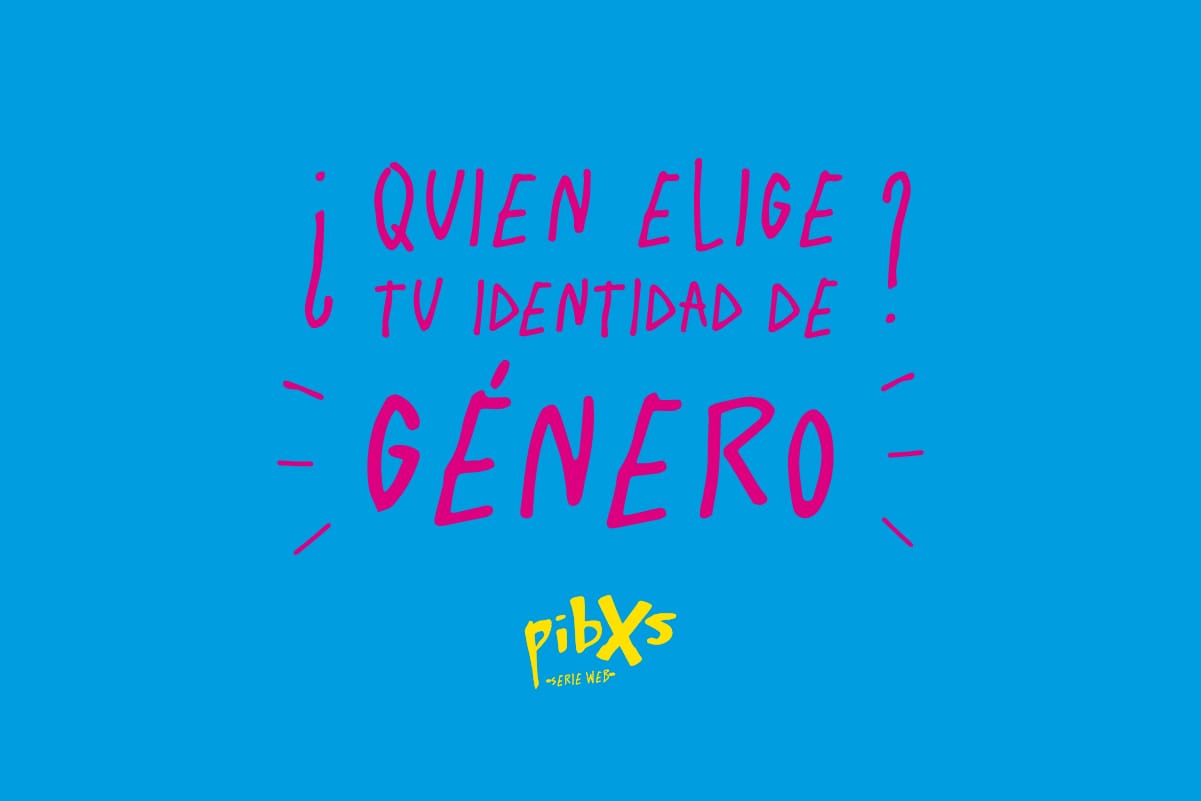
Fig. 3 Who chooses your gender identity?
Pibxs
Pibxs is a documentary web series focusing on queer people of marginalised genders in Argentina. It follows individuals’ journeys navigating the daily aspects of life in the current Latin American political climate as a transgender or nonbinary person (PIBXS/Cap 1- ARTE 2020). The collective’s branding for this series features bright colours and handwritten script type. The choice to do this may have been to make a personal and intimate connection to the themes of the series, gender identity and sexuality, as handwritten type tends to evoke this (Svaiko, 2025). The name of the series comes from the Spanish word “pibos” meaning boys. However, the way it is written uses a gender-neutral noun ending “x” to highlight the focus on gender nonconformity.
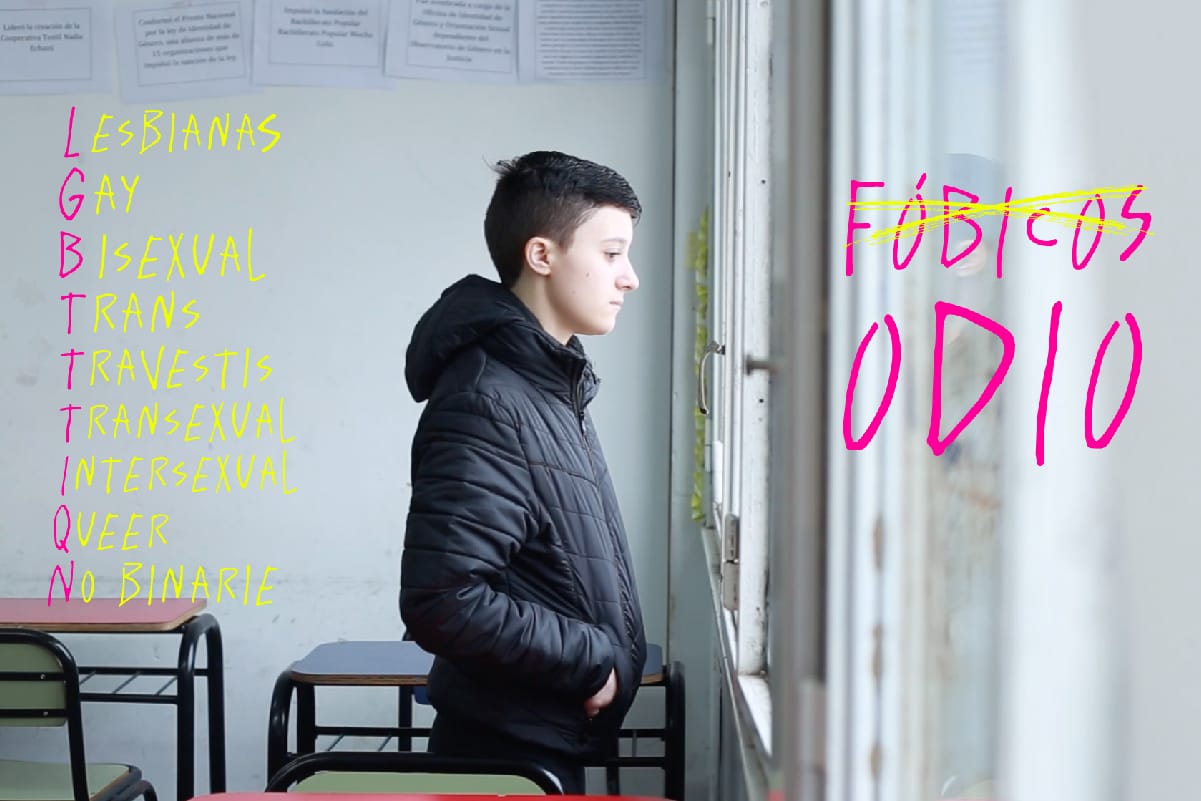
Fig.4 Lesbian, Gay, Bisexual, Trans, Transvestite, Transsexual, Intersex, Queer, Non-Binary (written with the gender inclusive -e noun ending). Not phobias, its hate.
Language
Across projects, including pibxs, they make an effort to incorporate gender neutral terms in their use of Spanish. Highlighting their focus on inclusivity and intersectionality, they make use of gender-neutral noun endings such as -x and -e (Fig. 4) as well as the singular they pronoun of elle which are common place among younger Spanish speakers (Papadopoulos, 2025). While not officially recognised by the Spanish language institute, and in fact, prohibited to use in Argentinian schools (Lankes, 2022), its use is becoming more commonplace especially within political movements and those linked to them. Their language use reflects their commitment to making their design services available to everyone, including those who may be alienated by the gender binary enforced by traditional Spanish language rules. Other aspects of language are used in projects for indigenous communities. The indigenous languages of the Rio de Plata have had influence on the Spanish spoken in Argentina (Rebecca et al., 2025) and are gaining more recognition despite the struggles faced by many indigenous communities in Latin America.
Argument
I chose Cooperativa de Diseño for this wiki because their work tackles intersectional issues. They proudly display that they are a Latin American organisation, not surprising as they are based in Argentina. I think this is important, as Argentina was a Spanish colony, that their work is centred around Latin American voices. Typically, design is often seen as a White discipline. A lot of our highlighted and celebrated designers are European or US American, very much White, with their work and exhibitions well documented. The profile and publicity that a wiki article gives a person is undoubtably something that BIPOC voices benefit from and helps disrupt a very White, colonial led narrative.
Their motto is “design by and for the people.” They talk about making design tools more accessible for people, such as small businesses. Their work helps dismantle the privilege that accessing designers and their services often requires. They value collectivism and make a lot of pieces supporting socialist/leftist views. I think that their work highlights the purpose of design to advocate for unheard voices. Design has often been coopted by capitalism. I value that their work is an attempt to dismantle it and make their services available without an expensive paywall.
To continue from their aims of inclusivity, their projects often highlight indigenous businesses. Across Argentina and Latin America as a whole, indigenous communities have faced a lot of discrimination. Coming from Latin America’s colonial roots, their language and culture has been stripped from many communities and those trying to maintain their heritage have historically been denied doing so. Choosing to highlight a design collective that works within these communities, was very important to me. Despite legal battles and xenophobic prejudice, I appreciate how much effort Cooperativa de Diseño put into making their work available to indigenous groups and how they celebrate those projects in their portfolio.
Cooperativa de Diseño’s work with Queer led projects is also worth note. With Argentina’s conservative politics (stemming from its time as a Spanish colony), rights and protections are hard to come by for members of the LGBT+ community. Cooperativa de Diseño’s inclusion of gender neutral/trans inclusive language across not only their projects with Queer groups but their portfolio and website show to me that they strive to make these voices heard (and something I appreciate as a nonbinary Spanish speaker). I think that Queer led design and design made for Queer communities is often something that, historically, doesn’t have much representation in the design canon. While there have been moves to include Queer voices in design, this is often limited to a White Queer experience which, while undoubtably is important, isn’t the experience of Latin American Queer communities. This also links to their feminist work. Queer rights and Women’s rights are intrinsically linked. Femicide and abortion rights are current issues faced by minority genders in Argentina. Once again, the collective’s work brings both these issues to light with accessible graphics and provides these groups with tools to make their own designs heard.
Overall, I think that Cooperativa de Diseño is an important source for a wiki article as their work tackles a plethora of issues. All these social causes and their own morals have links to each other. While 600 words is nowhere near enough to go into immense detail about each, it provides a great starting point to emphasise collectivist and intersectional issues that are faced by real people, breaking away from the often male, pale and stale history and narriative that has dominated our understanding of graphic design. I hope that highlighting this group will provide not only myself but others the opportunity to look beyond our current known, typically White European and, cishet dominated design canon.
Bibliography
Amnesty International (2024) Why we continue to march towards legal abortion in Argentina, Amnesty International. Available at: https://www.amnesty.org/en/latest/impact/2019/08/the-green-wave/ (Accessed: 22 November 2025).
Behance (2025) Cooperativa de Diseño Ltda. - servicios de diseño in Buenos Aires, Argentina, Behance. Available at: https://www.behance.net/cooperativadedisenio (Accessed: 20 November 2025).
Cooperativa de Diseño (2024) Experiencias de Transferencia y formación, Cooperativa de Diseño | Argentina. Available at: https://cooperativadedisenio.com/transferencia.html (Accessed: 20 November 2025).
Lankes, A. (2022) In Argentina, a battle over gender-inclusive language - one news page, The New York Times. Available at: https://www.onenewspage.com/n/Americas/1zoco9yb1o/In-Argentina-Battle-Over-Gender-Inclusive-Language.htm (Accessed: 26 November 2025).
Papadopoulos et al. (2025) Spanish, Gender in Language. Available at: https://www.genderinlanguage.com/spanish (Accessed: 26 November 2025).
PIBXS (2020) PIBXS/Cap 1- ARTE, YouTube. Available at: https://www.youtube.com/watch?v=ghxultUguzg&list=PL3P7txv8ubFqeu-SrvmW1etoq6A4SOJZN (Accessed: 20 November 2025).
PIBXS (2020) PIBXS/Cap 1- ARTE, YouTube. Available at: https://www.youtube.com/watch?v=ghxultUguzg&list=PL3P7txv8ubFqeu-SrvmW1etoq6A4SOJZN (Accessed: 20 November 2025).
Por Patricio Erb (*) | (2009) Para meijide, Los Desaparecidos no Fueron 30.000: Carlotto Le contesta, Perfil.com. Available at: https://web.archive.org/web/20160727205013/http://www.perfil.com/politica/Para-Meijide-los-desaparecidos-no-fueron-30.000-Carlotto-le-contesta-20090803-0020.html (Accessed: 20 November 2025).
Rebecca et al. (2025) Spanish in Argentina: Your guide to rioplatense spanish, Becci Abroad | Expat Life & Travel Blog. Available at: https://becci.dk/spanish-in-argentina/ (Accessed: 26 November 2025).