5.3 1200 words
Biography
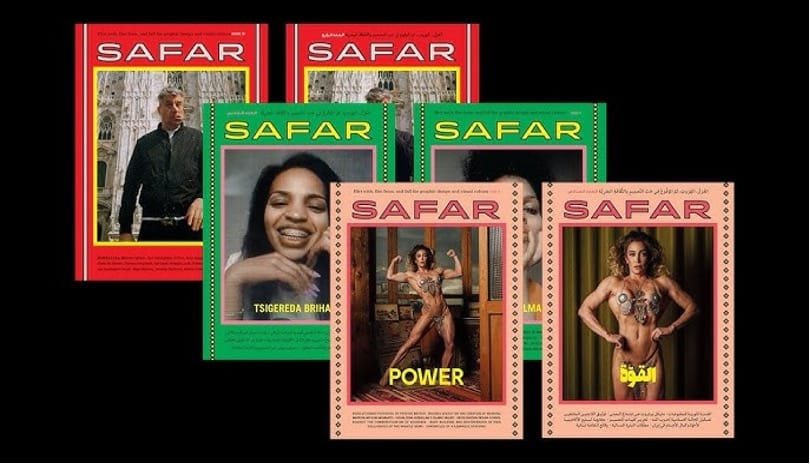
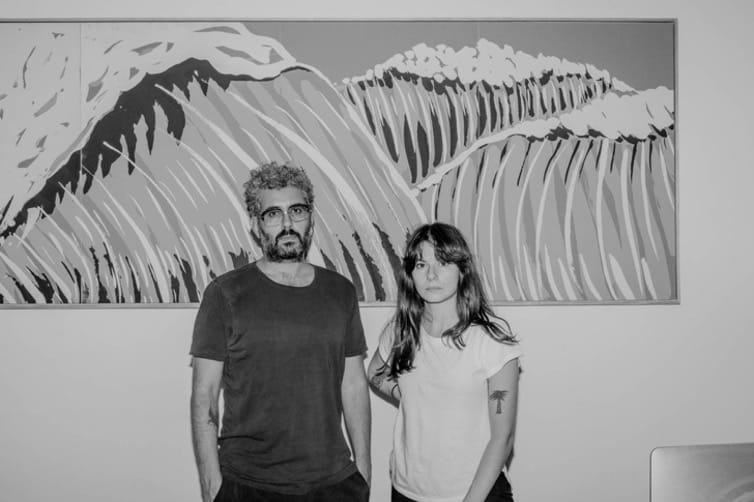
Studio Safar is a Beirut-based design and publishing studio. It was co-founded by Maya Moumné and Hatem Imam in 2012 (Culture Resource, 2021) (Biennale, 2022) and is mainly known for producing Journal Safar, a bilingual Arabic–English visual culture journal that foregrounds design practice in the Middle East and the Global South. (DNA, 2025)
Studio Safar’s team of designers collaborates with creative producers across disciplines such as film, literature, illustration, and photography, and more to spark innovation through research and dialogue. (Studio Safar, 2025) Their work engages deeply with a wide range of local design histories and seeks to reconnect with visual cultures and practices that were interrupted by colonialism for example they’ve produced visual identities and printed materials for cultural projects such as Dar El Nimer. (Samira M., 2020) These influences shape their contemporary approach to creating visual identities, exhibitions, websites, and publications that cultivate a creative exchange and critical conversations on cultural production and design trends throughout the global South. (Biennale, 2022)
Studio members:
The team includes co-founders and creative directors Maya Moumné and Hatem Imam, both graphic designers by trade as well as; senior graphic designer Lynne Zakhour; designers Giorgia Labaki and Rana Tawil; business and studio manager Ali Abdallah; and copywriter/editor Sharon Grosso. (Tobias van Schneider, 2020) The studio has also worked with a number of other designers/professionals to help with some of their stand-alone projects. (Studio Safar, 2025) (DNA, 2025)
History:
Established in 2012 by Maya Moumne and Hatem Imam, the idea of the creating the studio came about after Hatem Imam received a rejection letter for a full-time university teaching job (Tobias van Schneider, 2020). The pair described looking to create a new structure that they could feel they belong to. (Tobias van Schneider, 2020)
Journal Safar:
Journal Safar is an annual and bilingual design and visual culture journal designed and published in Beirut. The name ‘Safar’ is the Arabic word for travel. They used ‘Safar’ to “refer to notions of communication, especially across disciplinal, cultural, and linguistic boundaries.” (Journal Safar, 2025) The thought behind the journal was to create a remedy to the lacking number of critical writings on design in the global south. It aims to acknowledge designers as “agents of cultural production” rather than simply as tools within a production line. (Journal Safar, 2025)
The latest, 8th edition of the magazine is titled ‘Tongues’, and that is what it’s about. The writers do a deep dive into the tongue’s central role in human connection, including topics such as: language and communication, taste and sustenance, and intimacy. (Journal Safar, 2025)
Notable works:
Aside from journal safar, studio safar had produced a large spread of notable work since 2012 including much design and layout work for Samandal Comics, a comics collective in Beirut. Continuing their efforts to work across multiple languages the studio released their Samandal 3000 edition in English, French, and Arabic, each with a completely unique design, using different layouts, fonts, and materials for each one. (Velma Studio, 2020)
They’ve also worked on creating a brand identity for Mauj, a Lebanese NGO focused on sexual health as well as doing work with them on branding projects. (MA-g, 2020) For their work with Mauj the studio was awarded the ‘Tom Geismar Award’ (2021) by the Museum of the Avant Garde in Switzerland. (Shehadi, 2021)
Hatem Imam also worked on the scenography on the set of Past Disquiet, a research based documentary and exhibition shown at ‘Framer Framed,’ Amsterdam. The project aims to uncover a largely forgotten history of politically engaged artists and initiatives from 1960s-1980s, particularly around anti-imperialist solidarity movements. (Framer Framed, 2025)
Argument
The studio and the journal operate from Beirut, maintaining international connections through exhibitions, talks, and distribution. This allows the studio to act as both a local entity and a global participant, pushing the region’s design practices into worldwide discussions. (Culture Resource, 2021)
Arabic in Design
The studios main work, their bi-annual publication Journal Safar was set up to fill a notable gap in design documentation. It focuses on the lack of representation for non-Western design (Milroy Maher D., 2019). The journals bilingual format, in Arabic and English, addresses the shortage of critical writing about regional visual culture and highlights designers more as cultural creators rather than just a tool of production (Journal Safar, 2025). This bilingual approach is very much a political statement, as many English language design histories and journals often overlook or even simply ignore Arabic language practices. By publishing in Arabic, the studio preserves and critiques Arabic language design, actively working to push forward non-Western voices within global design conversations. (Milroy Maher D., 2019)
Recognition
Academically they have also gained recognition, moving from a handful of blog mentions to becoming a significant topic of scholarly discussion. The journal and their studio work are cited in several academic publications about design in the Global South (Abdulla D., 2024). These discussions prove Studio Safar as an important figure working to reduce the lack of critical writing about non-Western design. The studio’s approach has become a model for site-specific and politically aware design, gaining attention in both design media and educational research.
Their influence within the world of media coverage is also clear. They’ve featured in major design outlets such as It’s Nice That, MagCulture, Design Indaba and STACK magazines, taking part in interviews and being the topic of articles (MA-g, 2020) (MagCulture, 2025) (Shehadi L., 2021) (Muraben B., 2016) (Milroy Maher D., 2019) (Watson S., 2022). This media coverage, as well as several academic citations, shows that they meet Wikipedia’s notability criteria, showing the studio’s impact in design and culture.
Their Challenges
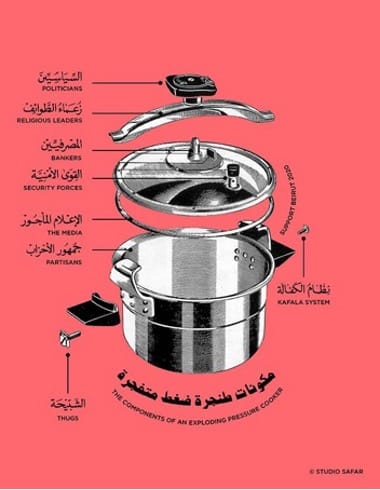
The studio’s work extends beyond editorial efforts to show resilience in tough times. A key example of this is the tragic Beirut port explosion in August 2020, which destroyed much of the city, including the studios infrastructure. (Heller S., 2020) Despite this, they continued to work while facing a vast quantity of economic and logistical challenges. (Drake K., 2020) This shows the studios dedication to the preservation of cultural archives and contributions towards design culture even under extreme circumstances. The fact that they continued to publish during this crisis challenges stories of marginality often associated with design in politically unstable areas.
The studios response to a shortage of funds as well as persistent political instability shows some of the systemic barriers leading to underrepresentation in design. (Milroy Maher D., 2019) Their persistence to pursue their mission despite the challenges/barriers in their way highlight their resilience and importance in shaping a more inclusive global design discussion.
Influence
Beyond practical contributions, they’ve have made left a clear mark on the design field. By pushing forward Arabic-language discussion and framing design as a political, public practice, the studio challenges the Western focused view of design history while Journal Safar acts as an archive and teaching tool for artists and designers across the region. (Journal Safar, 2025) (Watson S., 2022)
Conclusion
Through the bilingual Journal Safar, the studio showcases non-Western voices and preserves regional design history therefore challenging dominant Western narratives. The studios resilience in the face of adversity and its commitment to cultural preservation make it a key player in the global design scene, ensuring that perspectives from the Global South are recognized and valued in the worldwide conversation. Therefore, they are deserving of a wikipedia entry and are currently underrepresented.
Bibliography
Abdulla D., (2024), ‘Design Otherwise’, Available at: https://ualresearchonline.arts.ac.uk/id/eprint/24058/1/Design_Otherwise_2024_21Aug.pdf?utm
Beirut.com, (2025), ‘Studio Safar’ Available at: https://www.beirut.com/en/directory/studio-safar/?utm
Biennale de Lyon, (2022), ‘studio safar’ Available at : https://www.labiennaledelyon.com/en/les-artistes/details/studio-safar?utm
Culture Resource, (2021) ‘Studio Safar’, Avaialbale at: https://mawred.org/participant/studio-safar/?lang=en
Danek S., (2023), ‘There is no such thing like a homogenous Western culture or an Arab one’ Avaiallble at: https://page-online.de/kreation/there-is-no-such-thing-like-a-homogenous-western-culture-or-an-arab-one/?utm
DNA, (2025), ‘Maya Moumne & Hatem Imam – Lebanon’, Available at: https://dna.paris/studiosafar/?utm
Drake K., (2020), ‘After the explosion’, Avaialble at https://stackmagazines.com/everything/after-the-explosion-we-have-to-keep-publishing/
Framer Framed, (2025), ‘Past Disquiet’ Available at: https://framerframed.nl/wp-content/uploads/2025/05/FF-past-disquiet-updated-DEF.pdf?utm
Freundevondreunden, (2013), ‘Maya Mounme & Hatem Imam’, Available at: https://www.freundevonfreunden.com/stories/maya-mounme-hatem-imam/?utm
Heller s., (2020), ‘Beirut blast’, Available at: https://www.printmag.com/design-news/bierut-blast-destroys-design-studios-please-help/#utm
Huxtable I., (2021), ‘Creative Brief: Safar Journal’ Available at: https://www.1854.photography/2021/11/creative-brief-safar-journal/?utm
Journal Safar, (2025) ‘Journal safar’ Available at: https://journalsafar.com/
MA-g, (2020) ‘Studio Safar’ Available at: https://www.ma-g.org/contemporary-agencies/studio-safar/?utm
MagCulture, (2025), ‘Safar #9’, Available at: https://magculture.com/products/safar-9?srsltid=AfmBOoqg5izHwF18n_VQkyjZMUBAWlsQq9hdzc9986ZELd2e6RkubLFp
Milroy Maher D., (2019), ‘Design publication Journal Safar tackles the lack of documentation of creativity in the Middle East’, Available at:https://www.itsnicethat.com/articles/journal-safar-publication-020819?utm
Mr Magazine, (2019), ‘Safar Magazine’, Available at: https://mrmagazine.me/2019/08/02/safar-magazine-a-lebanese-publication-thats-flirting-with-fleeing-from-falling-for-graphic-design-visual-culture-the-mr-magazine-interview-with-maya-moumne/?utm
Muraben, B. (2016), ‘A city of contradictions’, Available at: https://www.itsnicethat.com/features/beirut-design-report-150916?utm
Sally, (2016), Hatem Imam and Maya Moumne
https://beiruttalk20.blogspot.com/2016/04/3-hatem-imam-and-maya-moumne-graphic.html?utm
Samira M., (2020), ‘Reviving Cosmopolitan Beirut’, Avaialble at: https://www.scribd.com/document/531434375/1237121586-MIT?utm
Shehadi L., (2021), ‘'Safar': Lebanese design magazine defies all odds with its production’ Available at: https://www.thenationalnews.com/arts-culture/art/2021/12/21/safar-lebanese-design-magazine-defies-all-odds-with-its-production/?utm
Studio Safar, (2025), ‘About us’ available at: https://studiosafar.com/old/?utm_
The Culturist, (2025), ‘JOURNAL SAFAR: GRAPHIC DESIGN AND VISUAL CULTURE FROM THE MIDDLE EAST’, Available at: https://www.theculturist.com/home/journal-safar-graphic-design-and-visual-culture-from-the-middle-east?utm
Van Schneider T., (2020), ‘Design in Lebanon featuring Studio Safar’ Available at: https://vanschneider.com/blog/design-in/design-in-lebanon-featuring-studio-safar/?utm
Velma Studio, (2020) ‘Samandal’ Available at: https://www.velma.studio/projets/samandal-comics?utm
Watson S., (2022), ‘Protest and Hope in Journal Safar’, Available at: https://stackmagazines.com/current-affairs/protest-and-hope-in-journal-safar/